Ma Lichen, Kruijt Anne-Wil, Ek Anna-Karin, Åbyhammar Gustaf, Furmark Tomas, Andersson Gerhard, Carlbring Per
Department of Psychology, Stockholm University, Frescativägen, 114 19 Stockholm, Sweden.
Department of Psychology, Uppsala University, P.O. Box 256, 751 05 Uppsala, Sweden.
Internet Interv. 2020 Aug 14;21:100334. doi: 10.1016/j.invent.2020.100334. eCollection 2020 Sep.
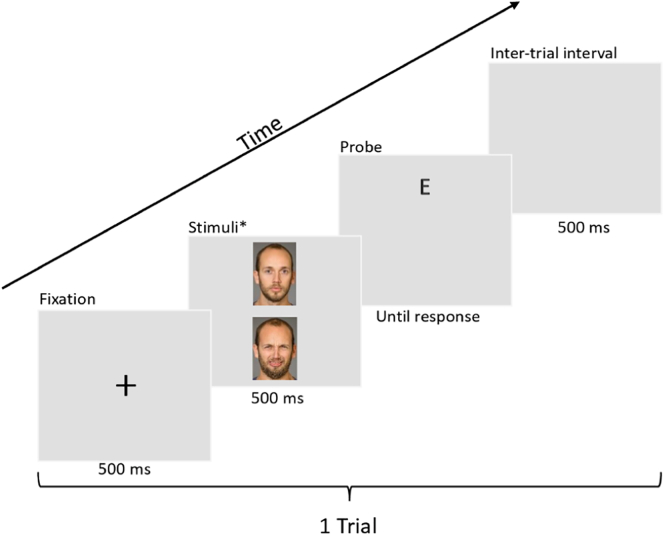
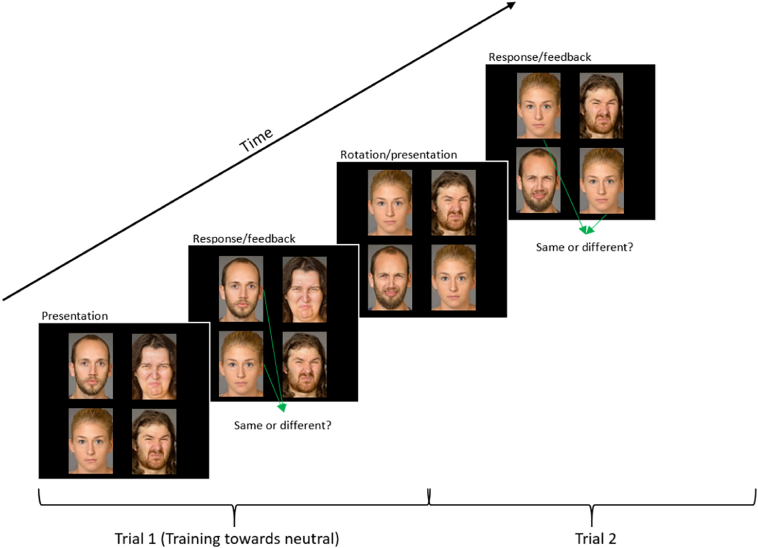
Attentional bias modification (ABM) aims to reduce anxiety by attenuating bias towards threatening information. The current study incorporated virtual reality (VR) technology and 3-dimensional stimuli with a person-identity-matching (PIM) task to evaluate the effects of a VR-based ABM training on attentional bias and anxiety symptoms.
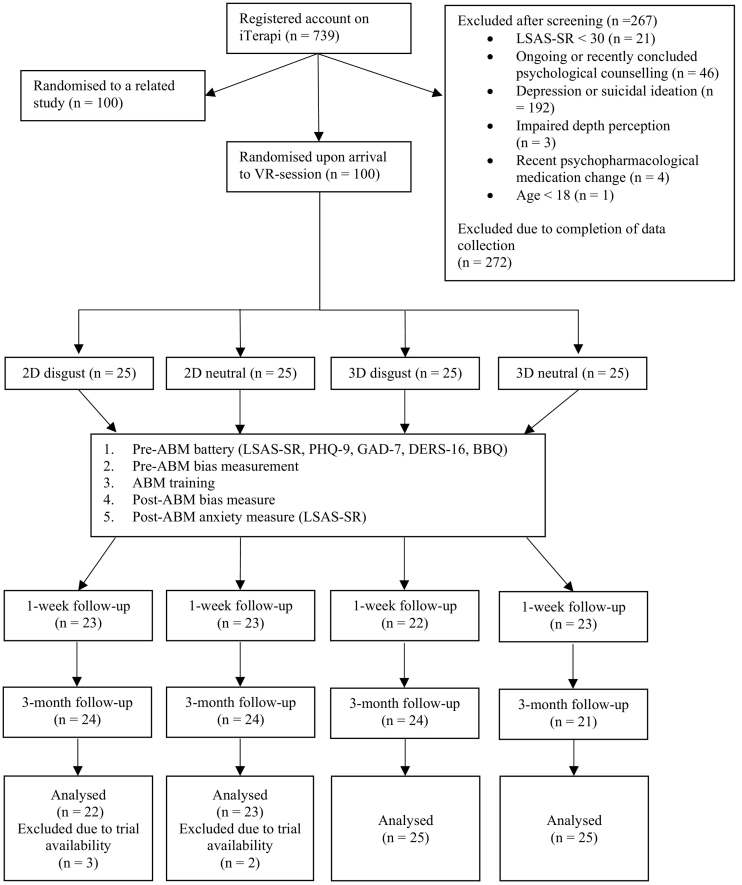
One hundred participants with elevated social anxiety were randomised to four training groups. Attentional bias was assessed at pre- and post-training, and anxiety symptoms were assessed at pre-training, post-training, 1-week follow-up, and 3-month follow-up.
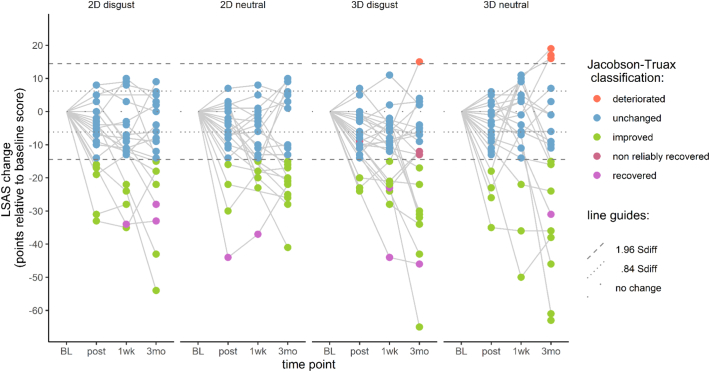
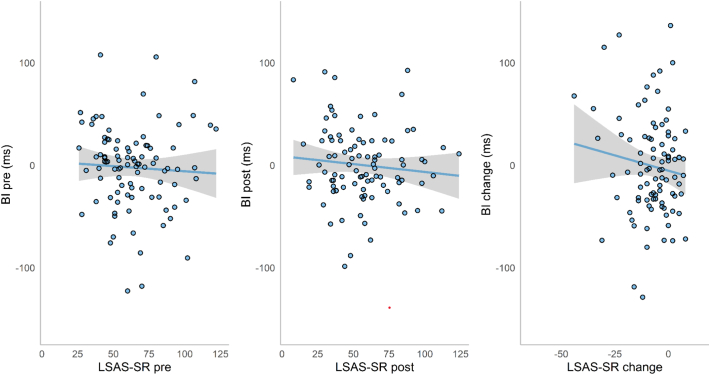
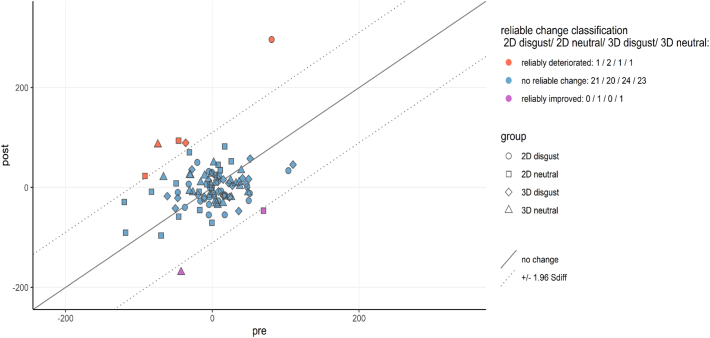
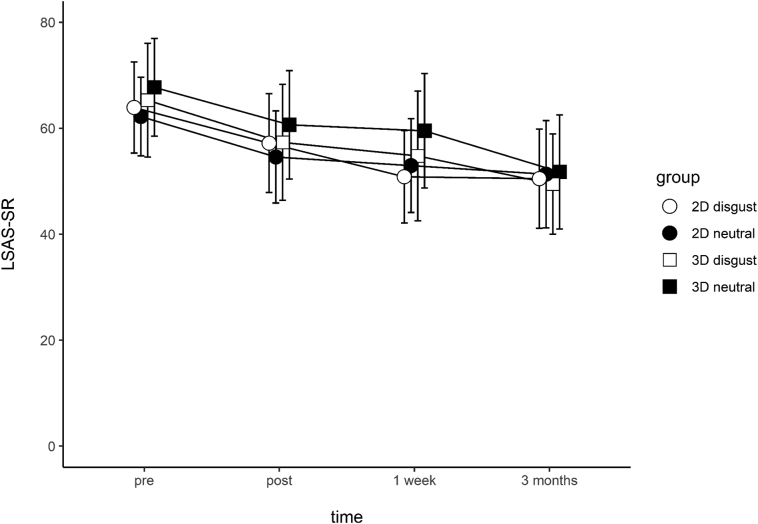
Change in anxiety did not correlate with change in bias ( = -0.08). A repeated-measures ANOVA showed no significant difference in bias from pre- to post-ABM, or between groups. For anxiety symptoms, a linear mixed-effects model analysis revealed a significant effect of time. Participants showed reduction in anxiety score at each successive assessment ( < .001, Nagelkerke's pseudo = 0.65). However, no other significant main effect or interactions were found. A clinically significant change analysis revealed that 4% of participants were classified as 'recovered' at 3-month follow-up.
A single session of VR-based PIM task did not change attentional bias. The significant reduction in anxiety was not specific to active training, and the majority of participants remained clinically unchanged.
注意力偏差修正(ABM)旨在通过减弱对威胁性信息的偏差来减轻焦虑。当前研究结合虚拟现实(VR)技术和三维刺激以及个人身份匹配(PIM)任务,以评估基于VR的ABM训练对注意力偏差和焦虑症状的影响。
100名社交焦虑水平较高的参与者被随机分为四个训练组。在训练前和训练后评估注意力偏差,在训练前、训练后、1周随访和3个月随访时评估焦虑症状。
焦虑的变化与偏差的变化不相关(r = -0.08)。重复测量方差分析显示,从ABM训练前到训练后,或在组间,偏差没有显著差异。对于焦虑症状,线性混合效应模型分析显示时间有显著影响。参与者在每次连续评估时焦虑评分均降低(P <.001,Nagelkerke's伪R² = 0.65)。然而,未发现其他显著的主效应或交互作用。临床显著变化分析显示,在3个月随访时,4%的参与者被归类为“康复”。
单次基于VR的PIM任务并未改变注意力偏差。焦虑的显著降低并非特定于主动训练,且大多数参与者在临床上没有变化。