
2019冠状病毒病中的骨代谢:可能的骨免疫学及性别影响
Bone Metabolism in SARS-CoV-2 Disease: Possible Osteoimmunology and Gender Implications.
作者信息
Salvio Gianmaria, Gianfelice Claudio, Firmani Francesca, Lunetti Stefano, Balercia Giancarlo, Giacchetti Gilberta
机构信息
Division of Endocrinology, Department of Clinical and Molecular Sciences, Polytechnic University of Marche, Via Conca 71, Umberto I Hospital, 60126 Ancona, Italy.
出版信息
Clin Rev Bone Miner Metab. 2020;18(4):51-57. doi: 10.1007/s12018-020-09274-3. Epub 2020 Sep 1.
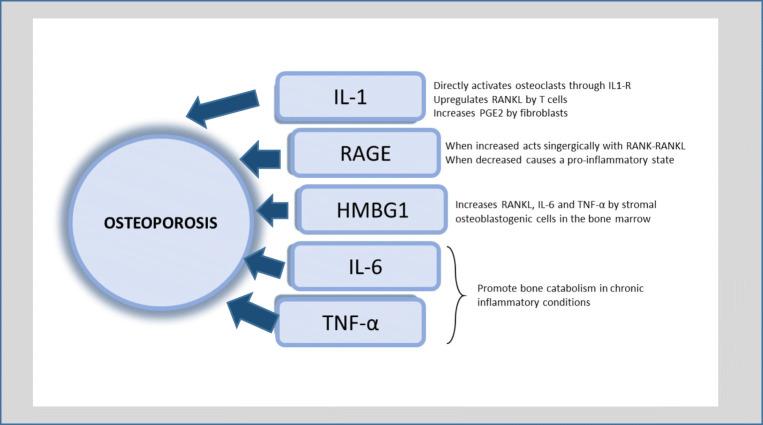
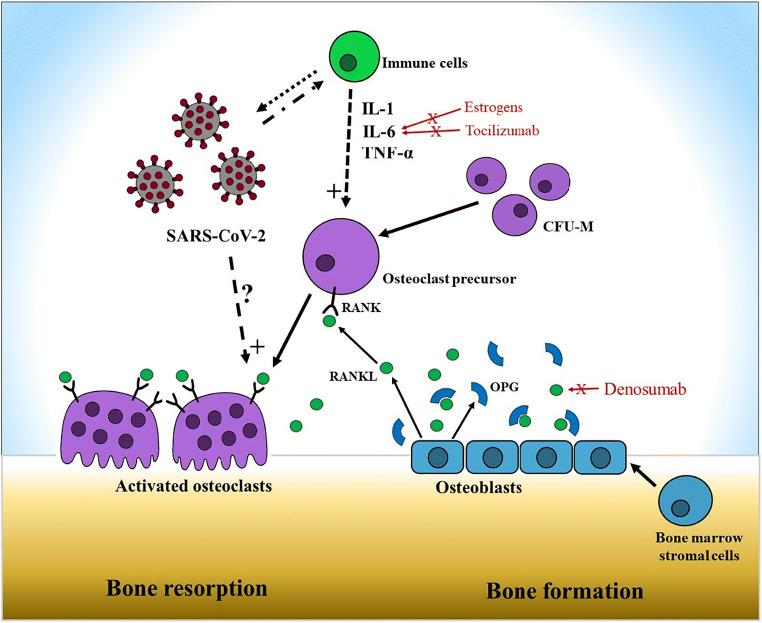
Even though inflammatory conditions are known to exert adverse effects on bone metabolism, there are no published data regarding SARS-CoV-2 infection and subsequent fracture risk. We present a brief review of the molecular mechanisms linking inflammatory diseases to increased fracture risk/osteoporosis and of the therapeutic strategies that can prevent bone resorption in patients with inflammatory disease, focusing on the RANK-RANKL system. We also make some considerations on gender differences in infection response and on their implications for survival and for the consequences of COVID-19. Several inflammatory cytokines, especially IL-1, IL-6, and TNF-α, stimulate osteoclast activity, favoring bone resorption through the RANK-RANKL system. Data from the previous SARS-CoV outbreak suggest that the present disease also has the potential to act directly on bone resorption units, although confirmation is clearly needed. Even though the available data are limited, the RANK-RANKL system may provide the best therapeutic target to prevent bone resorption after COVID-19 disease. Vitamin D supplementation in case of deficiency could definitely be beneficial for bone metabolism, as well as for the immune system. Supplementation of vitamin D in case of deficiency could be further advantageous. In COVID-19 patients, it would be useful to measure the bone metabolism markers and vitamin D. Targeting the RANK-RANKL system should be a priority, and denosumab could represent a safe and effective choice. In the near future, every effort should be made to investigate the fracture risk after SARS-CoV-2 infection.
尽管已知炎症状态会对骨代谢产生不利影响,但关于新型冠状病毒(SARS-CoV-2)感染及后续骨折风险,尚无已发表的数据。我们简要综述了将炎症性疾病与骨折风险增加/骨质疏松联系起来的分子机制,以及可预防炎症性疾病患者骨吸收的治疗策略,重点关注核因子κB受体活化因子配体(RANK)-RANKL系统。我们还对感染反应中的性别差异及其对生存和新型冠状病毒肺炎(COVID-19)后果的影响进行了一些思考。几种炎性细胞因子,尤其是白细胞介素-1(IL-1)、白细胞介素-6(IL-6)和肿瘤坏死因子-α(TNF-α),刺激破骨细胞活性,通过RANK-RANKL系统促进骨吸收。先前严重急性呼吸综合征(SARS)疫情的数据表明,尽管显然需要进一步证实,但目前这种疾病也有可能直接作用于骨吸收单位。尽管现有数据有限,但RANK-RANKL系统可能是预防COVID-19疾病后骨吸收的最佳治疗靶点。维生素D缺乏时进行补充肯定对骨代谢以及免疫系统有益。维生素D缺乏时进行补充可能会带来更多益处。在COVID-19患者中,检测骨代谢标志物和维生素D会很有用。靶向RANK-RANKL系统应是优先事项,地诺单抗可能是一种安全有效的选择。在不久的将来,应尽一切努力研究SARS-CoV-2感染后的骨折风险。
 Zotero 插件