Srewaradachpisal Satta, Dechwayukul Charoenyutr, Chatpun Surapong, Spontak Richard J, Thongruang Wiriya
Department of Mechanical Engineering, Faculty of Engineering, Prince of Songkla University, Hat Yai, Songkhla 90112, Thailand.
Institute of Biomedical Engineering, Faculty of Medicine, Prince of Songkla University, Hat Yai, Songkhla 90112, Thailand.
Polymers (Basel). 2020 Sep 7;12(9):2032. doi: 10.3390/polym12092032.
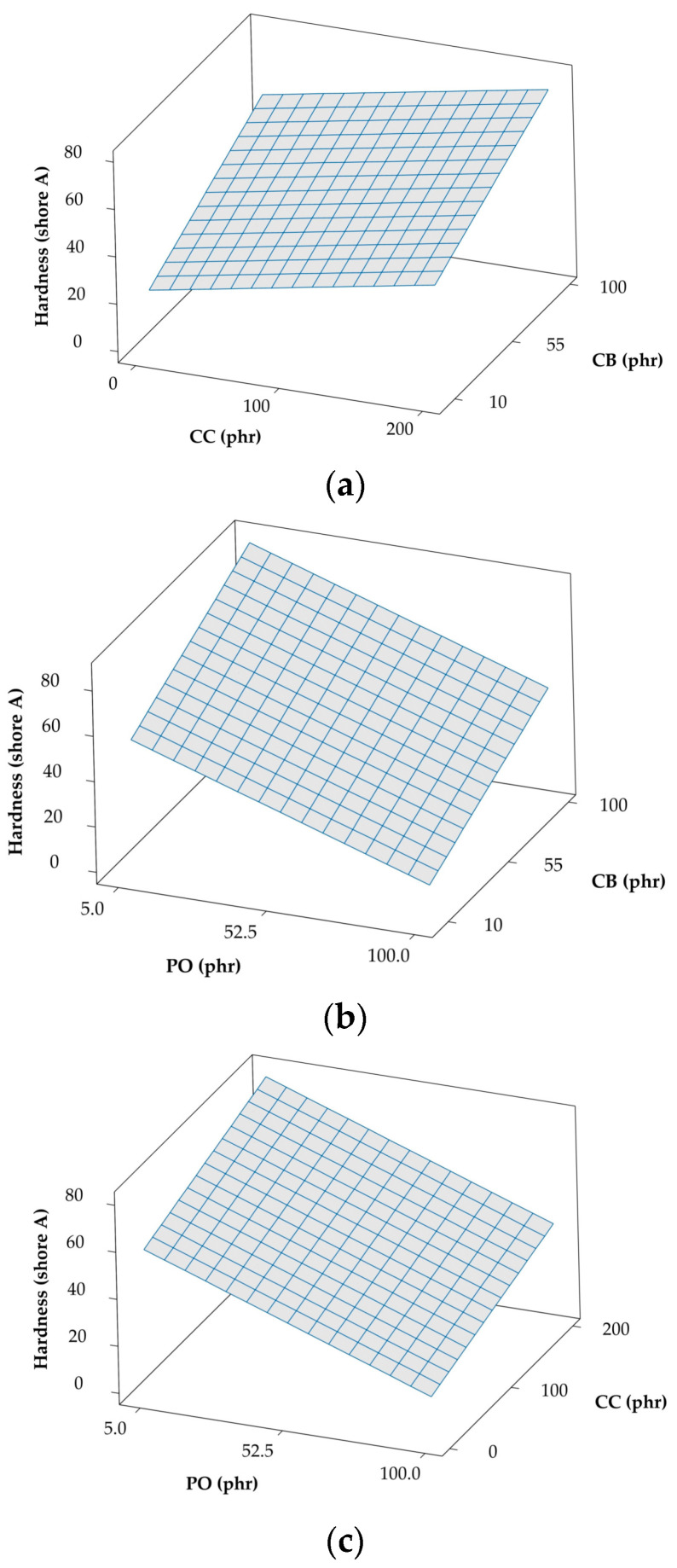
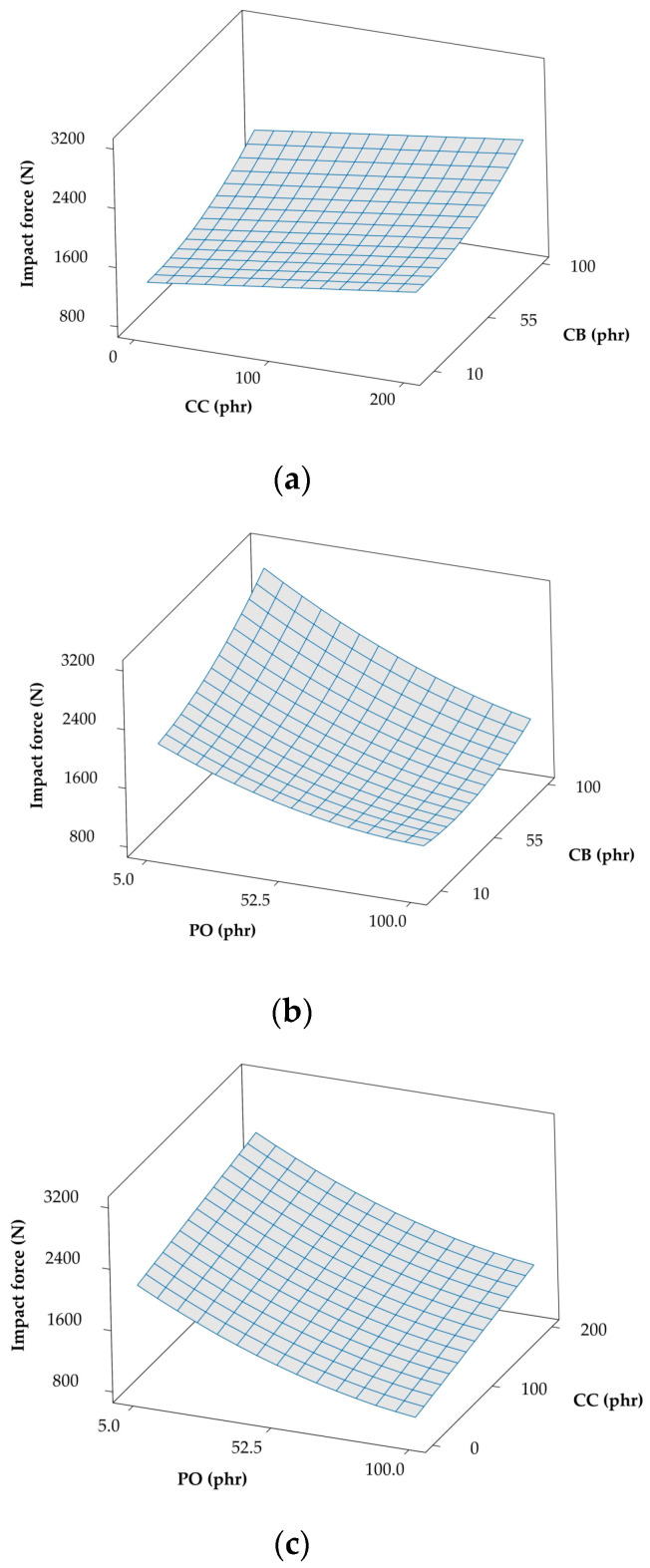
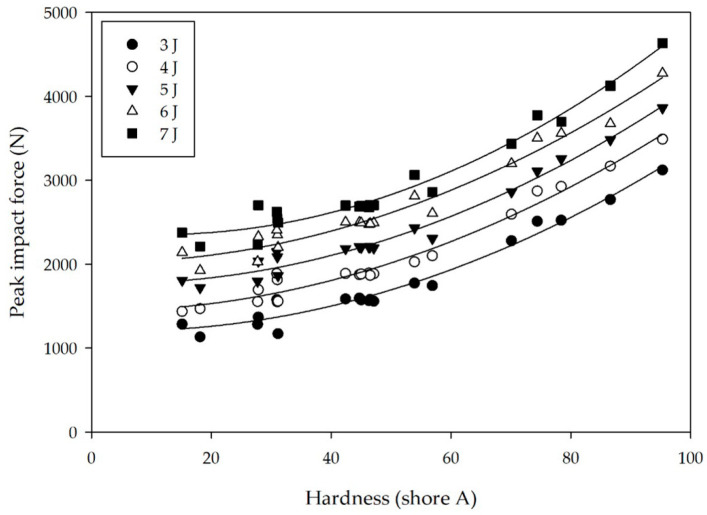
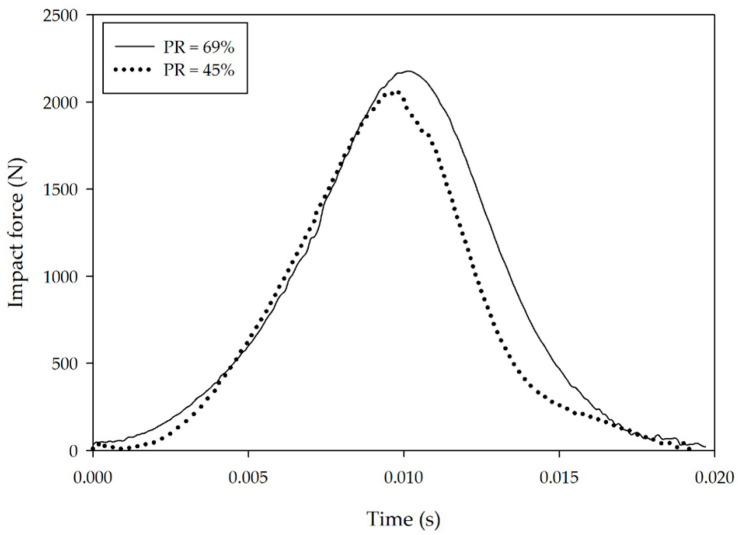
Impact force remains the primary cause of foot injury and general discomfort with regard to footwear. The footwear industry traditionally relies on modified elastomers (including natural rubber) whose properties can be physically adjusted by varying the constituents in the rubber formulations. This work aims to investigate the effect of filler/plasticizer fractions on shock attenuation of natural rubber soles. The statistical response surface method (RSM) was used to optimize the loading of natural rubber, fillers (carbon black and china clay) and a plasticizer (paraffinic oil). A novel predictive equation addressing the effects of additives on the physical and mechanical properties of the shoe sole was successfully created using the RSM. Our results demonstrate how the concentrations of these components regulate final properties, such as impact force absorption and hardness, in the commercial manufacture of shoe soles. While a higher loading level of plasticizer promotes reductions in hardness and impact force, as well as energy dissipation, in these modified elastomers, these properties were improved by increasing the filler content.
冲击力仍然是导致足部受伤以及鞋类穿着普遍不适的主要原因。传统上,鞋类行业依赖于改性弹性体(包括天然橡胶),其性能可通过改变橡胶配方中的成分进行物理调整。这项工作旨在研究填料/增塑剂比例对天然橡胶鞋底减震效果的影响。采用统计响应面法(RSM)对天然橡胶、填料(炭黑和瓷土)和增塑剂(石蜡油)的用量进行优化。利用RSM成功创建了一个新的预测方程,该方程阐述了添加剂对鞋底物理和机械性能的影响。我们的研究结果表明,在鞋底的商业制造中,这些成分的浓度如何调节最终性能,如冲击力吸收和硬度。虽然较高含量的增塑剂会降低这些改性弹性体的硬度、冲击力以及能量耗散,但通过增加填料含量可改善这些性能。