Microbiologie Fondamentale et Pathogénicité, MFP CNRS UMR 5234, University of Bordeaux, 146 rue Leo Saignat, 33076 Bordeaux, France.
Cells. 2020 Sep 7;9(9):2042. doi: 10.3390/cells9092042.
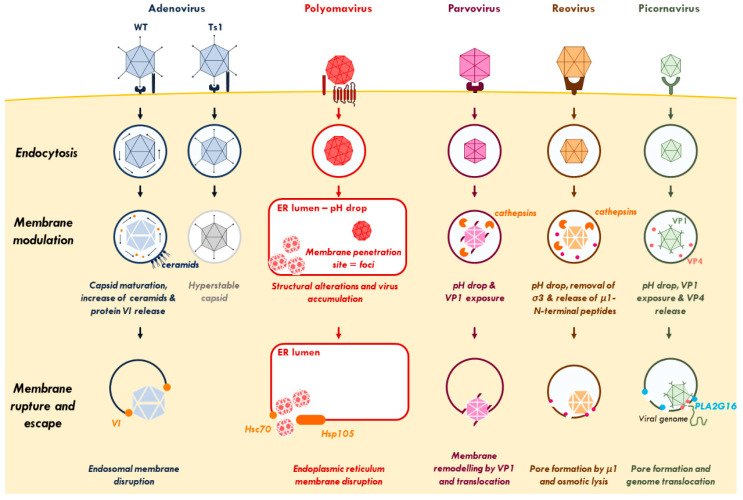
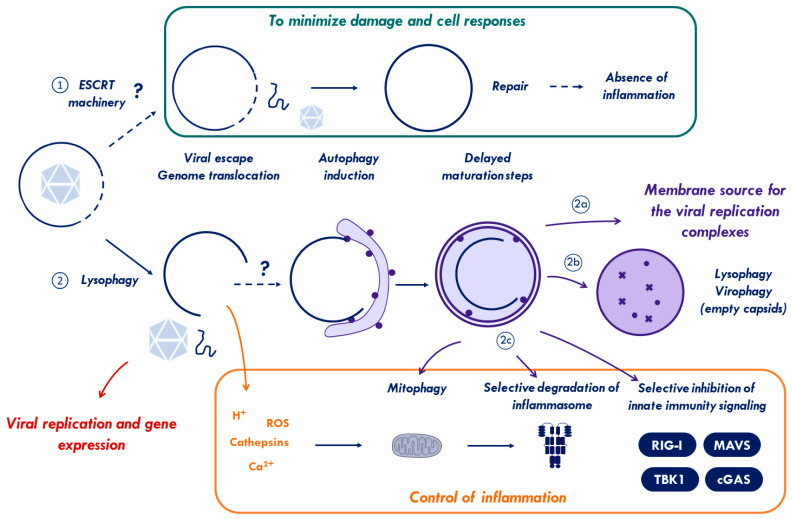
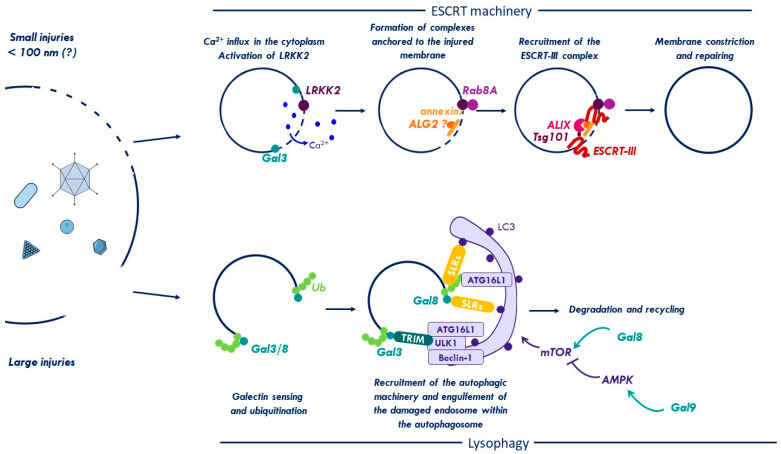
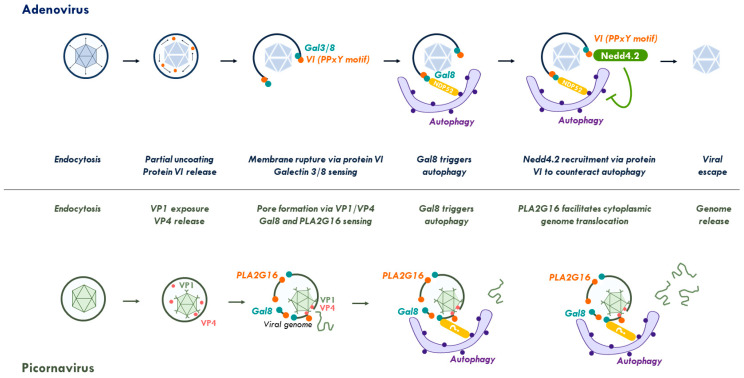
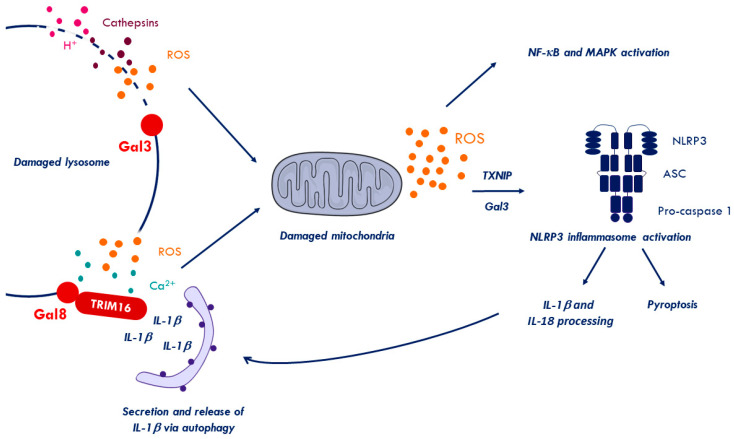
Cells are constantly challenged by pathogens (bacteria, virus, and fungi), and protein aggregates or chemicals, which can provoke membrane damage at the plasma membrane or within the endo-lysosomal compartments. Detection of endo-lysosomal rupture depends on a family of sugar-binding lectins, known as galectins, which sense the abnormal exposure of glycans to the cytoplasm upon membrane damage. Galectins in conjunction with other factors orchestrate specific membrane damage responses such as the recruitment of the endosomal sorting complex required for transport (ESCRT) machinery to either repair damaged membranes or the activation of autophagy to remove membrane remnants. If not controlled, membrane damage causes the release of harmful components including protons, reactive oxygen species, or cathepsins that will elicit inflammation. In this review, we provide an overview of current knowledge on membrane damage and cellular responses. In particular, we focus on the endo-lysosomal damage triggered by non-enveloped viruses (such as adenovirus) and discuss viral strategies to control the cellular membrane damage response. Finally, we debate the link between autophagy and inflammation in this context and discuss the possibility that virus induced autophagy upon entry limits inflammation.
细胞不断受到病原体(细菌、病毒和真菌)和蛋白质聚集体或化学物质的挑战,这些物质可能会引发质膜或内体溶酶体隔室的膜损伤。内体溶酶体破裂的检测取决于一类糖结合凝集素,称为半乳糖凝集素,它们在膜损伤时感知糖链异常暴露到细胞质中。半乳糖凝集素与其他因素一起协调特定的膜损伤反应,例如将内体分选复合物必需的运输(ESCRT)机制募集到修复受损膜或激活自噬以去除膜残余物。如果不受控制,膜损伤会导致释放包括质子、活性氧或组织蛋白酶在内的有害成分,从而引发炎症。在这篇综述中,我们提供了对膜损伤和细胞反应的最新知识概述。特别是,我们专注于由非包膜病毒(如腺病毒)触发的内体溶酶体损伤,并讨论了病毒控制细胞膜损伤反应的策略。最后,我们在这方面讨论了自噬和炎症之间的联系,并讨论了病毒诱导进入时的自噬限制炎症的可能性。