Graduate School, Chung-Ang University, Seoul 06794, Korea.
School of Architecture and Building Science, Chung-Ang University, Seoul 06974, Korea.
Molecules. 2020 Sep 7;25(18):4087. doi: 10.3390/molecules25184087.
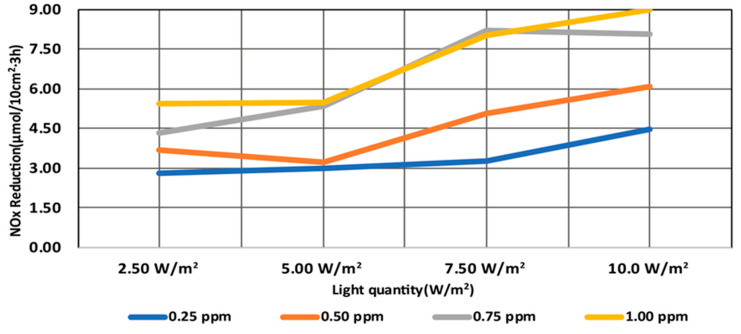
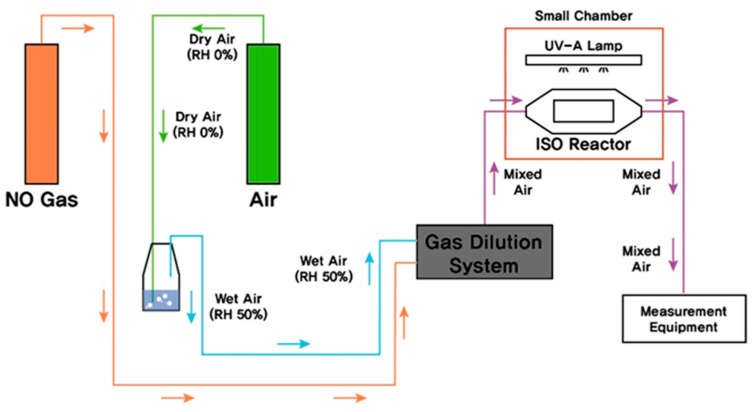
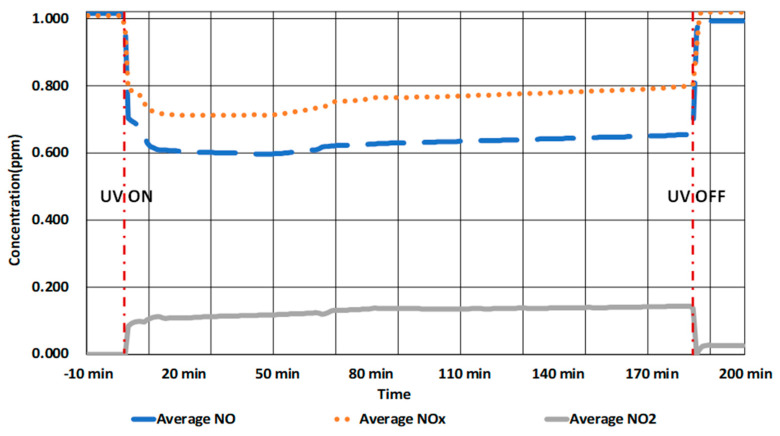
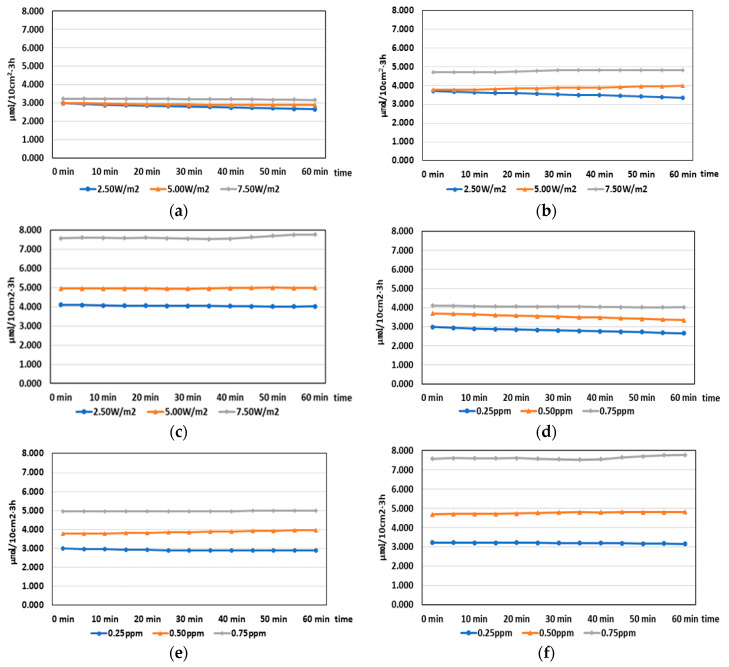
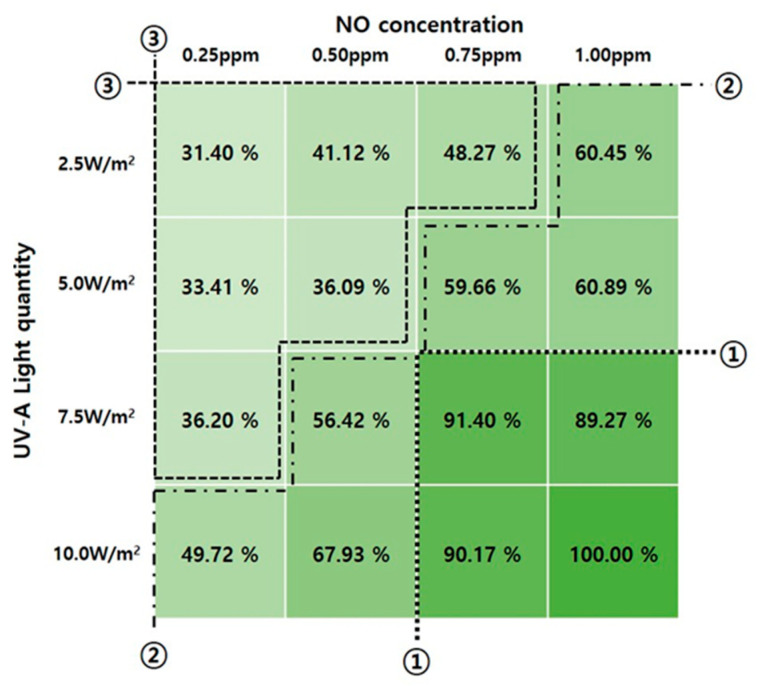
In South Korea, the gradual increase in particulate matter generation has received significant attention from central and local governments. Exhaust gas, which contains nitrogen oxides (NO), is one of the main sources of particulate matter. In this study, the reduction of NO using a coating material mixed with a titanium dioxide (TiO) photocatalyst was demonstrated. The NO reduction performance of the TiO photocatalyst-infused coating was evaluated by applying the ISO 22197-1: 2007 standard. Subsequently, the performance was evaluated by changing the NO gas concentration and ultraviolet (UV)-A irradiance under standard experimental conditions. It was determined that NO reduction can be achieved even if the NO gas concentration and UV-A irradiance are lower than those under the standard conditions when the TiO photocatalyst-infused coating was used. This study revealed that NO reduction can be realized through TiO photocatalyst-infused coating in winter or cloudy days with a low solar altitude. It was also confirmed that compared with the UV-A irradiance, the NO gas concentration has a greater effect on the NO reduction performance of the TiO photocatalyst-infused coating. These findings can be used to evaluate a variety of construction materials with TiO photocatalysts in the future.
在韩国,颗粒物生成的逐渐增加引起了中央和地方政府的高度关注。废气中含有氮氧化物(NO),是颗粒物的主要来源之一。在这项研究中,使用混合有二氧化钛(TiO)光催化剂的涂层材料来减少 NO。通过应用 ISO 22197-1:2007 标准,评估了 TiO 光催化剂注入涂层的 NO 还原性能。随后,在标准实验条件下改变 NO 气体浓度和紫外线(UV)-A 辐照度来评估性能。结果表明,即使在使用 TiO 光催化剂注入涂层时,NO 气体浓度和 UV-A 辐照度低于标准条件下,也可以实现 NO 还原。这项研究表明,在冬季或太阳高度较低的阴天,可以通过 TiO 光催化剂注入涂层实现 NO 还原。还证实了与 UV-A 辐照度相比,NO 气体浓度对 TiO 光催化剂注入涂层的 NO 还原性能有更大的影响。这些发现可用于未来评估各种含有 TiO 光催化剂的建筑材料。