Floriculture Research Division, National Institute of Horticultural & Herbal Science, Rural Development Administration, Wanju 55365, Korea.
Chemical Safety Division, National Institute of Agricultural Sciences, Rural Development Administration, Wanju 55365, Korea.
Int J Mol Sci. 2020 Sep 7;21(18):6537. doi: 10.3390/ijms21186537.
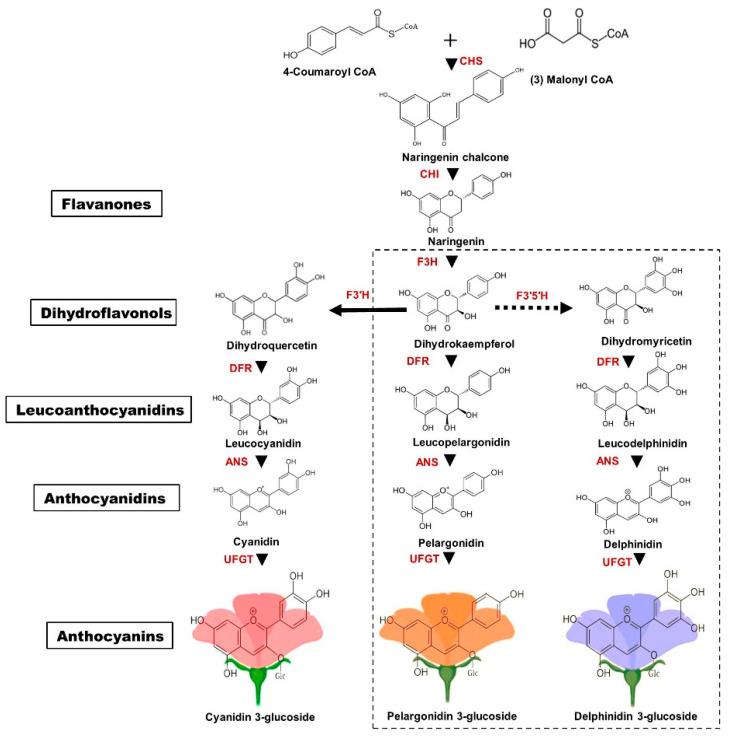
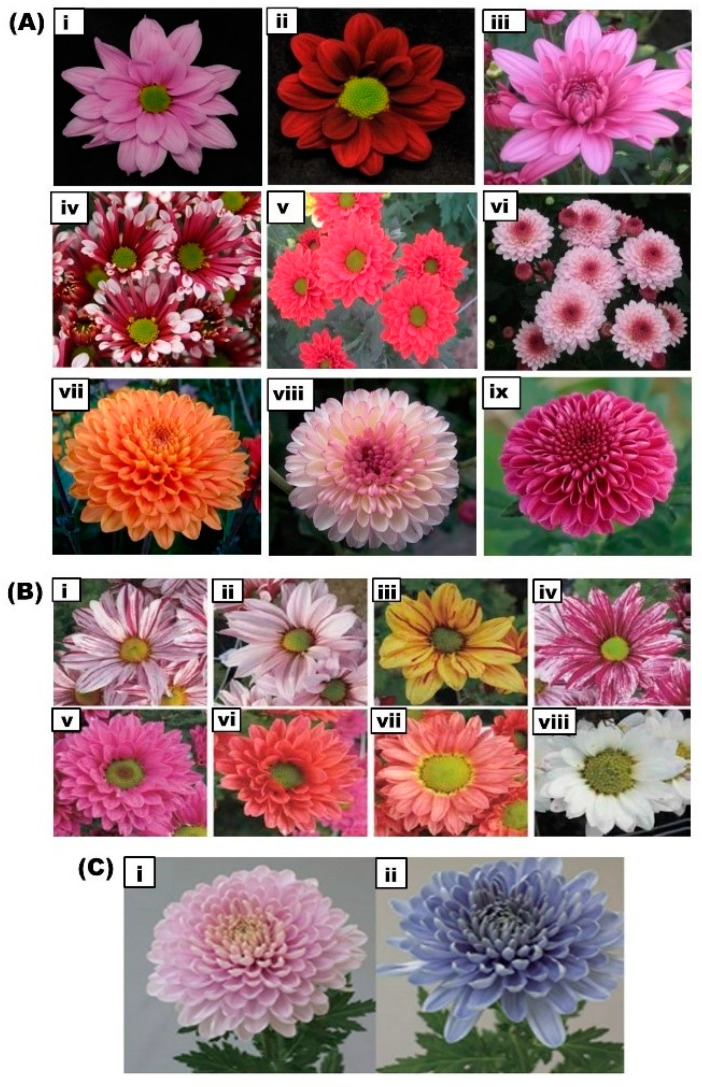
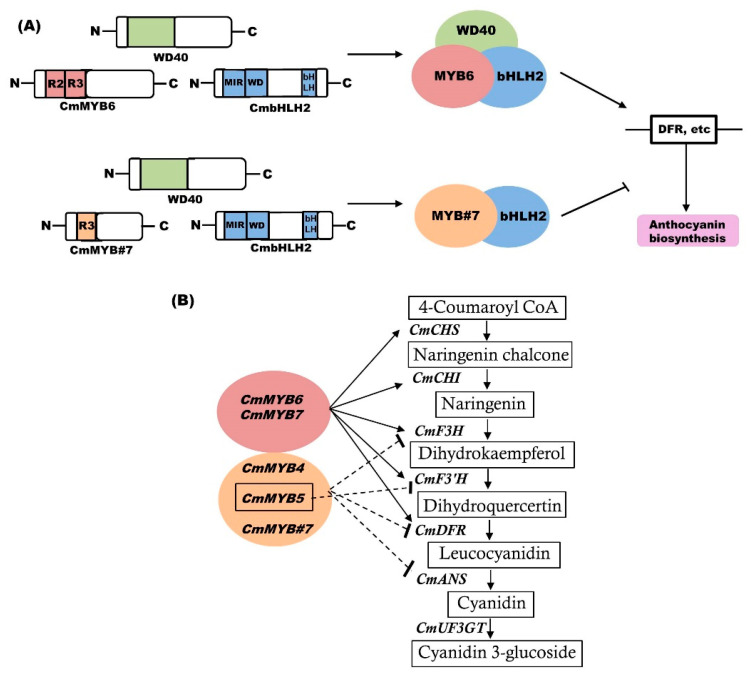
Chrysanthemum () is an economically important ornamental crop across the globe. As floral color is the major factor determining customer selection, manipulation of floral color has been a major objective for breeders. Anthocyanins are one of the main pigments contributing to a broad variety of colors in the ray florets of chrysanthemum. Manipulating petal pigments has resulted in the development of a vast range of floral colors. Although the candidate genes involved in anthocyanin biosynthesis have been well studied, the genetic and transcriptional control of floral color remains unclear. Despite advances in multi-omics technology, these methods remain in their infancy in chrysanthemum, owing to its large complex genome and hexaploidy. Hence, there is a need to further elucidate and better understand the genetic and molecular regulatory mechanisms in chrysanthemum, which can provide a basis for future advances in breeding for novel and diverse floral colors in this commercially beneficial crop. Therefore, this review describes the significance of anthocyanins in chrysanthemum flowers, and the mechanism of anthocyanin biosynthesis under genetic and environmental factors, providing insight into the development of novel colored ray florets. Genetic and molecular regulatory mechanisms that control anthocyanin biosynthesis and the various breeding efforts to modify floral color in chrysanthemum are detailed.
菊花在全球范围内是一种具有重要经济价值的观赏作物。由于花色是决定消费者选择的主要因素,因此花色的调控一直是育种者的主要目标之一。花色素苷是菊花舌状花呈现多种颜色的主要色素之一。对花瓣色素的调控导致了各种花卉颜色的发展。尽管参与花色苷生物合成的候选基因已经得到了很好的研究,但花色的遗传和转录控制仍然不清楚。尽管多组学技术取得了进展,但由于菊花基因组庞大且为六倍体,这些方法在菊花中仍处于起步阶段。因此,需要进一步阐明和更好地理解菊花中的遗传和分子调控机制,这可以为未来在这种商业上有益的作物中培育新型和多样化的花色提供基础。因此,本文综述了花色苷在菊花花朵中的重要性,以及花色苷生物合成在遗传和环境因素下的机制,为新型有色舌状花的开发提供了思路。详细介绍了控制花色苷生物合成的遗传和分子调控机制,以及菊花中修饰花色的各种育种方法。