The Concern Foundation Laboratories at the Lautenberg Center for Immunology and Cancer Research, IMRIC, Faculty of Medicine, Hebrew University-Hadassah Medical School, Jerusalem, 91120, Israel.
Department of Surgery, Hadassah-Hebrew University Medical Center, Jerusalem, 91120, Israel.
Nat Commun. 2020 Sep 9;11(1):4516. doi: 10.1038/s41467-020-18207-z.
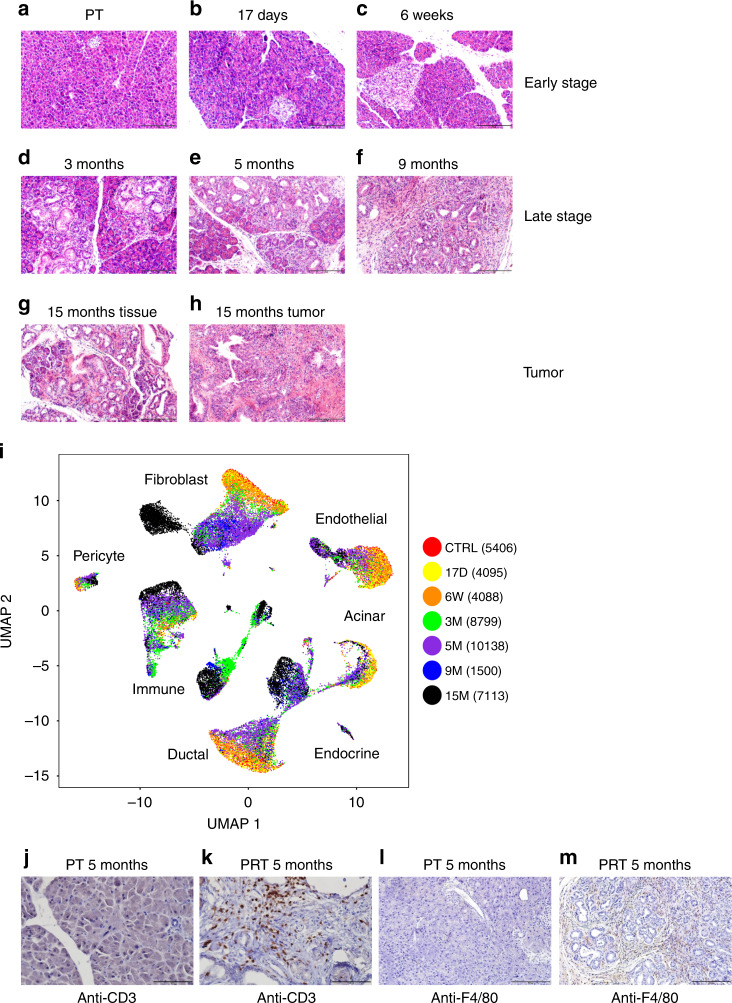
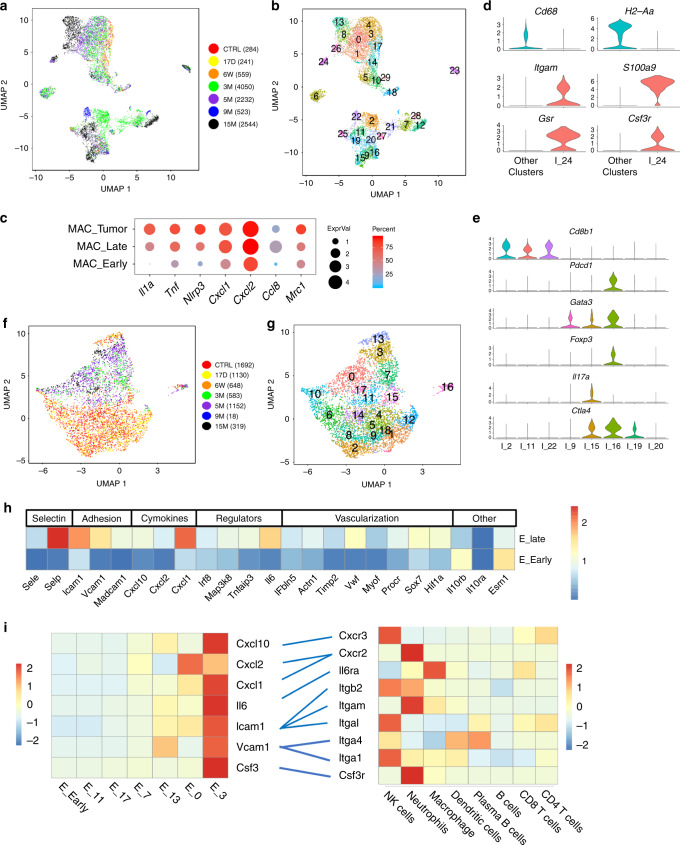
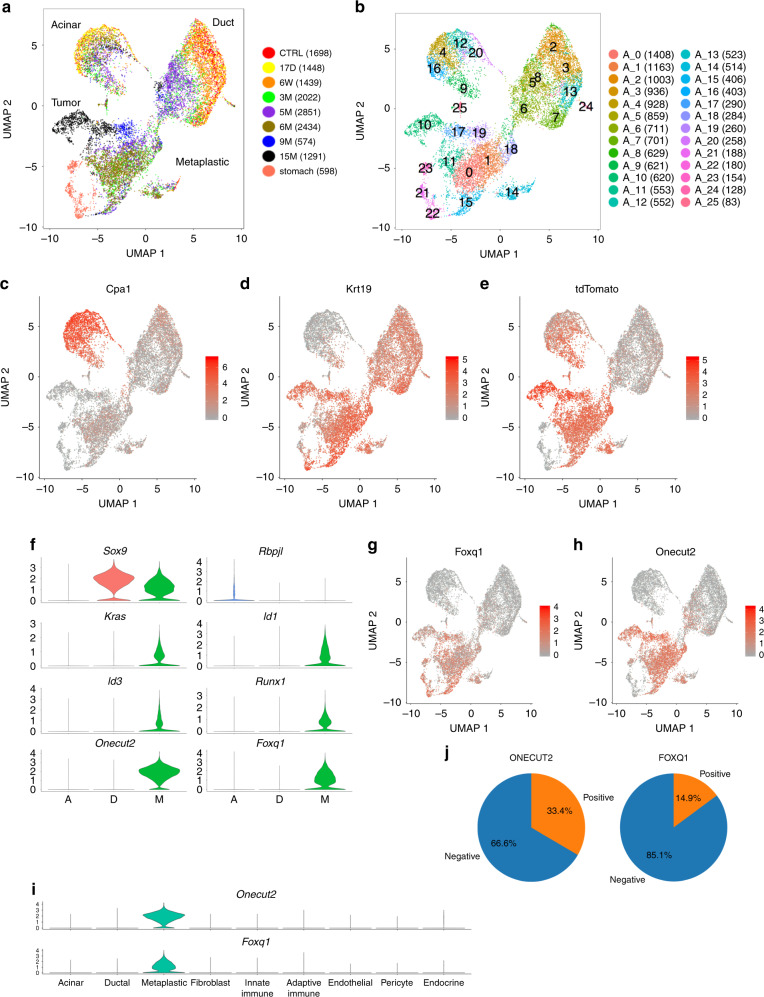
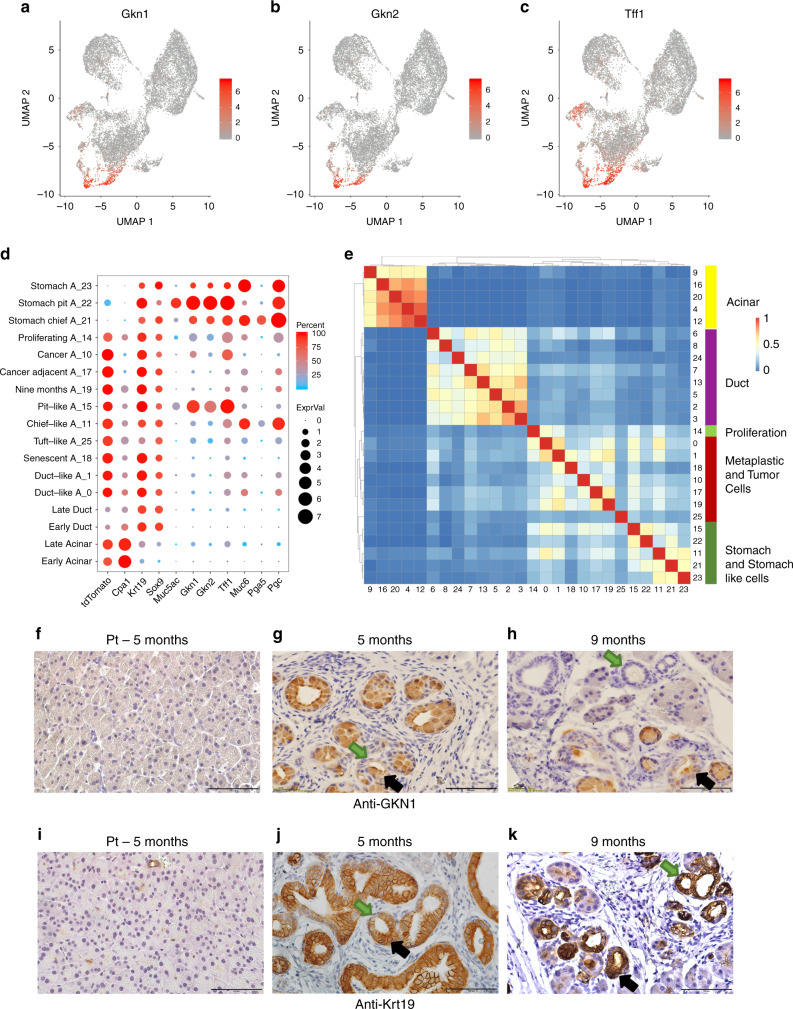
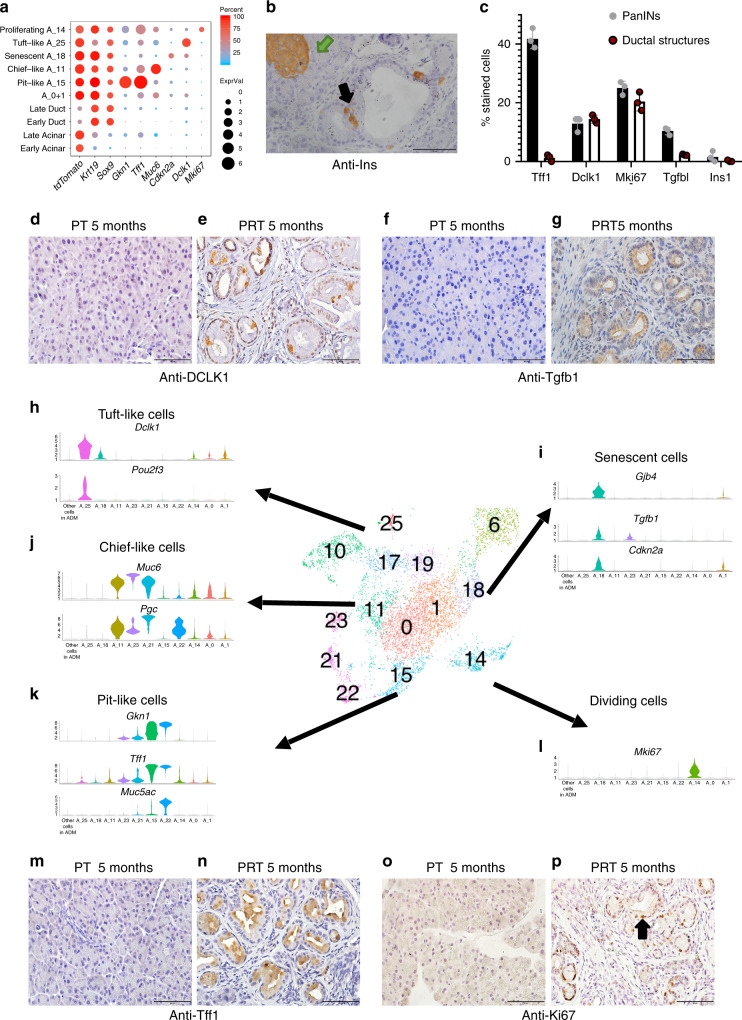
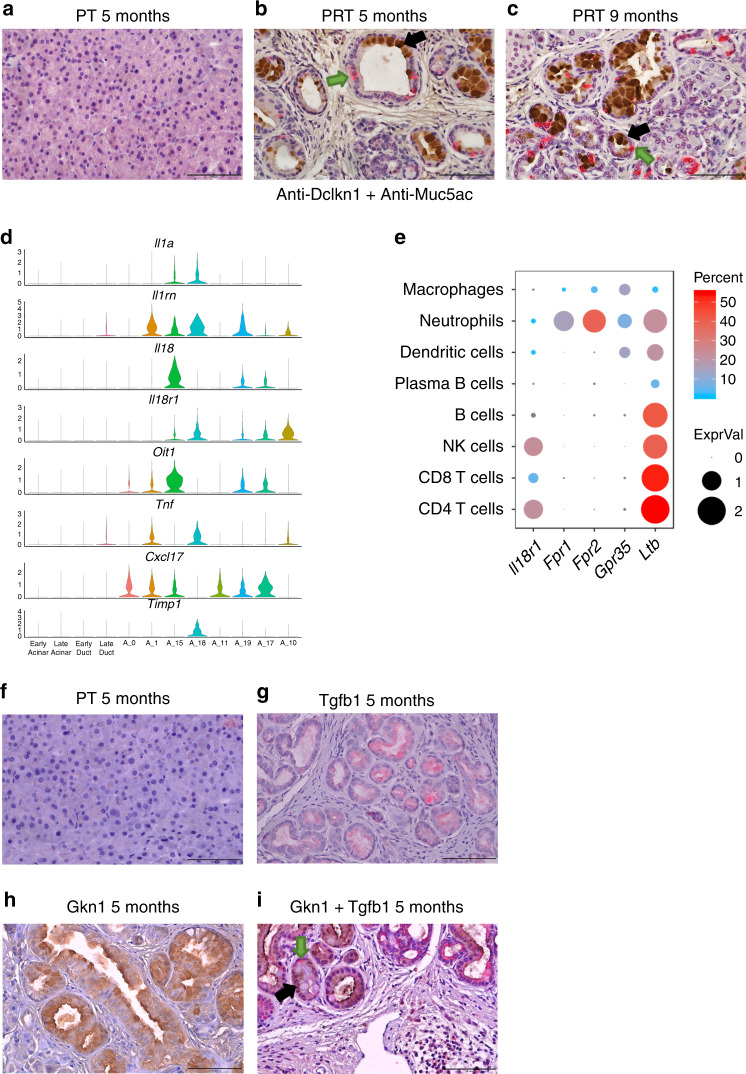
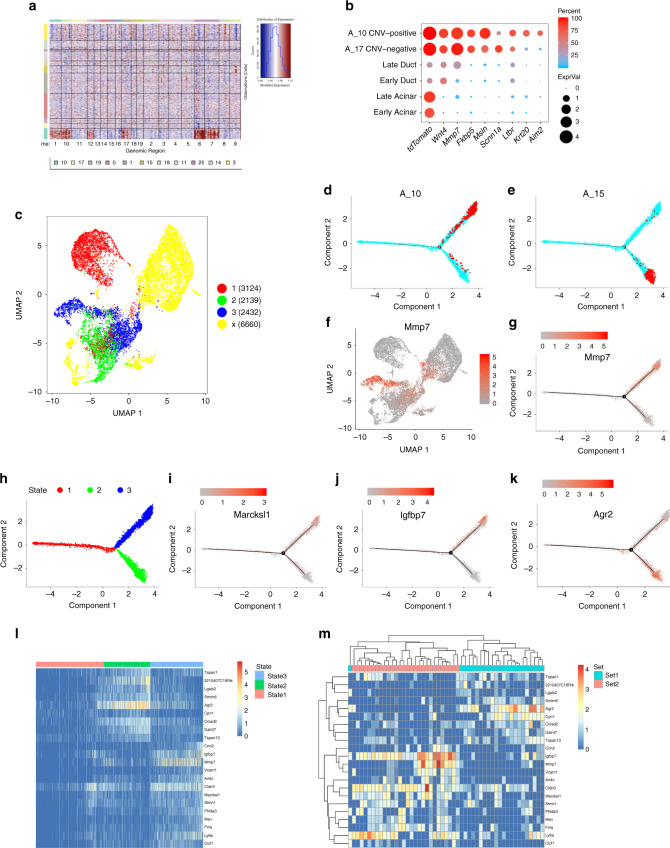
Acinar metaplasia is an initial step in a series of events that can lead to pancreatic cancer. Here we perform single-cell RNA-sequencing of mouse pancreas during the progression from preinvasive stages to tumor formation. Using a reporter gene, we identify metaplastic cells that originated from acinar cells and express two transcription factors, Onecut2 and Foxq1. Further analyses of metaplastic acinar cell heterogeneity define six acinar metaplastic cell types and states, including stomach-specific cell types. Localization of metaplastic cell types and mixture of different metaplastic cell types in the same pre-malignant lesion is shown. Finally, single-cell transcriptome analyses of tumor-associated stromal, immune, endothelial and fibroblast cells identify signals that may support tumor development, as well as the recruitment and education of immune cells. Our findings are consistent with the early, premalignant formation of an immunosuppressive environment mediated by interactions between acinar metaplastic cells and other cells in the microenvironment.
腺泡化生是一系列事件的初始步骤,这些事件可能导致胰腺癌。在这里,我们对从癌前阶段到肿瘤形成过程中的小鼠胰腺进行了单细胞 RNA 测序。使用报告基因,我们鉴定了起源于腺泡细胞并表达两种转录因子(Onecut2 和 Foxq1)的化生细胞。对化生腺泡细胞异质性的进一步分析定义了六种腺泡化生细胞类型和状态,包括胃特异性细胞类型。显示了化生细胞类型的定位以及同一致瘤前病变中不同化生细胞类型的混合。最后,对肿瘤相关基质、免疫、内皮和成纤维细胞的单细胞转录组分析鉴定了可能支持肿瘤发展的信号,以及免疫细胞的募集和教育。我们的研究结果与由腺泡化生细胞与微环境中的其他细胞相互作用介导的早期、癌前形成的免疫抑制环境一致。