Department of Nutrition, University of California, Davis, CA, USA.
Center for Child Health Research, Faculty of Medicine and Health Technology, Tampere University, Tampere, Finland.
Sci Rep. 2020 Sep 9;10(1):14861. doi: 10.1038/s41598-020-71922-x.
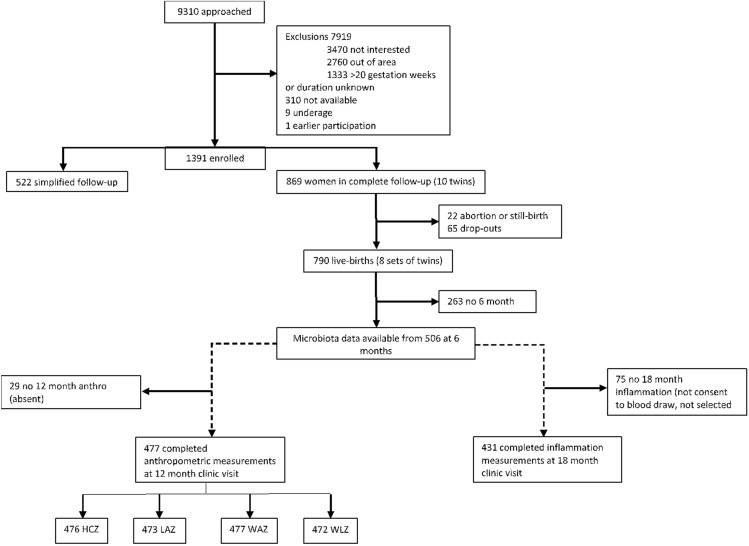
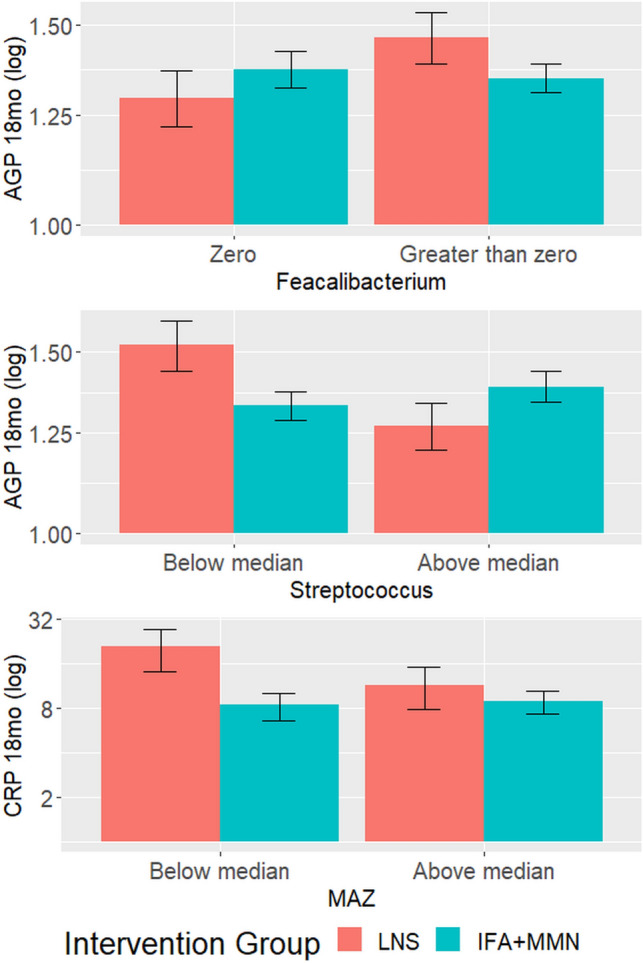
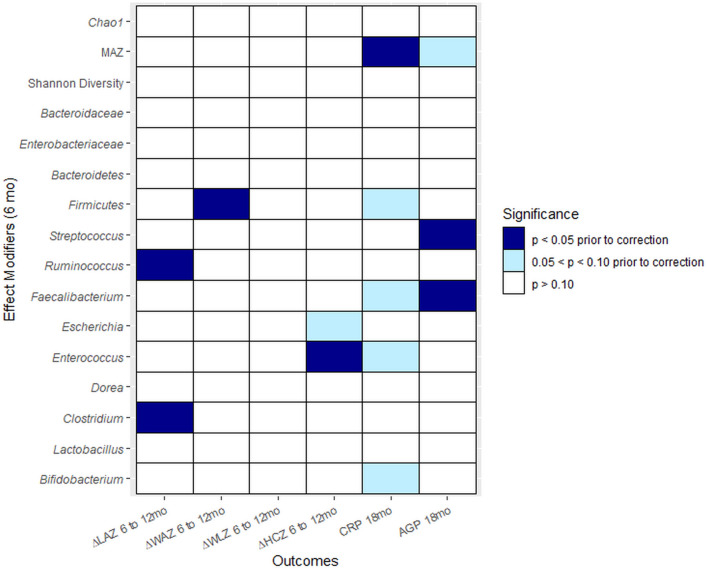
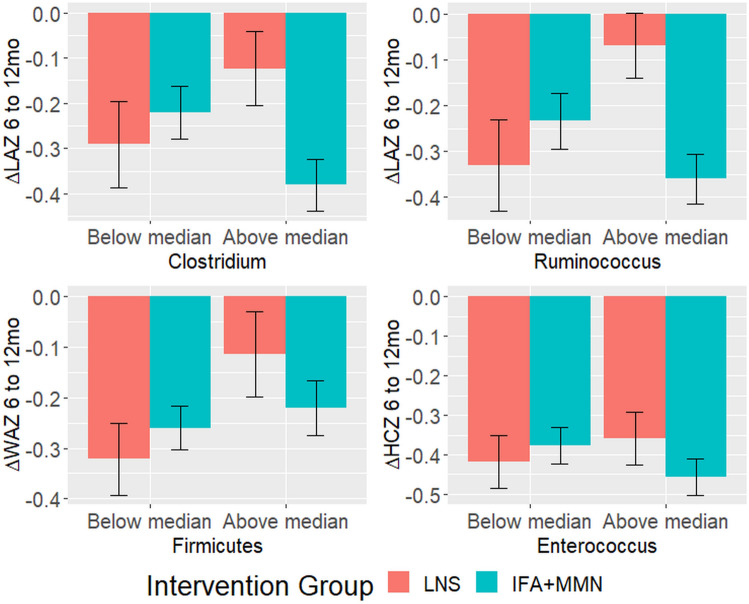
An unhealthy gut microbial community may act as a barrier to improvement in growth and health outcomes in response to nutritional interventions. The objective of this analysis was to determine whether the infant microbiota modified the effects of a randomized controlled trial of lipid-based nutrient supplements (LNS) in Malawi on growth and inflammation at 12 and 18 months, respectively. We characterized baseline microbiota composition of fecal samples at 6 months of age (n = 506, prior to infant supplementation, which extended to 18 months) using 16S rRNA gene sequencing of the V4 region. Features of the gut microbiota previously identified as being involved in fatty acid or micronutrient metabolism or in outcomes relating to growth and inflammation, especially in children, were investigated. Prior to correction for multiple hypothesis testing, the effects of LNS on growth appeared to be modified by Clostridium (p-for-interaction = 0.02), Ruminococcus (p-for-interaction = 0.007), and Firmicutes (p-for-interaction = 0.04) and effects on inflammation appeared to be modified by Faecalibacterium (p-for-interaction = 0.03) and Streptococcus (p-for-interaction = 0.004). However, after correction for multiple hypothesis testing these findings were not statistically significant, suggesting that the gut microbiota did not alter the effect of LNS on infant growth and inflammation in this cohort.
不健康的肠道微生物群落可能会成为改善生长和健康结果的障碍,而这是对营养干预的反应。本分析的目的是确定婴儿微生物群是否改变了在马拉维进行的脂质营养素补充剂(LNS)随机对照试验对 12 个月和 18 个月时生长和炎症的影响。我们使用 16S rRNA 基因 V4 区测序,对 6 个月龄(n=506,在婴儿补充之前,补充一直持续到 18 个月)的粪便样本的基线微生物群落组成进行了特征描述。先前确定的与脂肪酸或微量营养素代谢或与生长和炎症相关的结果有关的肠道微生物群特征,特别是在儿童中,被进行了研究。在对多个假设进行检验校正之前,LNS 对生长的影响似乎受到梭菌(p 交互作用=0.02)、真杆菌(p 交互作用=0.007)和厚壁菌门(p 交互作用=0.04)的影响,对炎症的影响似乎受到粪杆菌(p 交互作用=0.03)和链球菌(p 交互作用=0.004)的影响。然而,在对多个假设进行检验校正后,这些发现没有统计学意义,表明在本队列中,肠道微生物群并没有改变 LNS 对婴儿生长和炎症的影响。