Molecular and Cell Biology Laboratory, The Salk Institute for Biological Studies, La Jolla, California 92037, USA.
Department of Cellular and Molecular Medicine, University of California at San Diego, La Jolla, California 92037, USA.
Genes Dev. 2020 Oct 1;34(19-20):1330-1344. doi: 10.1101/gad.339895.120. Epub 2020 Sep 10.
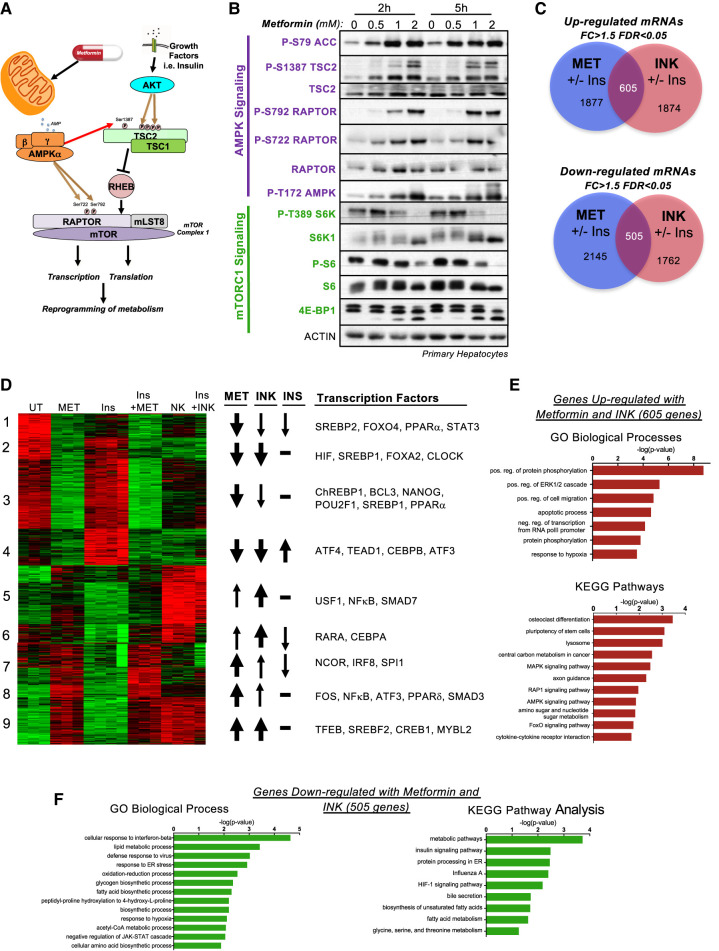
Despite being the frontline therapy for type 2 diabetes, the mechanisms of action of the biguanide drug metformin are still being discovered. In particular, the detailed molecular interplays between the AMPK and the mTORC1 pathway in the hepatic benefits of metformin are still ill defined. Metformin-dependent activation of AMPK classically inhibits mTORC1 via TSC/RHEB, but several lines of evidence suggest additional mechanisms at play in metformin inhibition of mTORC1. Here we investigated the role of direct AMPK-mediated serine phosphorylation of RAPTOR in a new mouse model, in which AMPK phospho-serine sites Ser722 and Ser792 of RAPTOR were mutated to alanine. Metformin treatment of primary hepatocytes and intact murine liver requires AMPK regulation of both RAPTOR and TSC2 to fully inhibit mTORC1, and this regulation is critical for both the translational and transcriptional response to metformin. Transcriptionally, AMPK and mTORC1 were both important for regulation of anabolic metabolism and inflammatory programs triggered by metformin treatment. The hepatic transcriptional response in mice on high-fat diet treated with metformin was largely ablated by AMPK deficiency under the conditions examined, indicating the essential role of this kinase and its targets in metformin action in vivo.
尽管二甲双胍是治疗 2 型糖尿病的一线药物,但二甲双胍的作用机制仍在不断发现。特别是,二甲双胍在肝脏中对 AMPK 和 mTORC1 通路的详细分子相互作用仍未得到明确界定。二甲双胍依赖的 AMPK 经典激活通过 TSC/RHEB 抑制 mTORC1,但有几条证据表明在二甲双胍抑制 mTORC1 中存在其他机制。在这里,我们在一个新的小鼠模型中研究了直接 AMPK 介导的 RAPTOR 丝氨酸磷酸化的作用,在该模型中,RAPTOR 的 AMPK 磷酸化丝氨酸位点 Ser722 和 Ser792 突变为丙氨酸。二甲双胍处理原代肝细胞和完整的鼠肝需要 AMPK 调节 RAPTOR 和 TSC2 以完全抑制 mTORC1,并且这种调节对于二甲双胍的翻译和转录反应都是至关重要的。在转录水平上,AMPK 和 mTORC1 对于二甲双胍处理引发的合成代谢代谢和炎症程序的调节都是重要的。在所检查的条件下,高脂肪饮食小鼠的肝脏转录反应在 AMPK 缺陷的情况下基本被阻断,这表明这种激酶及其靶标在体内二甲双胍作用中的重要作用。