Luecke Thorsten, Edgar Deborah, Huse Daniel
Department of Anesthesiology and Surgery, Franziskus Krankenhaus Linz, Linz am Rhein, Germany.
Commexus Ltd., Dunblane, UK.
SAGE Open Med. 2020 Aug 20;8:2050312120951369. doi: 10.1177/2050312120951369. eCollection 2020.
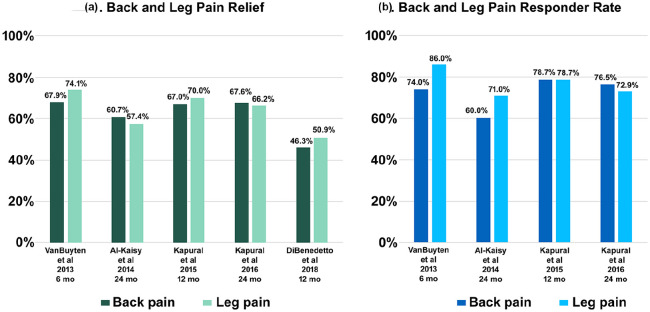
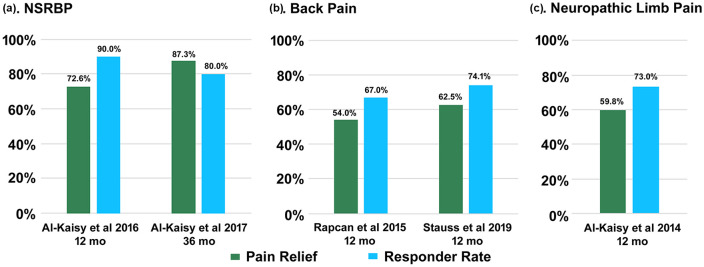
Chronic pain has a major impact on sufferers and their families. The associated health care costs are substantial. In the context of increasing prevalence, effective treatment options are ever more important. 10 kHz spinal cord stimulation has been shown to effectively provide pain relief, aid in opioid reduction, and improve quality of life in patients with chronic intractable pain. The present review aims to summarize the clinical evidence related to the use of 10 kHz SCS in chronic back and/or leg pain. We searched the PubMed database between 2009 and 2 June 2020 for articles reporting clinical studies that included at least 10 human subjects permanently treated with a 10 kHz SCS system (Senza system) for chronic back and/or leg pain for a minimum of 3 months. A randomized controlled trial (SENZA-RCT), as well as several prospective and retrospective studies, reported clinical outcomes in subjects with chronic back and leg pain treated with 10 kHz SCS. A high proportion of subjects (60%-80%) reported long-term response to therapy. Pain relief was provided without paresthesia. Other studies showed promising pain relief outcomes in subjects with back pain ineligible for spinal surgery, neuropathic limb pain, and in those with previously failed traditional low-frequency SCS. Most studies reported improved quality of life metrics and/or reduced opioid intake. Level 1 evidence has already been established for the use of 10 kHz SCS in treating chronic back and leg pain, corroborated by real-world, clinical experience. Exploratory studies also show the potential of the therapy in other refractory pain syndromes, although larger studies are desired to validate their findings. Overall, the literature suggests that 10 kHz SCS provides long-term pain relief in a high proportion of patients, along with improved quality of life and reduced opioid consumption.
慢性疼痛对患者及其家庭有重大影响。相关的医疗保健成本巨大。在患病率不断上升的背景下,有效的治疗选择变得愈发重要。10千赫兹脊髓刺激已被证明能有效缓解疼痛、帮助减少阿片类药物用量,并改善慢性顽固性疼痛患者的生活质量。本综述旨在总结与使用10千赫兹脊髓刺激治疗慢性背痛和/或腿痛相关的临床证据。我们在2009年至2020年6月2日期间搜索了PubMed数据库,查找报告临床研究的文章,这些研究纳入了至少10名使用10千赫兹脊髓刺激系统(Senza系统)永久治疗慢性背痛和/或腿痛至少3个月的人类受试者。一项随机对照试验(SENZA - RCT)以及多项前瞻性和回顾性研究报告了使用10千赫兹脊髓刺激治疗慢性背痛和腿痛患者的临床结果。很大比例的受试者(60% - 80%)报告对治疗有长期反应。疼痛得到缓解且无感觉异常。其他研究表明,在不符合脊柱手术条件的背痛患者、神经性肢体疼痛患者以及先前传统低频脊髓刺激治疗失败的患者中,疼痛缓解效果良好。大多数研究报告生活质量指标有所改善和/或阿片类药物摄入量减少。在治疗慢性背痛和腿痛方面,使用10千赫兹脊髓刺激的一级证据已经确立,真实世界的临床经验也证实了这一点。探索性研究还显示了该疗法在其他难治性疼痛综合征中的潜力,不过需要更大规模的研究来验证其结果。总体而言,文献表明10千赫兹脊髓刺激能使很大比例的患者长期缓解疼痛,同时提高生活质量并减少阿片类药物的使用。