Southside Hospital at Northwell Health, Bay Shore, New York; Donald and Barbara Zucker School of Medicine at Hofstra/Northwell, Hempstead, New York.
J Emerg Med. 2021 Feb;60(2):223-225. doi: 10.1016/j.jemermed.2020.08.009. Epub 2020 Aug 4.
Coronavirus disease 2019 (COVID-19) is associated with endothelial inflammation and a hypercoagulable state resulting in both venous and arterial thromboembolic complications. We present a case of COVID-19-associated aortic thrombus in an otherwise healthy patient.
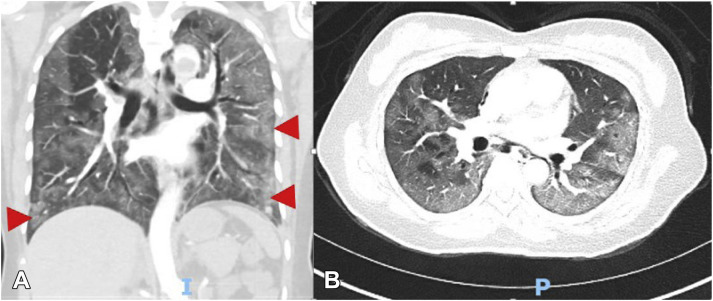
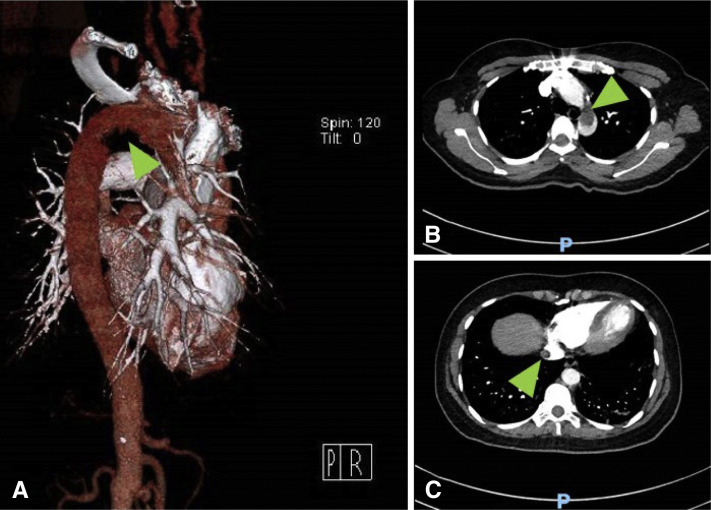
A 53-year-old woman with no past medical history presented with a 10-day history of dyspnea, fever, and cough. Her pulse oximetry on room air was 84%. She tested positive for severe acute respiratory syndrome coronavirus 2 infection, and chest radiography revealed moderate patchy bilateral airspace opacities. Serology markers for cytokine storm were significantly elevated, with a serum D-dimer level of 8180 ng/mL (normal < 230 ng/mL). Computed tomography of the chest with i.v. contrast was positive for bilateral ground-glass opacities, scattered filling defects within the bilateral segmental and subsegmental pulmonary arteries, and a large thrombus was present at the aortic arch. The patient was admitted to the intensive care unit and successfully treated with unfractionated heparin, alteplase 50 mg, and argatroban 2 μg/kg/min. WHY SHOULD AN EMERGENCY PHYSICIAN BE AWARE OF THIS?: Mural aortic thrombus is a rare but serious cause of distal embolism and is typically discovered during an evaluation of cryptogenic arterial embolization to the viscera or extremities. Patients with suspected hypercoagulable states, such as that encountered with COVID-19, should be screened for thromboembolism, and when identified, aggressively anticoagulated.
2019 年冠状病毒病(COVID-19)与内皮炎症和高凝状态有关,导致静脉和动脉血栓栓塞并发症。我们报告了一例 COVID-19 相关的主动脉血栓形成病例,该患者原本健康。
一名 53 岁女性,无既往病史,因呼吸困难、发热和咳嗽 10 天就诊。她在室内空气下的脉搏血氧饱和度为 84%。她对严重急性呼吸综合征冠状病毒 2 感染呈阳性,胸部 X 线摄影显示中度斑片状双侧气腔混浊。细胞因子风暴的血清标志物明显升高,血清 D-二聚体水平为 8180ng/mL(正常值<230ng/mL)。胸部 CT 增强扫描显示双侧磨玻璃影,双侧段和亚段肺动脉内散在充盈缺损,主动脉弓上有一个大血栓。患者被收入重症监护病房,成功接受了普通肝素、50mg 阿替普酶和 2μg/kg/min 阿加曲班治疗。
为什么急诊医生应该注意这一点?:壁主动脉血栓形成是一种罕见但严重的远端栓塞原因,通常在评估内脏或四肢的隐源性动脉栓塞时发现。疑似高凝状态的患者,如 COVID-19 患者,应筛查血栓栓塞,一旦发现,应积极抗凝。