Haider Maryam B, Abbas Farrukh, Hafeez Wasif
Department of Internal Medicine, Detroit Medical Center/Wayne State University Sinai Grace Hospital, Detroit, MI, USA.
Department of Pulmonary and Critical Care Medicine, University of Rochester, Rochester, NY, USA.
Am J Case Rep. 2020 Jul 20;21:e925794. doi: 10.12659/AJCR.925794.
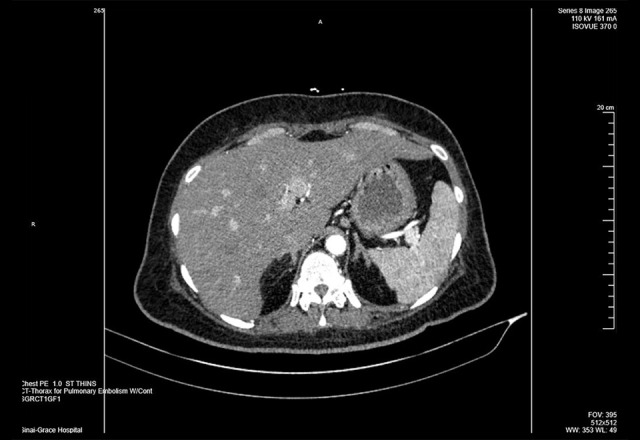
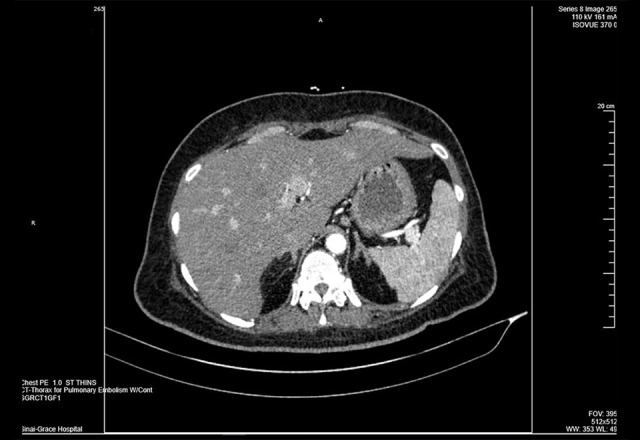
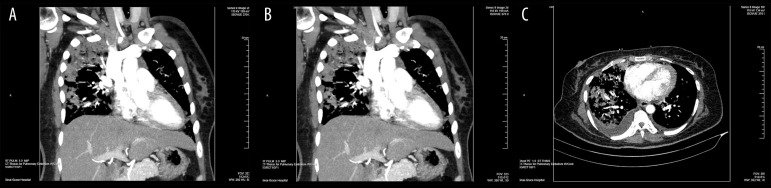
BACKGROUND Coronavirus disease 2019 (COVID-19) occurs because of a novel enveloped ribonucleic acid coronavirus called severe acute respiratory distress syndrome coronavirus-2 (SARS-CoV-2). One of the major reported complications of COVID-19 includes both arterial and venous thromboembolism (VTE). Here we describe a case of COVID-19 provoked pulmonary embolism in a young patient already receiving prophylactic treatment for VTE. CASE REPORT A 46-year-old female with past medical history of diabetes mellites, hypertension, and asthma presented in the emergency department (ED) with dyspnea requiring 6 liters per minute of oxygen on presentation. Her main complaints were cough and vomiting. In the ED, hypoxemia worsened, and she ultimately required endotracheal intubation. Labs were suggestive of diabetic ketoacidosis (DKA) and showed increase in all inflammatory markers and absolute lymphocytopenia. Chest X-ray showed bilateral diffuse patchy airspace opacities. Standard DKA management was started. She was also started on ceftriaxone, azithromycin, hydroxychloroquine, and subcutaneous heparin (5000 U every 8 h) for VTE prophylaxis. SARS-Cov2 reverse transcription-polymerase chain reaction returned positive. Ceftriaxone and azithromycin were discontinued the very next day because of low suspicion of bacterial infection while hydroxychloroquine was completed for 5 days. On the third day of admission, the patient self-extubated and was immediately placed on nonrebreather with spO₂ in low 90s. On the fourth day of admission, D-dimer came back 4.74 mg/L, which was elevated from a prior value, so computed tomography angiography of the lungs was done, which disclosed multiple emboli in the lungs. She was started on therapeutic doses of enoxaparin sodium, which was continued through her admission. She was switched to Apixaban on discharge. CONCLUSIONS The finding of the case suggested that low-molecular-weight heparin prophylaxis may not be sufficient to prevent VTE in COVID-19 pneumonia. Some of these patients may benefit from receiving prophylactic half doses or full doses of anticoagulants.
背景 2019 冠状病毒病(COVID-19)是由一种名为严重急性呼吸综合征冠状病毒 2(SARS-CoV-2)的新型包膜核糖核酸冠状病毒引起的。COVID-19 报告的主要并发症之一包括动脉和静脉血栓栓塞(VTE)。在此,我们描述一例在已接受 VTE 预防性治疗的年轻患者中由 COVID-19 引发的肺栓塞病例。病例报告 一名 46 岁女性,既往有糖尿病、高血压和哮喘病史,因呼吸困难就诊于急诊科(ED),就诊时需要每分钟 6 升氧气。她的主要症状是咳嗽和呕吐。在急诊科,低氧血症加重,最终需要气管插管。实验室检查提示糖尿病酮症酸中毒(DKA),所有炎症标志物升高且出现绝对淋巴细胞减少。胸部 X 光显示双侧弥漫性斑片状气腔模糊影。开始进行标准的 DKA 治疗。她还开始使用头孢曲松、阿奇霉素、羟氯喹和皮下肝素(每 8 小时 5000 单位)进行 VTE 预防。SARS-CoV-2 逆转录聚合酶链反应结果呈阳性。由于对细菌感染的怀疑较低,第二天停用了头孢曲松和阿奇霉素,而羟氯喹完成了 5 天的疗程。入院第三天,患者自行拔管,立即被置于非重复呼吸面罩吸氧,血氧饱和度在 90 年代初偏低。入院第四天,D - 二聚体升至 4.74mg/L,高于之前的值,因此进行了肺部计算机断层血管造影,结果显示肺部有多处栓塞。开始给予治疗剂量的依诺肝素钠,并在其住院期间持续使用。出院时改为阿哌沙班。结论 该病例的发现表明,低分子量肝素预防可能不足以预防 COVID-19 肺炎患者的 VTE。这些患者中的一些人可能受益于接受预防性半量或全量抗凝剂治疗。