Yoshino Yuta, Roy Bhaskar, Dwivedi Yogesh
Department of Psychiatry and Behavioral Neurobiology, University of Alabama at Birmingham, Birmingham, AL, 35294, USA.
Neuropsychopharmacology. 2021 Apr;46(5):900-910. doi: 10.1038/s41386-020-00861-y. Epub 2020 Sep 12.
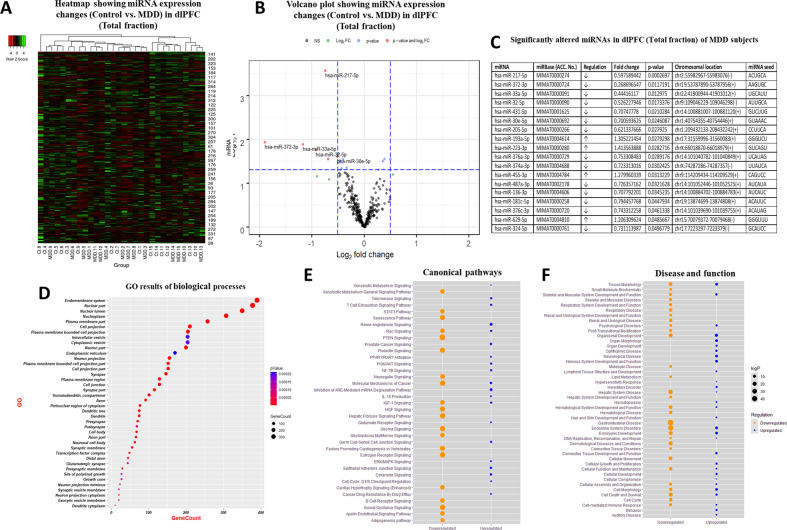
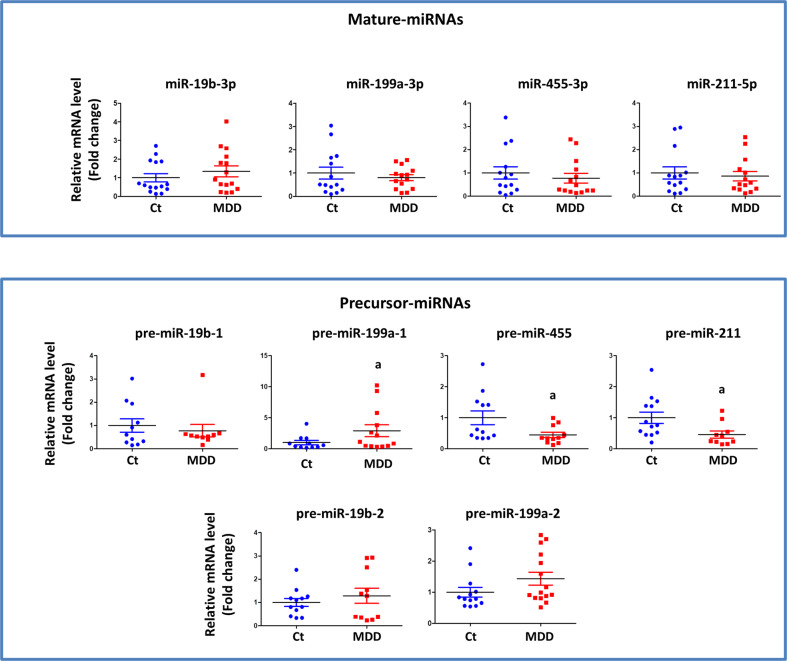
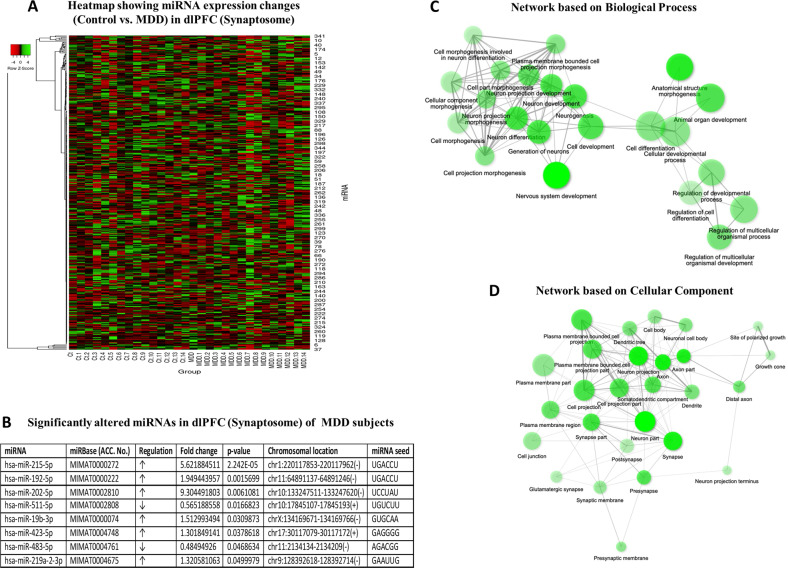
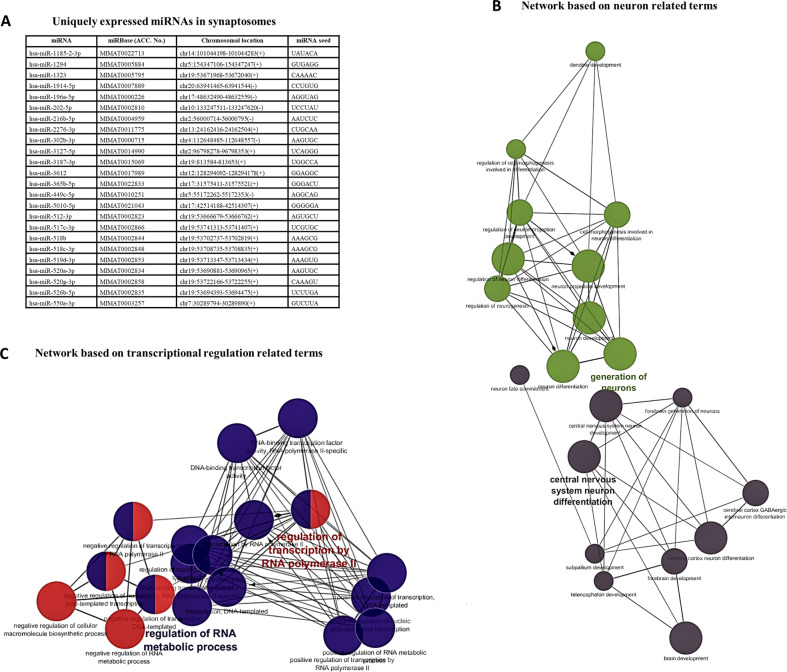
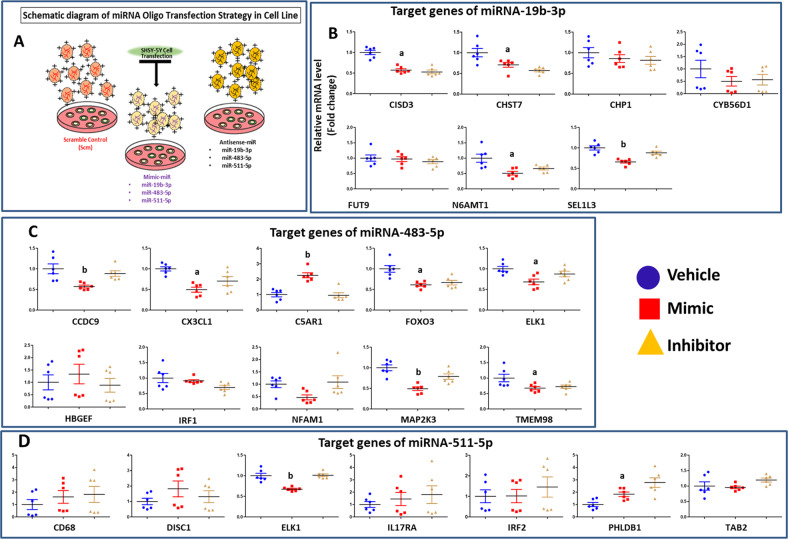
Altered synaptic plasticity is often associated with major depressive disorder (MDD). Disease-associated changes in synaptic functions are tightly correlated with altered microRNA (miRNA) expression. Here, we examined the role of miRNAs and their functioning at the synapse in MDD by examining miRNA processing machinery at synapse and sequencing miRNAs and analyzing their functions in synaptic and total tissue fractions obtained from dorsolateral prefrontal cortex (dlPFC) of 15 MDD and 15 matched non-psychiatric control subjects. A total of 333 miRNAs were reliably detected in the total tissue fraction. Multiple testing following the Benjamini-Hochberg false discovery rate [FDR] showed that 18 miRNAs were significantly altered (1 downregulated 4 up and 13 downregulated; p < 0.05) in MDD subjects. Out of 351 miRNAs reliably expressed in the synaptic fraction, 24 were uniquely expressed at synapse. In addition, 8 miRNAs (miR-215-5p, miR-192-5p, miR-202-5p, miR-19b-3p, miR-423-5p, miR-219a-2-3p; miR-511-5p, miR-483-5p showed significant (FDR corrected; p < 0.05) differential regulation in the synaptic fraction from dlPFC of MDD subjects. In vitro transfection studies and gene ontology revealed involvement of these altered miRNAs in synaptic plasticity, nervous system development, and neurogenesis. A shift in expression ratios (synaptic vs. total fraction) of miR-19b-3p, miR-376c-3p, miR-455-3p, and miR-337-3p were also noted in the MDD group. Moreover, an inverse relationship between the expression of precursor (pre-miR-19b-1, pre-miR-199a-1 and pre-miR-199a-2) and mature (miR-19b-3p, miR-199a-3p) miRNAs was found. Although not significantly, several miRNA processing enzymes (DROSHA [95%], DICER [17%], TARBP2 [38%]) showed increased expression patterns in MDD subjects. Our findings provide new insights into the understanding of the regulation of miRNAs at the synapse and their possible roles in MDD pathogenesis.
突触可塑性改变常与重度抑郁症(MDD)相关。与疾病相关的突触功能变化与微小RNA(miRNA)表达改变密切相关。在此,我们通过检查突触处的miRNA加工机制、对miRNA进行测序并分析其在从15名MDD患者和15名匹配的非精神疾病对照受试者的背外侧前额叶皮质(dlPFC)获得的突触和全组织部分中的功能,研究了miRNA及其在MDD突触处的作用。在全组织部分中可靠检测到总共333种miRNA。按照Benjamini-Hochberg错误发现率[FDR]进行的多重检验显示,MDD患者中有18种miRNA发生了显著改变(4种上调,13种下调;p<0.05)。在突触部分可靠表达的351种miRNA中,有24种在突触处独特表达。此外,8种miRNA(miR-215-5p、miR-192-5p、miR-202-5p、miR-19b-3p、miR-423-5p、miR-219a-2-3p;miR-511-5p、miR-483-5p)在MDD患者dlPFC的突触部分显示出显著的(FDR校正;p<0.05)差异调节。体外转染研究和基因本体分析表明,这些改变的miRNA参与了突触可塑性、神经系统发育和神经发生。在MDD组中还注意到miR-19b-3p、miR-376c-3p、miR-455-3p和miR-337-3p的表达比率(突触与全部分)发生了变化。此外,还发现前体(pre-miR-19b-1、pre-miR-199a-1和pre-miR-199a-2)和成熟(miR-19b-3p、miR-199a-3p)miRNA的表达之间存在负相关。虽然不显著,但几种miRNA加工酶(DROSHA[95%]、DICER[17%]、TARBP2[38%])在MDD患者中显示出表达增加的模式。我们的研究结果为理解突触处miRNA的调控及其在MDD发病机制中的可能作用提供了新的见解。