Department of Psychiatry and Behavioral Neurobiology, University of Alabama at Birmingham, Birmingham, AL, 35294, USA.
Department of Biology, University of Alabama at Birmingham, Birmingham, AL, 35294, USA.
Transl Psychiatry. 2021 Jan 22;11(1):73. doi: 10.1038/s41398-020-01159-9.
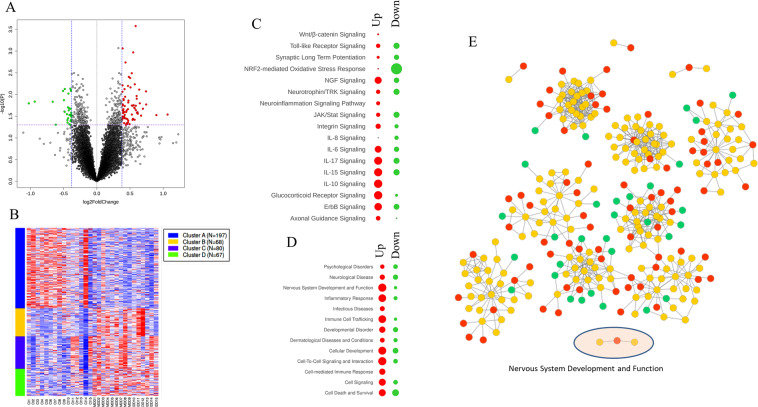
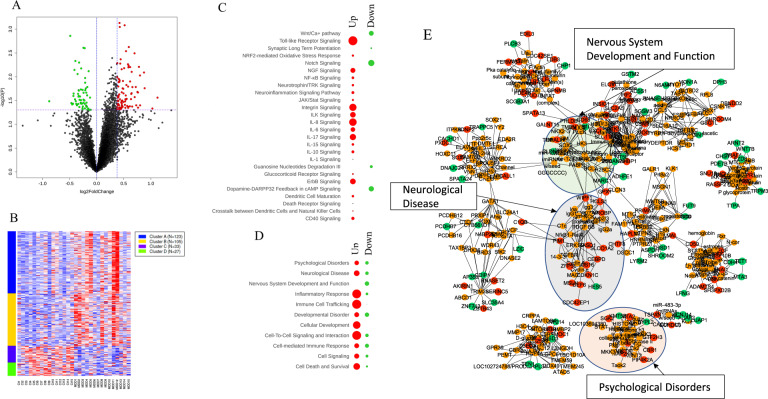
Disrupted synaptic plasticity is the hallmark of major depressive disorder (MDD), with accompanying changes at the molecular and cellular levels. Often, the maladaptive molecular changes at the synapse are the result of global transcriptional reprogramming dictated by activity-dependent synaptic modulation. Thus far, no study has directly studied the transcriptome-wide expression changes locally at the synapse in MDD brain. Here, we have examined altered synaptic transcriptomics and their functional relevance in MDD with a focus on the dorsolateral prefrontal cortex (dlPFC). RNA was isolated from total fraction and purified synaptosomes of dlPFC from well-matched 15 non-psychiatric controls and 15 MDD subjects. Transcriptomic changes in synaptic and total fractions were detected by next-generation RNA-sequencing (NGS) and analyzed independently. The ratio of synaptic/total fraction was estimated to evaluate a shift in gene expression ratio in MDD subjects. Bioinformatics and network analyses were used to determine the biological relevance of transcriptomic changes in both total and synaptic fractions based on gene-gene network, gene ontology (GO), and pathway prediction algorithms. A total of 14,005 genes were detected in total fraction. A total of 104 genes were differentially regulated (73 upregulated and 31 downregulated) in MDD group based on 1.3-fold change threshold and p < 0.05 criteria. In synaptosomes, out of 13,236 detectable genes, 234 were upregulated and 60 were downregulated (>1.3-fold, p < 0.05). Several of these altered genes were validated independently by a quantitative polymerase chain reaction (qPCR). GO revealed an association with immune system processes and cell death. Moreover, a cluster of genes belonged to the nervous system development, and psychological disorders were discovered using gene-gene network analysis. The ratio of synaptic/total fraction showed a shift in expression of 119 genes in MDD subjects, which were primarily associated with neuroinflammation, interleukin signaling, and cell death. Our results suggest not only large-scale gene expression changes in synaptosomes, but also a shift in the expression of genes from total to synaptic fractions of dlPFC of MDD subjects with their potential role in immunomodulation and cell death. Our findings provide new insights into the understanding of transcriptomic regulation at the synapse and their possible role in MDD pathogenesis.
突触可塑性障碍是重度抑郁症(MDD)的标志,伴随着分子和细胞水平的变化。通常,突触处的适应性分子变化是由活性依赖性突触调节决定的全局转录重编程的结果。到目前为止,还没有研究直接在 MDD 大脑的突触局部研究全转录组表达变化。在这里,我们研究了 MDD 中突触转录组的改变及其功能相关性,重点是背外侧前额叶皮层(dlPFC)。从 15 名非精神病对照和 15 名 MDD 患者的 dlPFC 总部分和纯化的突触体中分离 RNA。通过下一代 RNA 测序(NGS)检测突触和总部分的转录组变化,并分别进行分析。使用估计突触/总分数的比值来评估 MDD 患者中基因表达比值的变化。使用生物信息学和网络分析基于基因-基因网络、基因本体论(GO)和途径预测算法来确定总分数和突触分数中转录组变化的生物学相关性。在总分数中检测到 14005 个基因。基于 1.3 倍变化阈值和 p<0.05 标准,在 MDD 组中发现 104 个基因差异调节(73 个上调和 31 个下调)。在突触体中,在 13236 个可检测基因中,234 个上调,60 个下调(>1.3 倍,p<0.05)。这些改变的基因中的一些通过定量聚合酶链反应(qPCR)独立验证。GO 显示与免疫系统过程和细胞死亡有关。此外,使用基因-基因网络分析发现了一组属于神经系统发育和心理障碍的基因。在 MDD 患者中,突触/总分数的比值显示 119 个基因的表达发生了变化,这些基因主要与神经炎症、白细胞介素信号和细胞死亡有关。我们的结果不仅表明突触体中存在大规模的基因表达变化,而且表明 MDD 患者 dlPFC 的总分数到突触分数的基因表达发生了变化,它们可能在免疫调节和细胞死亡中发挥作用。我们的研究结果为理解突触转录组调节及其在 MDD 发病机制中的可能作用提供了新的见解。