Li Rong, Wang Yao, Chen Pei, Meng Jiamin, Zhang Hongbing
Department of Ophthalmology, The First Affiliated Hospital of Xi'an Medical University, Xi'an 710077, Shaanxi, PR China.
Department of Ophthalmology, Eye Institute of Shaanxi Province and Xi'an First Hospital, Xi'an 710002, Shaanxi, PR China.
Aging (Albany NY). 2020 Sep 13;12(17):17367-17379. doi: 10.18632/aging.103733.
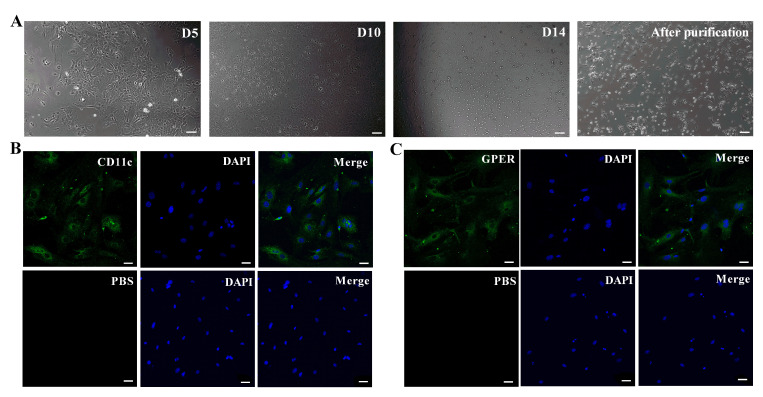
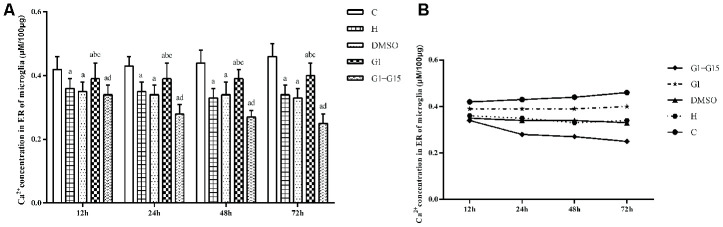
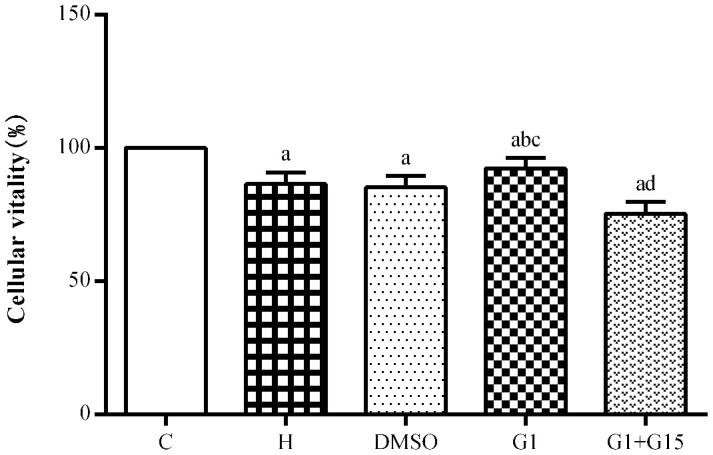
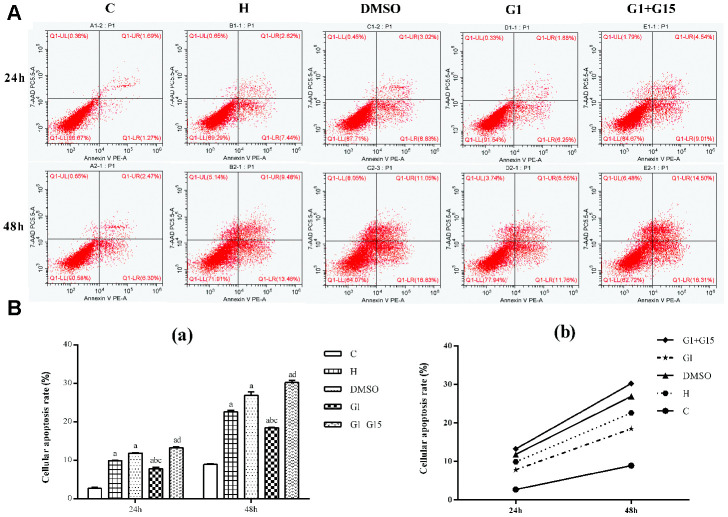
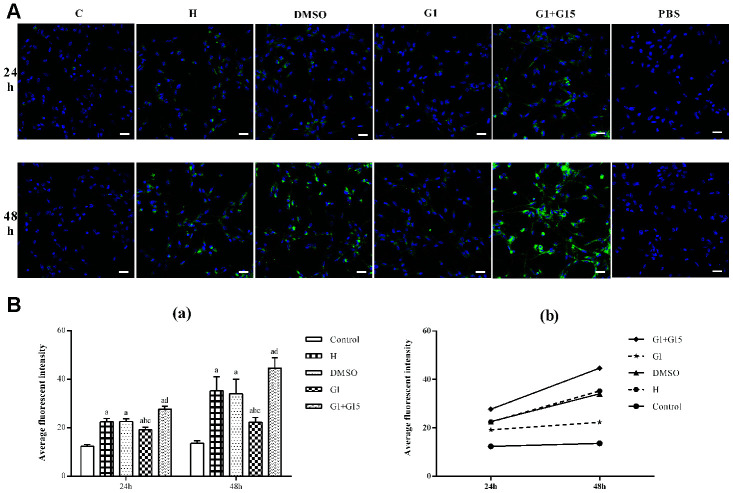
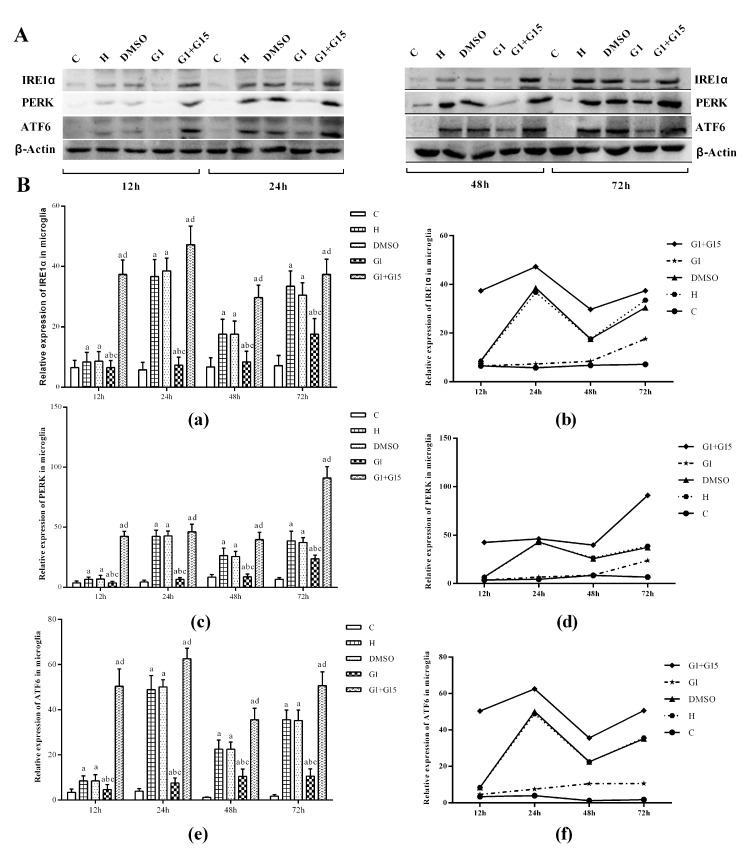
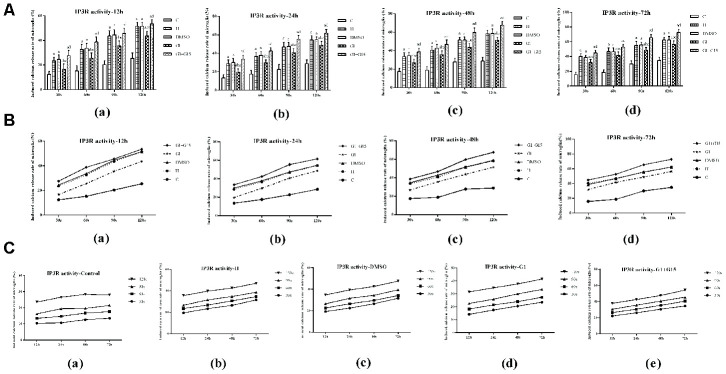
In this study, we investigated the effects of G-protein coupled estrogen receptor (GPER) activation in the early phase of retinopathy of prematurity (ROP) and its association with endoplasmic reticulum (ER) stress using primary murine retinal microglia as an experimental model. Fluorescence microscopy results show that the CD11c-positive primary retinal microglia cultured for 14 days were GPER-positive. GPER activation using GPER-agonist G-1 reduced autophagy and increased the viability of the hyperoxia-treated primary murine retinal microglia. Furthermore, GPER activation reduced the expression of ER stress-related proteins, IRE1α, PERK and ATF6 in the hyperoxia-treated primary murine retinal microglia compared to the corresponding controls. GPER activation significantly reduced a time-dependent increase in IP3R-dependent calcium release from the ER, thereby maintaining higher calcium levels in the ER of hyperoxia-treated primary retinal microglia. However, the protective effects of G-1 on the hyperoxia-treated primary retinal microglia were eliminated by inactivation of GPER using the GPER-antagonist, G-15. In conclusion, our study demonstrates that GPER activation enhances the survival of hyperoxia-treated primary retinal microglia by reducing ER stress. Our study demonstrates the therapeutic potential of GPER agonists such as G-1 in the early phase of ROP.
在本研究中,我们以原代小鼠视网膜小胶质细胞为实验模型,研究了G蛋白偶联雌激素受体(GPER)激活在早产儿视网膜病变(ROP)早期阶段的作用及其与内质网(ER)应激的关系。荧光显微镜检查结果显示,培养14天的CD11c阳性原代视网膜小胶质细胞为GPER阳性。使用GPER激动剂G-1激活GPER可减少自噬并提高高氧处理的原代小鼠视网膜小胶质细胞的活力。此外,与相应对照组相比,GPER激活降低了高氧处理的原代小鼠视网膜小胶质细胞中ER应激相关蛋白IRE1α、PERK和ATF6的表达。GPER激活显著降低了内质网中IP3R依赖性钙释放随时间的增加,从而在高氧处理的原代视网膜小胶质细胞的内质网中维持较高的钙水平。然而,使用GPER拮抗剂G-15使GPER失活后,G-1对高氧处理的原代视网膜小胶质细胞的保护作用被消除。总之,我们的研究表明,GPER激活通过减轻内质网应激来提高高氧处理的原代视网膜小胶质细胞的存活率。我们的研究证明了GPER激动剂如G-1在ROP早期阶段的治疗潜力。