Department of Pediatric Rheumatology, Dokuz Eylül University School of Medicine, İzmir, Turkey.
Department of Pediatric Rheumatology, Şanlıurfa Training and Research Hospital, Şanlıurfa, Turkey.
Balkan Med J. 2021 Jan;38(1):29-33. doi: 10.4274/balkanmedj.galenos.2020.2020.5.2205.220.
Colchicine is an anti-inflammatory agent used for preventing familial Mediterranean fever (FMF) attacks and amyloidosis. A significant number of patients are non-responsive or intolerant to the domestic drug colchicum dispert.
To compare the efficacy and side effects of colchicum dispert and colchicine opocalcium in children with FMF.
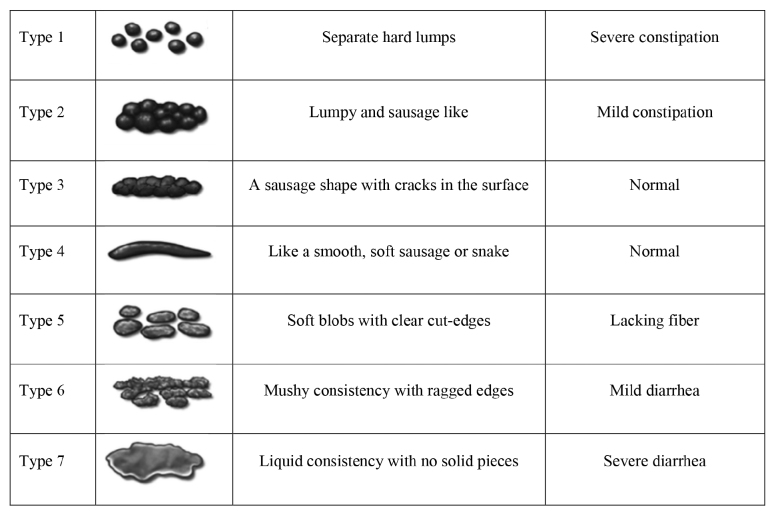
A total of 29 children with FMF who used colchicum dispert for at least 6 months initially and colchicine opocalcium for another consecutive 6 months were included. Sex and gender equity in research was considered. Clinical features, visual analog scale for pain scores, exercise-induced leg pain, and FMF severity scores with laboratory parameters were evaluated for both the treatment periods. Bristol stool chart and number of stools per 24 hours were recorded to compare the gastrointestinal side effects.
A total of 29 children with FMF who used colchicum dispert for at least 6 months initially and colchicine opocalcium for another consecutive 6 months were included. Sex and gender equity in research was considered. Clinical features, visual analog scale for pain scores, exercise-induced leg pain, and FMF severity scores with laboratory parameters were evaluated for both the treatment periods. Bristol stool chart and number of stools per 24 hours were recorded to compare the gastrointestinal side effects.
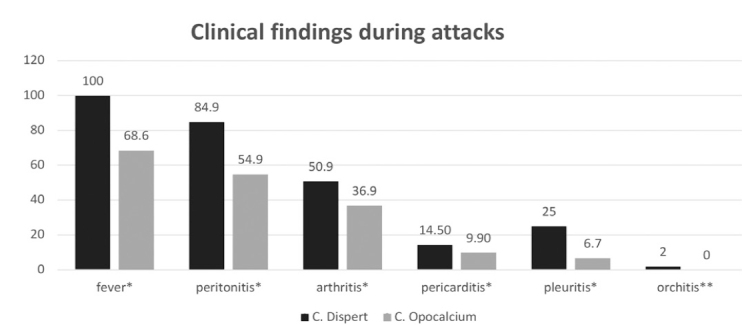
The major indication was non-responsiveness in 18 patients (62%) and intolerance in 11 patients (38%). Usage of colchicine opocalcium (significantly higher dosage than colchicum dispert) showed statistically significant beneficial effects on the number and duration of attacks, visual analog scale for pain, exercise-induced leg pain scores, and FMF severity scores (p<0.05 for each parameter). Bristol stool chart questionnaire scores decreased from 5.62±1.56 to 4.15±1.73 points, and the scores of daily stool number decreased from 0.46±0.894 to 0.03±0.118 points (p<0.05). There were 12 patients who benefited from the switch without a change in dosage, and the clinical features were significantly better with the colchicine opocalcium treatment.
Pediatric patients with FMF, who have active disease and/or gastrointestinal complaints during the use of colchicum dispert, may benefit from colchicine opocalcium.
秋水仙碱是一种用于预防家族性地中海热(FMF)发作和淀粉样变性的抗炎药。相当数量的患者对国产秋水仙素不耐受或无反应。
比较秋水仙素离散剂和秋水仙碱奥卡钙在 FMF 患儿中的疗效和副作用。
共纳入 29 例最初至少使用秋水仙素离散剂治疗 6 个月,然后连续使用秋水仙碱奥卡钙治疗 6 个月的 FMF 患儿。考虑了研究中的性别平等。在两个治疗期间评估了临床特征、疼痛视觉模拟评分、运动诱导的腿部疼痛和 FMF 严重程度评分与实验室参数。记录布里斯托尔粪便图表和每 24 小时的粪便次数,以比较胃肠道副作用。
共纳入 29 例最初至少使用秋水仙素离散剂治疗 6 个月,然后连续使用秋水仙碱奥卡钙治疗 6 个月的 FMF 患儿。考虑了研究中的性别平等。在两个治疗期间评估了临床特征、疼痛视觉模拟评分、运动诱导的腿部疼痛和 FMF 严重程度评分与实验室参数。记录布里斯托尔粪便图表和每 24 小时的粪便次数,以比较胃肠道副作用。
主要指征为 18 例(62%)无反应和 11 例(38%)不耐受。秋水仙碱奥卡钙(剂量明显高于秋水仙素离散剂)的使用在发作次数和持续时间、疼痛视觉模拟评分、运动诱导的腿部疼痛评分和 FMF 严重程度评分方面均有统计学显著的有益效果(每个参数均为 p<0.05)。布里斯托尔粪便图表问卷评分从 5.62±1.56 降至 4.15±1.73 分,每日粪便次数评分从 0.46±0.894 降至 0.03±0.118 分(p<0.05)。有 12 例患者在不改变剂量的情况下受益,且秋水仙碱奥卡钙治疗的临床特征明显更好。
在使用秋水仙素离散剂时患有活动性疾病和/或胃肠道不适的 FMF 儿科患者可能受益于秋水仙碱奥卡钙。