Lee Songhyun, Shin Seung-Jae, Baek Hoyong, Choi Yeonwoo, Hyun Kyunglim, Seo Myungeun, Kim Kyunam, Koh Dong-Yeun, Kim Hyungjun, Choi Minkee
Department of Chemical and Biomolecular Engineering, Korea Advanced Institute of Science and Technology (KAIST), Daejeon 34141, Republic of Korea.
Department of Chemistry, Korea Advanced Institute of Science and Technology (KAIST), Daejeon 34141, Republic of Korea.
Sci Adv. 2020 Jul 8;6(28):eabb7369. doi: 10.1126/sciadv.abb7369. eCollection 2020 Jul.
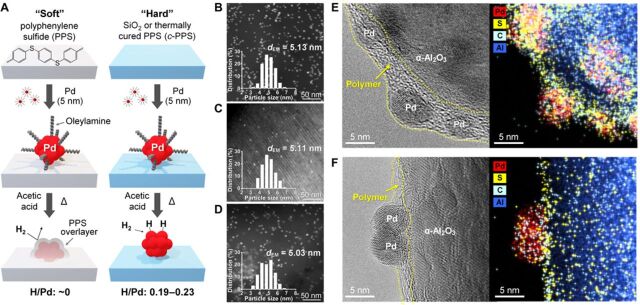
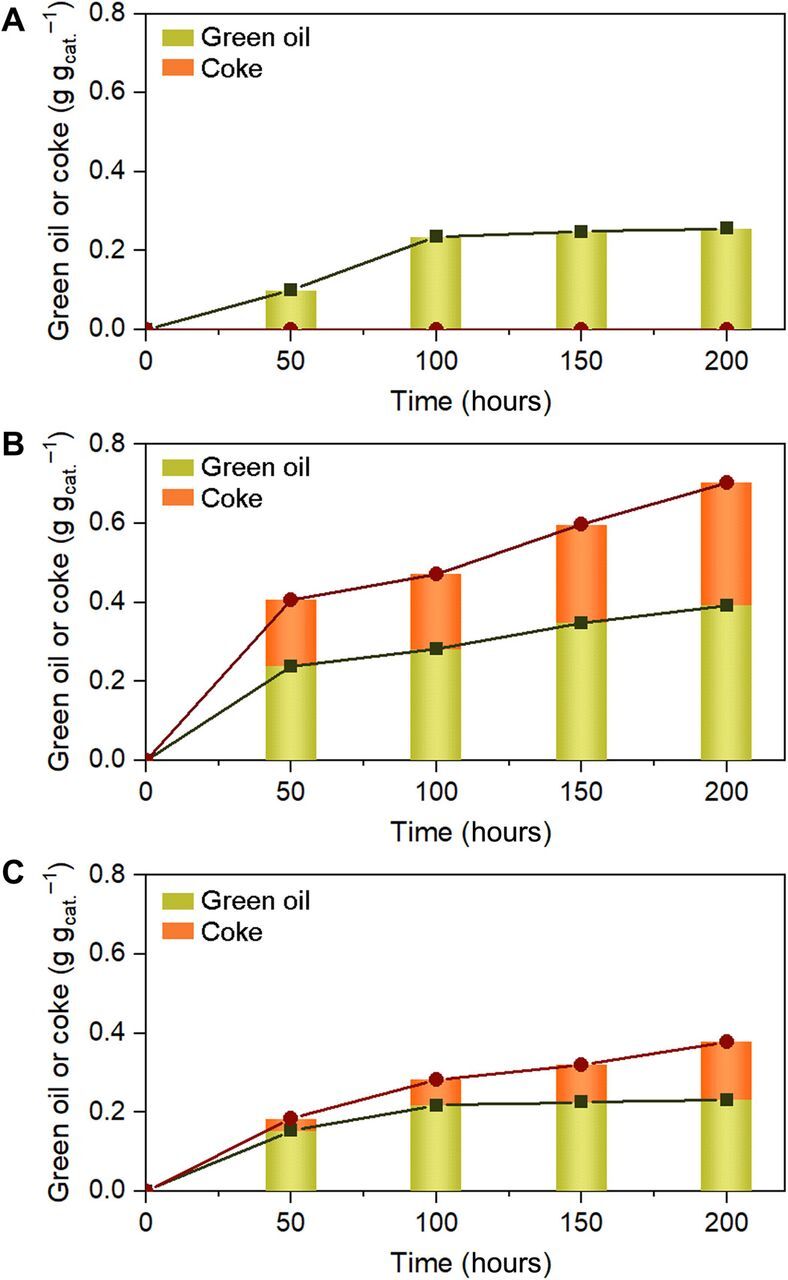
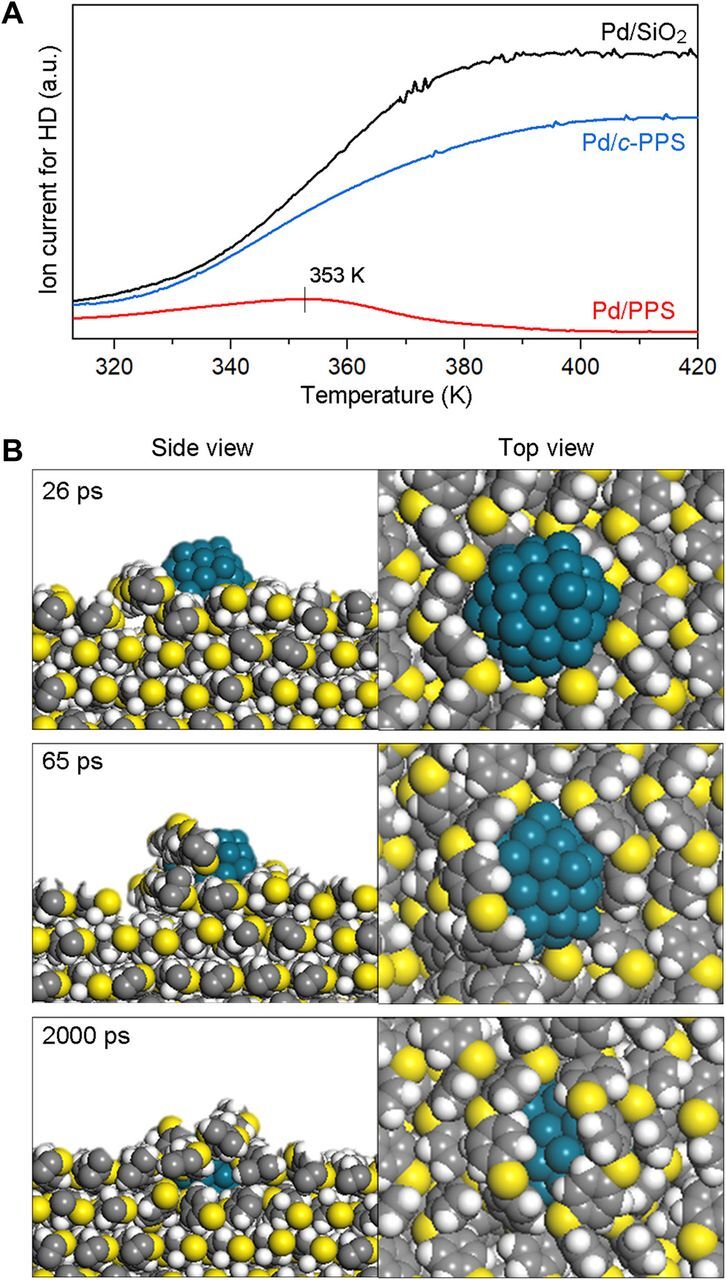
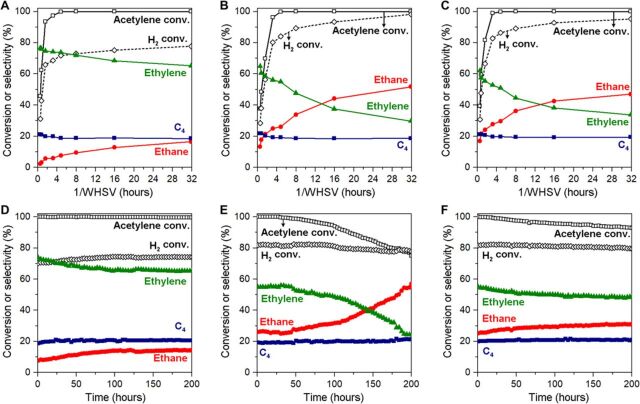
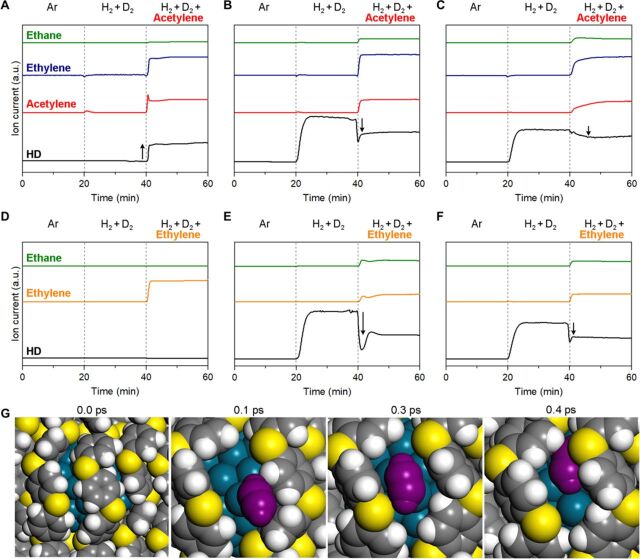
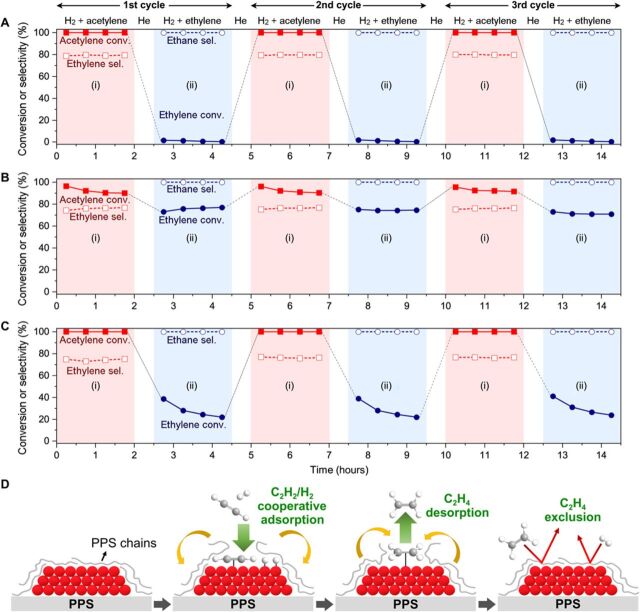
Metal catalysts are generally supported on hard inorganic materials because of their high thermochemical stabilities. Here, we support Pd catalysts on a thermochemically stable but "soft" engineering plastic, polyphenylene sulfide (PPS), for acetylene partial hydrogenation. Near the glass transition temperature (~353 K), the mobile PPS chains cover the entire surface of Pd particles via strong metal-polymer interactions. The Pd-PPS interface enables H activation only in the presence of acetylene that has a strong binding affinity to Pd and thus can disturb the Pd-PPS interface. Once acetylene is hydrogenated to weakly binding ethylene, re-adsorption of PPS on the Pd surface repels ethylene before it is further hydrogenated to ethane. The Pd-PPS interaction enables selective partial hydrogenation of acetylene to ethylene even in an ethylene-rich stream and suppresses catalyst deactivation due to coke formation. The results manifest the unique possibility of harnessing dynamic metal-polymer interaction for designing chemoselective and long-lived catalysts.
由于具有高热化学稳定性,金属催化剂通常负载在硬质无机材料上。在此,我们将钯催化剂负载在一种热化学稳定但“柔软”的工程塑料——聚苯硫醚(PPS)上,用于乙炔部分加氢反应。在接近玻璃化转变温度(约353K)时,可移动的PPS链通过强金属-聚合物相互作用覆盖钯颗粒的整个表面。钯-聚苯硫醚界面仅在乙炔存在时才能够实现氢活化,因为乙炔对钯具有很强的结合亲和力,因此会干扰钯-聚苯硫醚界面。一旦乙炔加氢生成弱结合的乙烯,PPS在钯表面的再吸附会在乙烯进一步加氢生成乙烷之前将其排斥。钯-聚苯硫醚相互作用即使在富含乙烯的物流中也能使乙炔选择性地部分加氢生成乙烯,并抑制由于积炭形成导致的催化剂失活。这些结果表明利用动态金属-聚合物相互作用设计化学选择性和长寿命催化剂具有独特的可能性。