Hynes W F, Pepona M, Robertson C, Alvarado J, Dubbin K, Triplett M, Adorno J J, Randles A, Moya M L
Materials Engineering Division, Lawrence Livermore National Laboratory, Livermore, CA 94550, USA.
Department of Biomedical Engineering, Duke University, Durham, NC 27708, USA.
Sci Adv. 2020 Aug 26;6(35):eabb3308. doi: 10.1126/sciadv.abb3308. eCollection 2020 Aug.
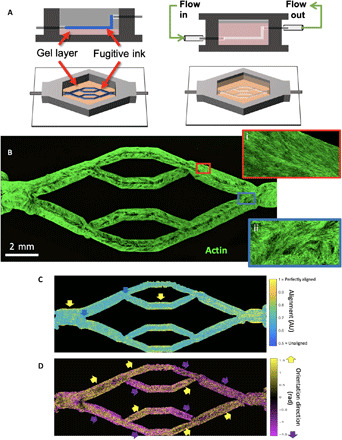
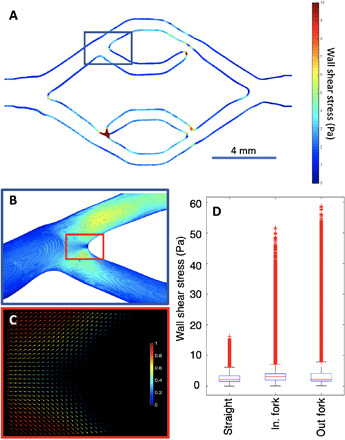
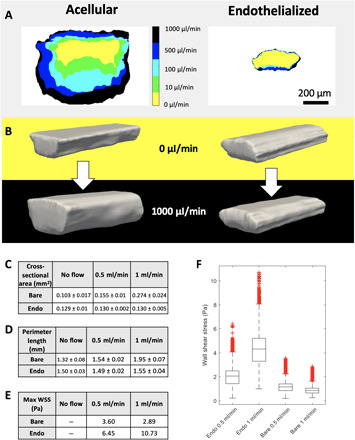
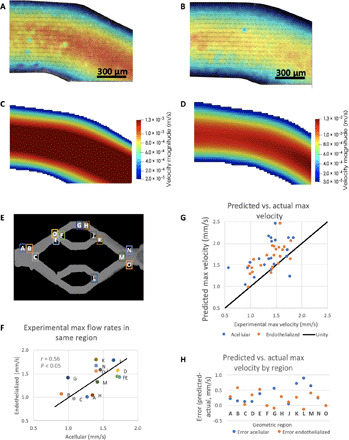
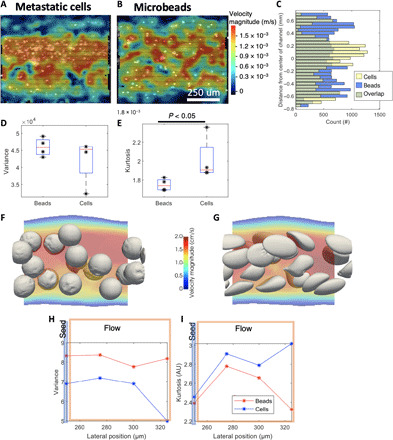
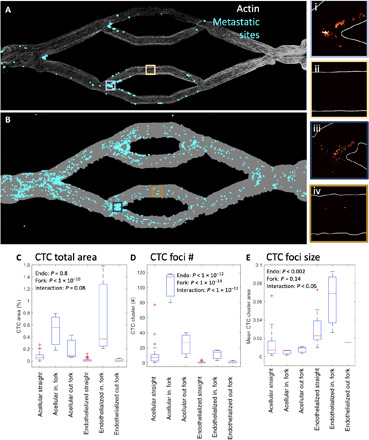
Understanding the dynamics of circulating tumor cell (CTC) behavior within the vasculature has remained an elusive goal in cancer biology. To elucidate the contribution of hydrodynamics in determining sites of CTC vascular colonization, the physical forces affecting these cells must be evaluated in a highly controlled manner. To this end, we have bioprinted endothelialized vascular beds and perfused these constructs with metastatic mammary gland cells under physiological flow rates. By pairing these in vitro devices with an advanced computational flow model, we found that the bioprinted analog was readily capable of evaluating the accuracy and integrated complexity of a computational flow model, while also highlighting the discrete contribution of hydrodynamics in vascular colonization. This intersection of these two technologies, bioprinting and computational simulation, is a key demonstration in the establishment of an experimentation pipeline for the understanding of complex biophysical events.
了解循环肿瘤细胞(CTC)在脉管系统中的行为动态一直是癌症生物学中一个难以实现的目标。为了阐明流体动力学在确定CTC血管定植部位方面的作用,必须以高度可控的方式评估影响这些细胞的物理力。为此,我们通过生物打印构建了内皮化血管床,并在生理流速下用转移性乳腺细胞灌注这些构建体。通过将这些体外装置与先进的计算流动模型相结合,我们发现生物打印的类似物能够轻松评估计算流动模型的准确性和综合复杂性,同时还突出了流体动力学在血管定植中的离散作用。生物打印和计算模拟这两种技术的交叉,是建立用于理解复杂生物物理事件的实验管道的关键例证。