Department of Gastrointestinal Surgery, West China Hospital, Sichuan University, Chengdu, China.
Department of Oral and Maxillofacial Surgery, West China Hospital of Stomatology, Sichuan University, Chengdu, China.
Cancer Med. 2020 Nov;9(21):7964-7978. doi: 10.1002/cam4.3428. Epub 2020 Sep 13.
The purpose of this umbrella review was to assess the associations between sarcopenia and adverse health-related outcomes.
An umbrella review of meta-analyses of observational studies.
Patients with sarcopenia and controls without sarcopenia were included.
The PubMed, Web of Science and Embase were searched for relevant systematic review and meta-analysis. AMSTAR and GRADE system were used for methodological quality and evidence quality assessments, respectively.
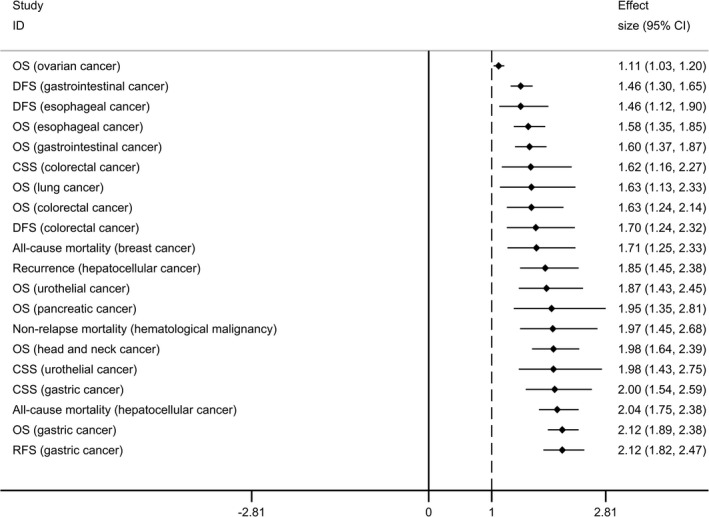
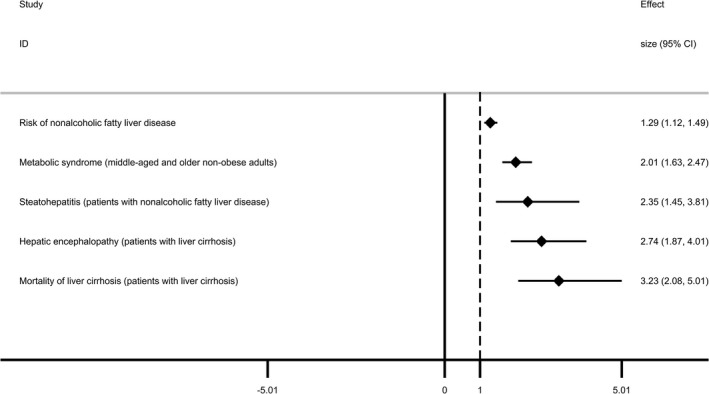
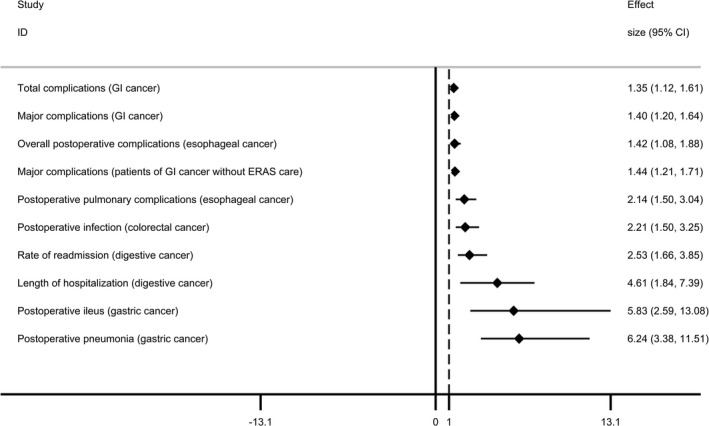
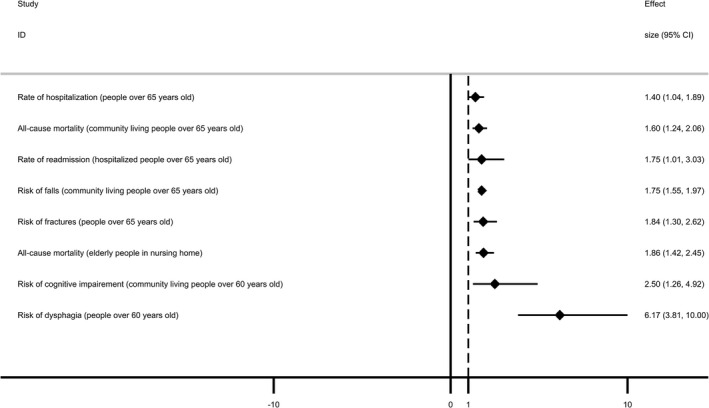
Totally 54 outcomes extracted from 30 meta-analyses were analyzed. Twenty out of 21 prognostic outcomes indicated that sarcopenia was significantly associated with poorer prognosis of gastric cancer, hepatocellular cancer, urothelial cancer, head and neck cancer, hematological malignancy, pancreatic cancer, breast cancer, colorectal cancer, lung cancer, esophageal cancer, and ovarian cancer. Besides, 10 out of 16 postoperative outcomes suggested that sarcopenia significantly increased the risk of multiple postoperative complications and prolonged the length of hospitalization of patients with digestive cancer. In age-related outcomes, sarcopenia significantly increased the risk of dysphagia, cognitive impairment, fractures, falls, hospitalization, and all-cause mortality of elderly populations. Moreover, sarcopenia was also associated with higher level of albuminuria, risk of depression, and several metabolic diseases.
Sarcopenia significantly affected a wide range of adverse health-related outcomes, particularly in patients of tumor and elderly populations. Because evidences of most outcomes were rated as "low" and "very low," more prospective cohort studies are required in the future.
本次伞式综述旨在评估肌少症与不良健康相关结局之间的关联。
对观察性研究的荟萃分析进行伞式综述。
纳入肌少症患者和无肌少症对照者。
通过 PubMed、Web of Science 和 Embase 检索相关的系统评价和荟萃分析。分别采用 AMSTAR 和 GRADE 系统对方法学质量和证据质量进行评估。
从 30 项荟萃分析中提取了 54 项结局进行分析。21 项预后结局中的 20 项表明肌少症与胃癌、肝细胞癌、膀胱癌、头颈部癌、血液恶性肿瘤、胰腺癌、乳腺癌、结直肠癌、肺癌、食管癌和卵巢癌的预后较差显著相关。此外,16 项术后结局中的 10 项表明肌少症显著增加了消化系统癌症患者多种术后并发症的风险并延长了住院时间。在与年龄相关的结局中,肌少症显著增加了老年人发生吞咽困难、认知障碍、骨折、跌倒、住院和全因死亡率的风险。此外,肌少症还与更高水平的白蛋白尿、抑郁风险和几种代谢疾病相关。
肌少症显著影响广泛的不良健康相关结局,尤其是在肿瘤患者和老年人群中。由于大多数结局的证据质量被评为“低”和“极低”,未来需要更多的前瞻性队列研究。