Department of Pediatrics, Medical College of Wisconsin, Milwaukee, WI.
Pediatrics, Ann & Robert H. Lurie Children's Hospital of Chicago, Northwestern University Feinberg School of Medicine, Chicago, IL.
Ann Emerg Med. 2020 Sep;76(3S):S6-S11. doi: 10.1016/j.annemergmed.2020.08.006.
The National Heart, Lung, and Blood Institute evidence-based guidelines for timeliness of opioid administration for sickle cell disease (SCD) pain crises recommend an initial opioid within 1 hour of arrival, with subsequent dosing every 30 minutes until pain is controlled. No multisite studies have evaluated guideline adherence, to our knowledge. Our objective was to determine guideline adherence across a multicenter network.
We conducted a multiyear cross-sectional analysis of children with SCD who presented between January 1, 2016, and December 31, 2018, to 7 emergency departments (EDs) within the Pediatric Emergency Care Applied Research Network. Visits for uncomplicated pain crisis were included, defined with an International Classification of Diseases, Ninth Revision (ICD-9) and ICD-10 code for SCD crisis and receipt of an opioid, excluding visits with other SCD complications or temperature exceeding 38.5°C (101.3°F). Times were extracted from the electronic record. Guideline adherence was assessed across sites and calendar years.
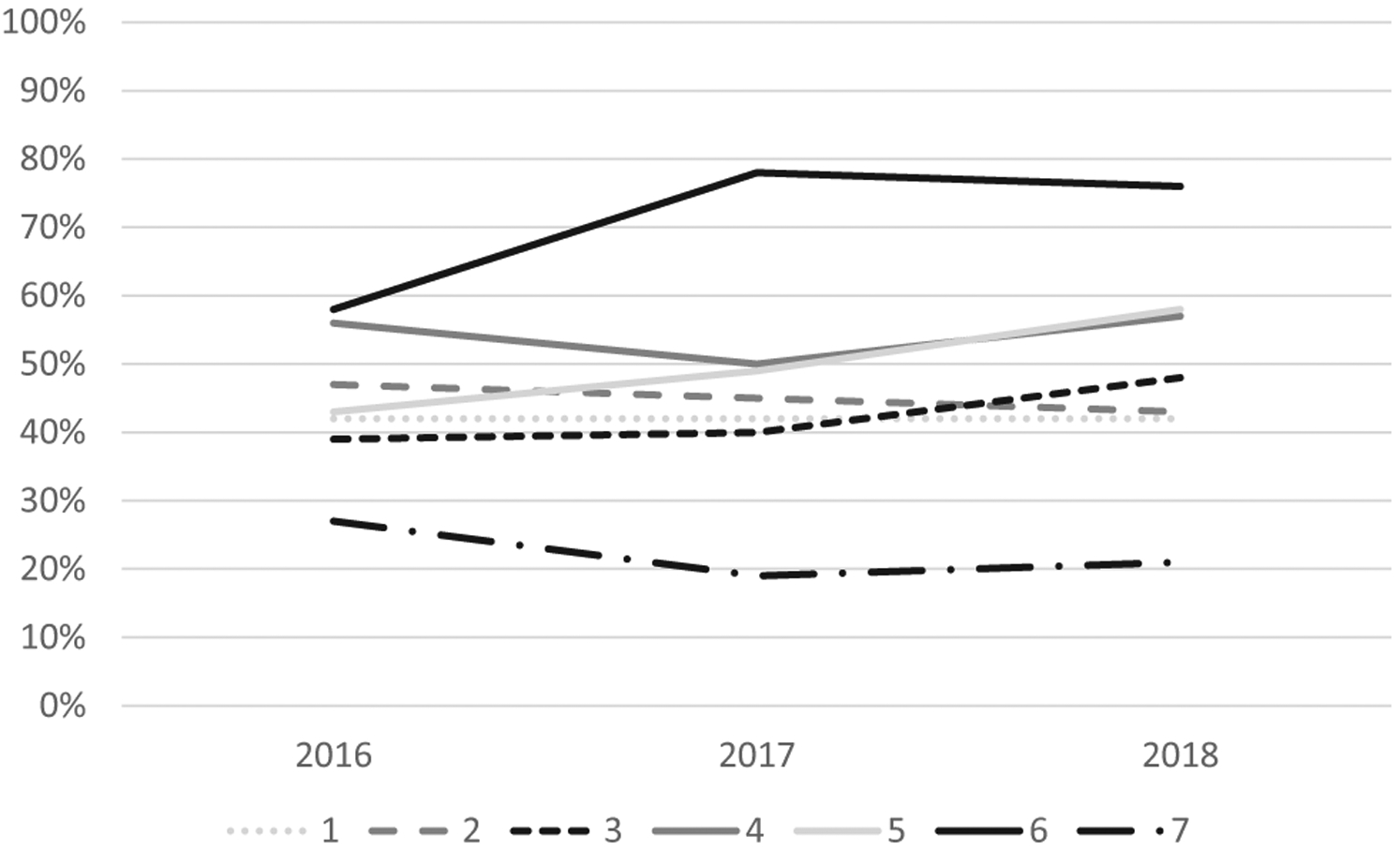
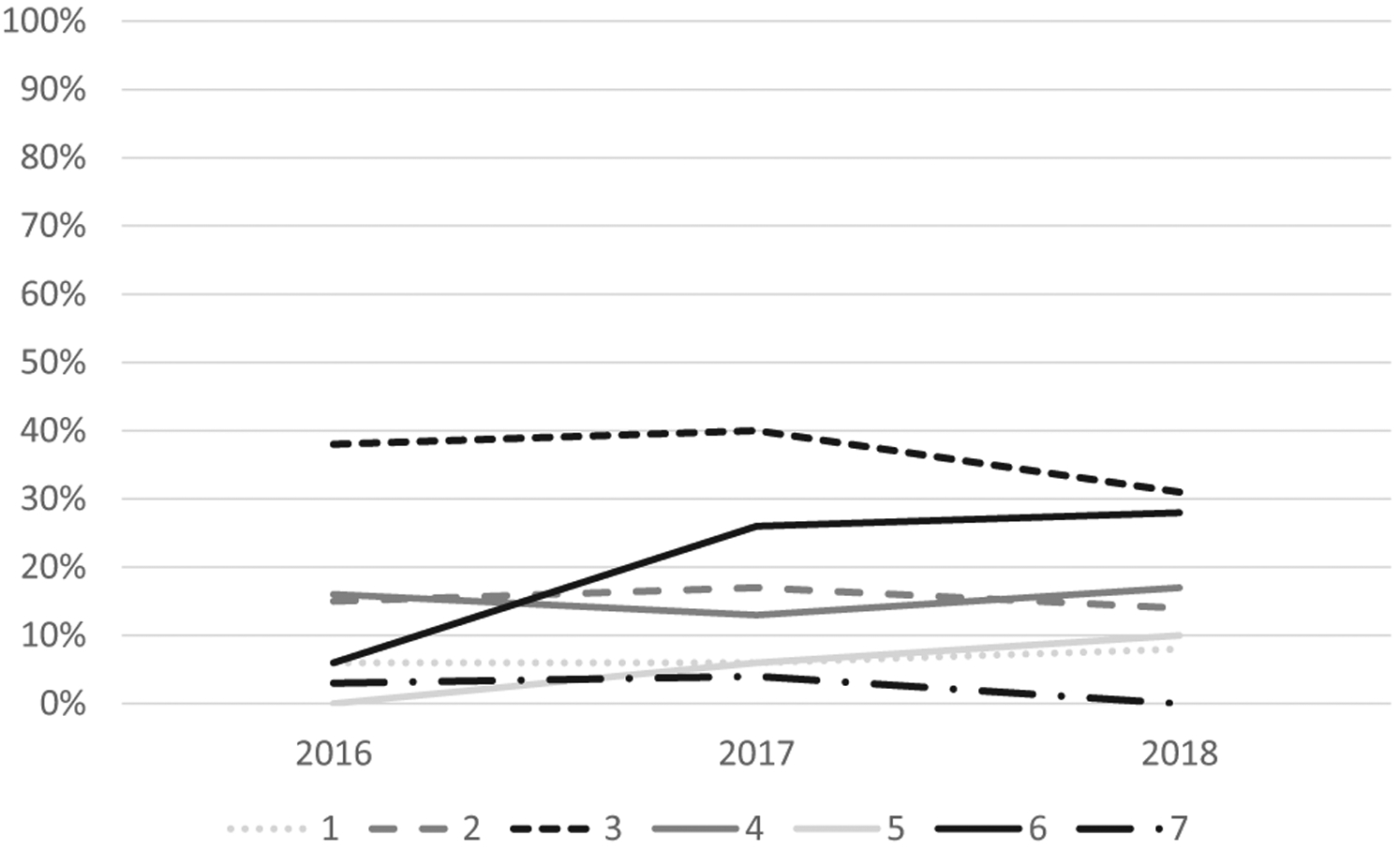
A total of 4,578 visits were included. The median time to first opioid receipt was 62 minutes (interquartile range 42 to 93 minutes); between the first and second opioid receipt, 60 minutes (interquartile range 39 to 93 minutes). Overall, 48% of visits (95% confidence interval 47% to 50%) were guideline adherent for first opioid. Of 3,538 visits with a second opioid, 15% (95% confidence interval 14% to 16%) were guideline adherent. Site variation in adherence existed for time to first opioid (range 22% to 70%) and time between first and second opioid (range 2% to 36%; both P<.001). There was no change in timeliness to first dose or time between doses across years (P>.05 for both).
Guideline adherence for timeliness of SCD treatment is poor, with half of visits adherent for time to first opioid and one seventh adherent for second dose. Dissemination and implementation research/quality improvement efforts are critical to improve care across EDs.
美国国家心肺血液研究所(National Heart,Lung,and Blood Institute)针对镰状细胞病(sickle cell disease,SCD)疼痛危象的阿片类药物给药及时性的循证指南建议,在到达后 1 小时内给予初始阿片类药物,随后每 30 分钟给予一次,直至疼痛得到控制。据我们所知,还没有多中心研究评估过该指南的遵循情况。我们的目的是在多中心网络中确定指南的遵循情况。
我们对 2016 年 1 月 1 日至 2018 年 12 月 31 日期间在儿科急诊护理应用研究网络(Pediatric Emergency Care Applied Research Network)内的 7 家急诊部就诊的患有 SCD 的儿童进行了多年的横断面分析。纳入单纯疼痛危象就诊,其通过国际疾病分类,第 9 版(International Classification of Diseases,Ninth Revision,ICD-9)和 ICD-10 编码为 SCD 危象并接受阿片类药物治疗来定义,不包括伴有其他 SCD 并发症或体温超过 38.5°C(101.3°F)的就诊。时间从电子病历中提取。评估了各个站点和历年的指南遵守情况。
共纳入 4578 次就诊。首次接受阿片类药物的中位数时间为 62 分钟(四分位距 42 至 93 分钟);在第一次和第二次接受阿片类药物之间,中位数时间为 60 分钟(四分位距 39 至 93 分钟)。总体而言,48%(95%置信区间 47%至 50%)的就诊符合首次接受阿片类药物的时间指南。在接受第二次阿片类药物的 3538 次就诊中,15%(95%置信区间 14%至 16%)符合指南。首次接受阿片类药物和首次与第二次接受阿片类药物之间的时间(范围 22%至 70%)存在站点差异(均 P<.001)。在过去几年中,首次剂量或两次剂量之间的及时性没有变化(两者均 P>.05)。
SCD 治疗及时性的指南遵守情况较差,只有一半的就诊符合首次接受阿片类药物的时间指南,只有七分之一的就诊符合第二次接受阿片类药物的时间指南。传播和实施研究/质量改进工作对于改善急诊室的护理至关重要。