Zheng Biao, Qu Jianhua, Ohuchida Kenoki, Feng Haimin, Chong Stephen Jun Fei, Yan Zilong, Piao Yicui, Liu Peng, Sheng Nan, Eguchi Daiki, Ohtsuka Takao, Mizumoto Kazuhiro, Liu Zhong, Pervaiz Shazib, Gong Peng, Nakamura Masafumi
Department of General Surgery, Shenzhen University General Hospital / Shenzhen University Clinical Medical Academy, Shenzhen, Guangdong 518055, China.
Department of Surgery and Oncology, Graduate School of Medical Sciences, Kyushu University, Fukuoka 812-8582, Japan.
Theranostics. 2020 Aug 13;10(22):10274-10289. doi: 10.7150/thno.47001. eCollection 2020.
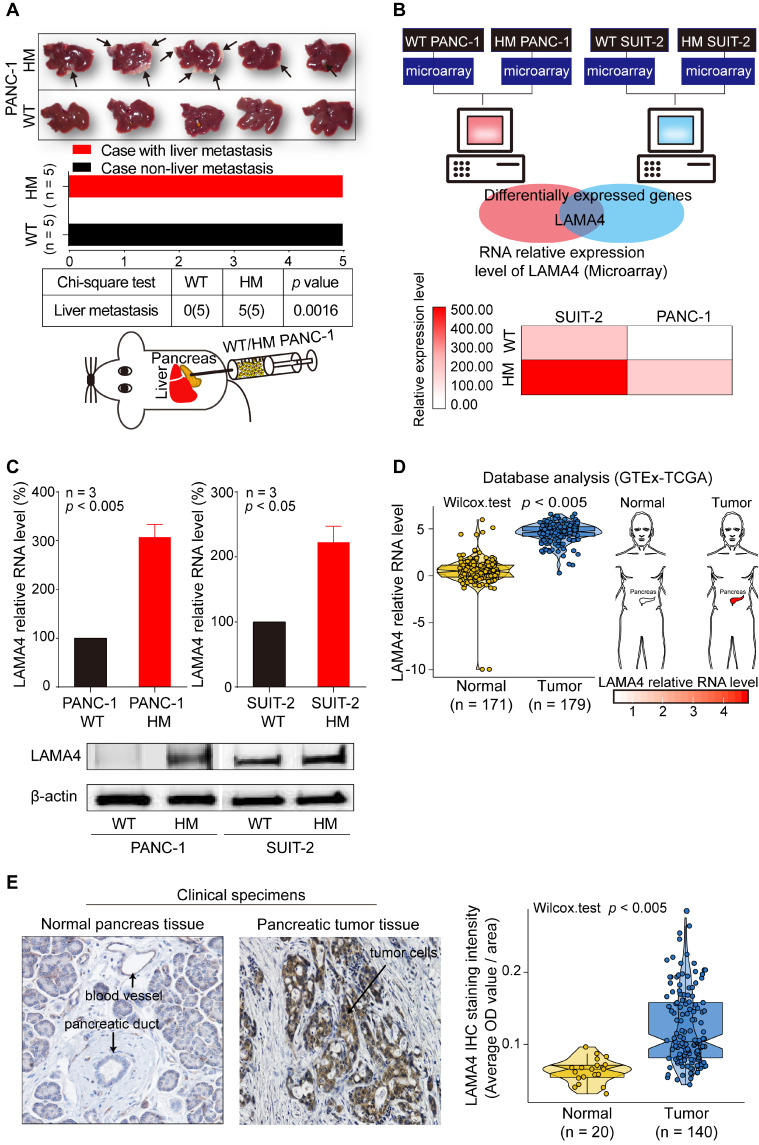
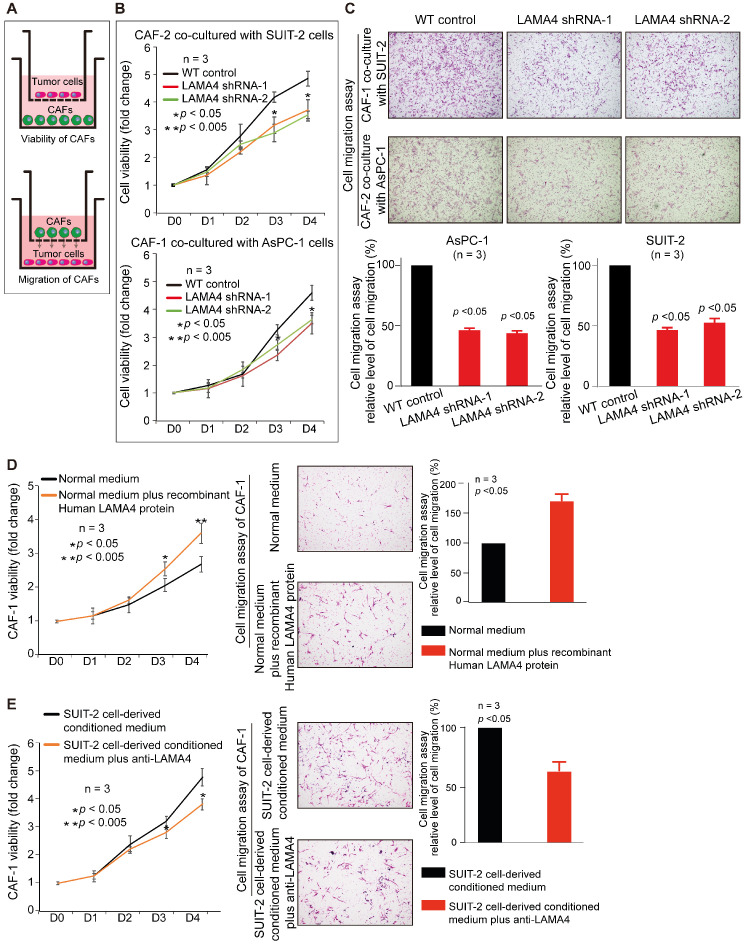
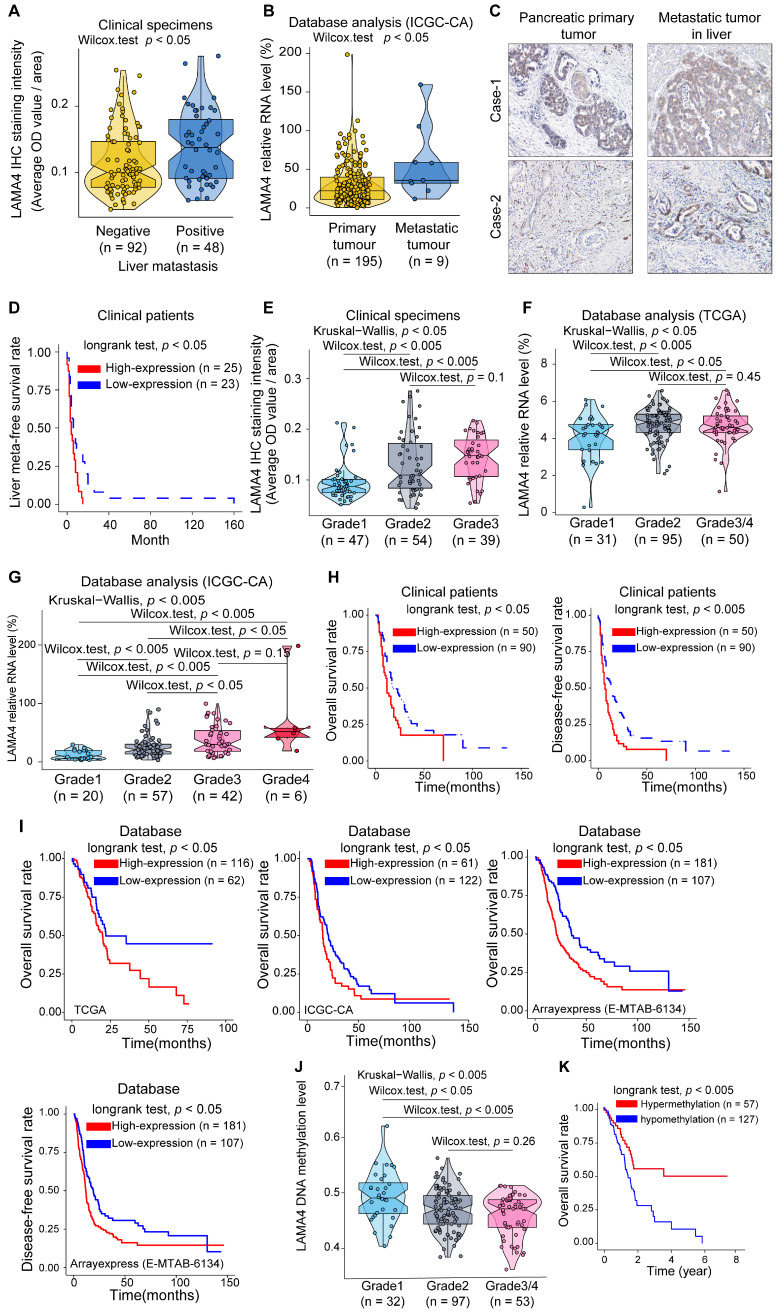
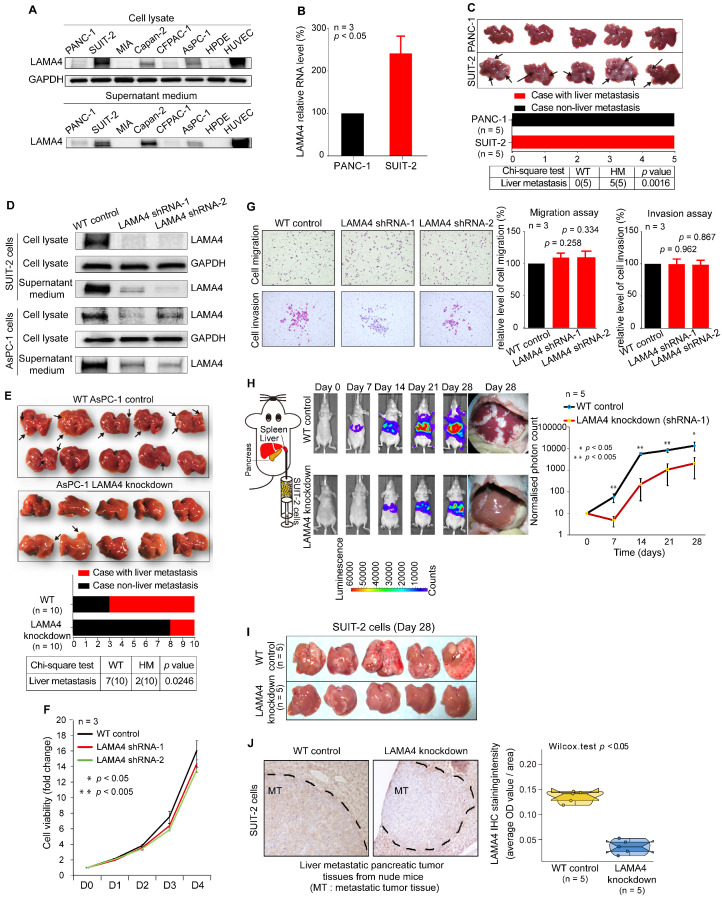
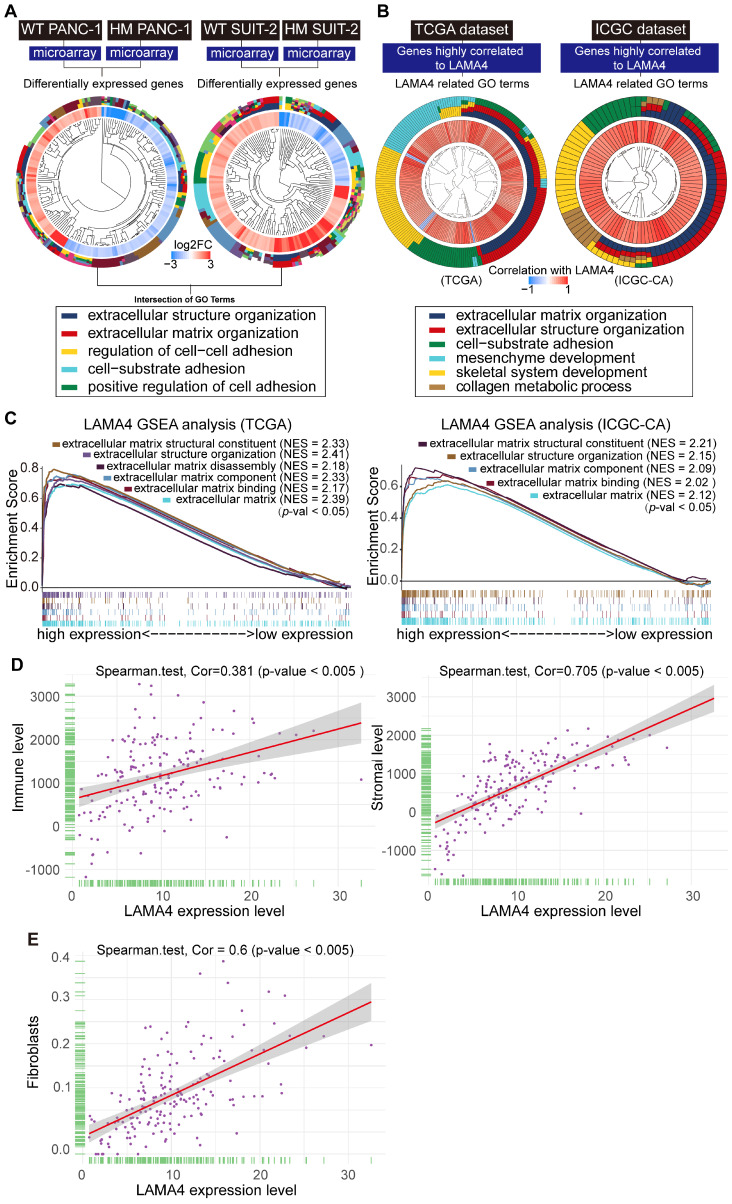
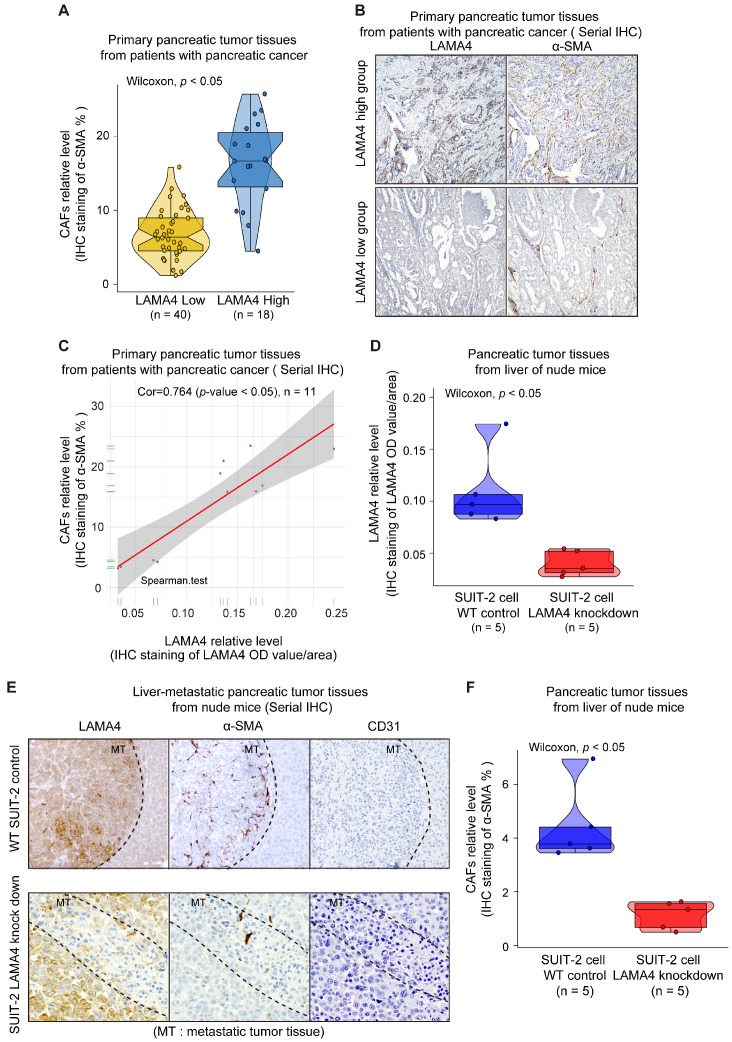
Pancreatic cancer is one of the most difficult cancers to manage and its poor prognosis stems from the lack of a reliable early disease biomarker coupled with its highly metastatic potential. Liver metastasis accounts for the high mortality rate in pancreatic cancer. Therefore, a better understanding of the mechanism(s) underlying the acquisition of the metastatic potential in pancreatic cancer is highly desirable. Microarray analysis in wild-type and highly liver metastatic human pancreatic cancer cell lines was performed to identify gene expression signatures that underlie the metastatic process. We validated our findings in patient samples, nude mice, cell lines and database analysis. We identified a metastasis-related gene, laminin subunit alpha 4 (), that was upregulated in highly liver metastatic human pancreatic cancer cell lines. Downregulation of LAMA4 reduced the liver metastatic ability of pancreatic cancer cells . Furthermore, LAMA4 expression was positively correlated with tumor severity and analyses revealed that LAMA4 was associated with altered tumor microenvironment. In particular, our and i results showed that LAMA4 expression was highly correlated with cancer-associated fibroblasts (CAFs) level which may contribute to pancreatic cancer metastasis. We further found that LAMA4 had a positive effect on the recruitment and activity of CAFs. These data provide evidence for LAMA4 as a possible biomarker of disease progression and poor prognosis in pancreatic cancer. Our findings indicate that LAMA4 may contribute to pancreatic cancer metastasis via recruitment or activation of CAFs.
胰腺癌是最难治疗的癌症之一,其预后较差源于缺乏可靠的早期疾病生物标志物以及其高度转移潜能。肝转移是胰腺癌高死亡率的原因。因此,非常需要更好地了解胰腺癌转移潜能获得的潜在机制。对野生型和高肝转移潜能的人胰腺癌细胞系进行微阵列分析,以确定转移过程背后的基因表达特征。我们在患者样本、裸鼠、细胞系和数据库分析中验证了我们的发现。我们鉴定出一个与转移相关的基因,层粘连蛋白α4亚基(LAMA4),其在高肝转移潜能的人胰腺癌细胞系中上调。下调LAMA4可降低胰腺癌细胞的肝转移能力。此外,LAMA4表达与肿瘤严重程度呈正相关,分析显示LAMA4与肿瘤微环境改变有关。特别是,我们的体内和体外结果表明,LAMA4表达与癌症相关成纤维细胞(CAF)水平高度相关,这可能促成胰腺癌转移。我们进一步发现,LAMA4对CAF的募集和活性有积极作用。这些数据为LAMA4作为胰腺癌疾病进展和预后不良的可能生物标志物提供了证据。我们的研究结果表明,LAMA4可能通过募集或激活CAF促成胰腺癌转移。