Department of Gynecology and Obstetrics, Ludwig Maximilian University, Maistraße 11, 80337, Munich, Germany.
Department of Gynecology and Obstetrics, University Hospital Graz, Auenbruggerplatz 14/1, 8036, Graz, Austria.
Arch Gynecol Obstet. 2021 Jan;303(1):217-230. doi: 10.1007/s00404-020-05793-y. Epub 2020 Sep 14.
Circulating tumor cells (CTC) in the peripheral blood in women with breast cancer has been found to be an indicator of prognosis before the start of systemic treatment. The aim of this study is the assessment of specific cytokine profiles as markers for CTC involvement that could act as independent prognostic markers in terms of survival outcome for breast cancer patients.
Patients selected for this study were defined as women with breast cancer of the SUCCESS study. A total of 200 patients' sera were included in this study, 100 patients being positive for circulating tumor cells (CTC) and 100 patients being CTC negative. The matching criteria were histo-pathological grading, lymph node metastasis, hormone receptor status, TNM classification, and patient survival. Commercial ELISA with a multi cytokine/chemokine array was used to screen the sera for Interleukin 15 (IL-15) and eotaxin.
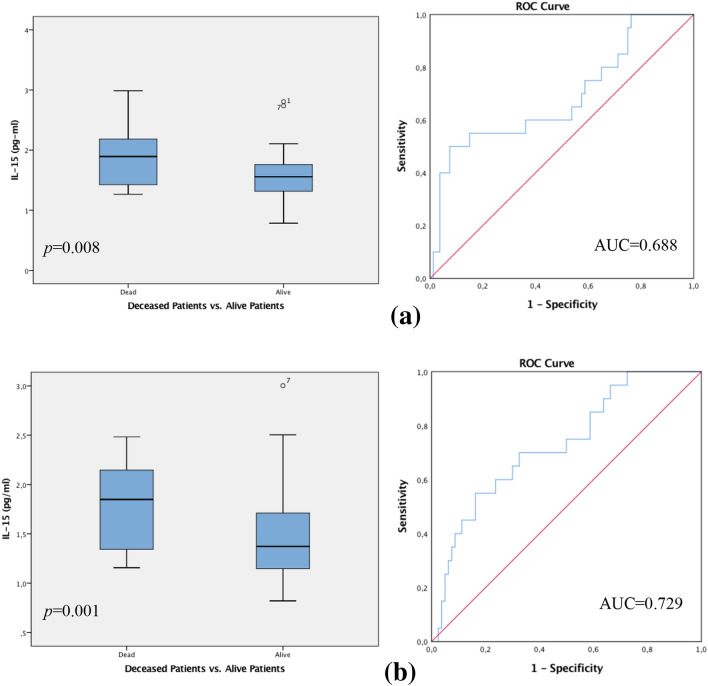
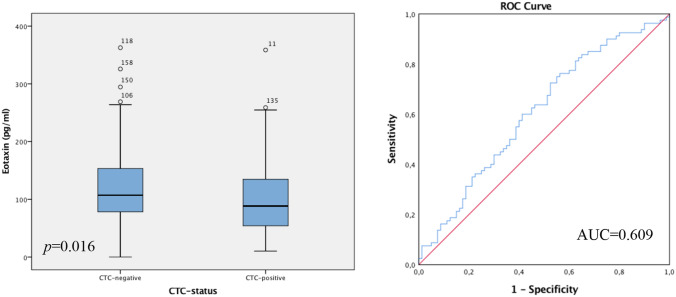
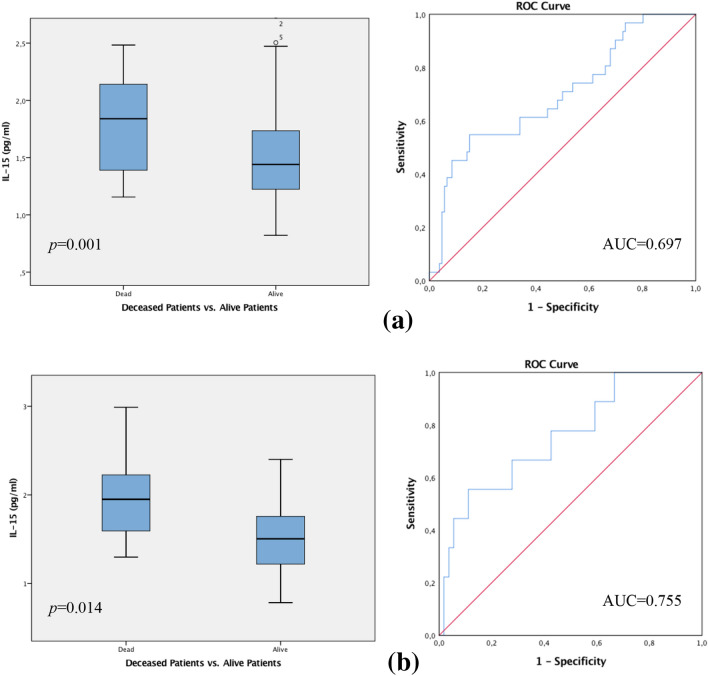
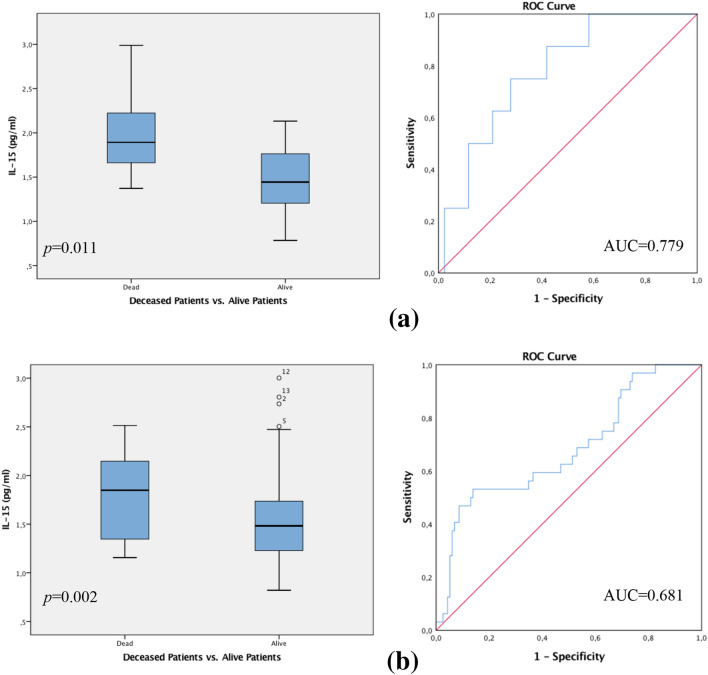
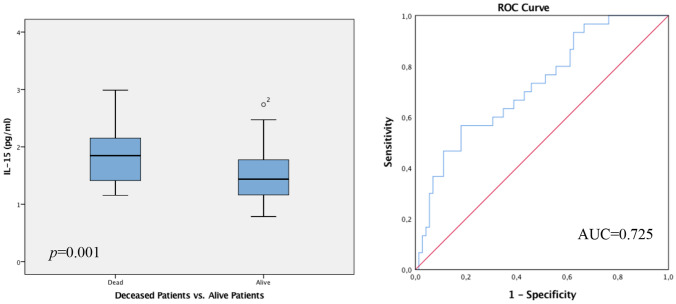
Statistically significant concentrations were exposed for IL-15 levels regardless of the CTC-Status, lymph node involvement, or hormone receptor status. Significantly enhanced serum IL-15 concentrations were observed in those patients with worse overall survival (OS) and disease-free survival (DFS). Elevated serum concentrations of IL-15 significantly correlate with patients diagnosed with Grade 3 tumor and worse OS. In contrast, patients with a Grade 3 tumor with a favourable OS and DFS demonstrated significantly decreased IL-15 values. The CTC negative patient subgroup with a favourable OS and DFS, showed statistically significant elevated eotaxin values.
These findings suggest a potential functional interaction of increased IL-15 concentrations in the peripheral blood of patients with a worse OS and DFS, regardless of prognostic factors at primary diagnosis. The increased levels of the chemokine eotaxin in CTC negative patients and a favourable OS and DFS, on the other hand, suggest that the overexpression inhibits CTCs entering the peripheral blood, thus emphasizing a significant inhibition of circulation specific metastasis. To sum up, IL-15 could be used as an independent prognostic marker in terms of survival outcome for breast cancer patients and used as an early indicator to highlight high-risk patients and consequently the adjustment of cancer therapy strategies.
在开始全身治疗之前,外周血中的循环肿瘤细胞(CTC)已被发现是乳腺癌患者预后的指标。本研究的目的是评估特定细胞因子谱作为 CTC 参与的标志物,这些标志物在乳腺癌患者的生存结果方面可作为独立的预后标志物。
本研究选择的患者被定义为SUCCESS 研究中的乳腺癌女性。共有 200 例患者的血清纳入本研究,其中 100 例患者 CTC 阳性,100 例 CTC 阴性。匹配标准为组织病理学分级、淋巴结转移、激素受体状态、TNM 分类和患者生存。使用商业 ELISA 进行多细胞因子/趋化因子阵列筛选,以检测血清中的白细胞介素 15(IL-15)和嗜酸性粒细胞趋化因子。
无论 CTC 状态、淋巴结受累或激素受体状态如何,IL-15 水平均表现出统计学显著的浓度。在总体生存(OS)和无病生存(DFS)较差的患者中观察到显著升高的血清 IL-15 浓度。升高的血清 IL-15 浓度与诊断为 3 级肿瘤和 OS 较差的患者显著相关。相比之下,具有良好 OS 和 DFS 的 3 级肿瘤患者的 IL-15 值显著降低。具有良好 OS 和 DFS 的 CTC 阴性患者亚组的嗜酸性粒细胞趋化因子值统计学显著升高。
这些发现表明,无论在原发性诊断时的预后因素如何,外周血中升高的 IL-15 浓度与较差的 OS 和 DFS 之间存在潜在的功能相互作用。另一方面,在 CTC 阴性患者中,趋化因子嗜酸性粒细胞趋化因子水平升高且 OS 和 DFS 良好,这表明过表达抑制 CTC 进入外周血,从而强调了对循环特异性转移的显著抑制。总之,IL-15 可以作为乳腺癌患者生存结果的独立预后标志物,并作为突出高危患者的早期指标,从而调整癌症治疗策略。