Department of Nephrology, Chang Gung Memorial Hospital, Keelung 20401, Taiwan.
College of Medicine, Chang Gung University, Taoyuan 33305, Taiwan.
Nutrients. 2020 Sep 12;12(9):2799. doi: 10.3390/nu12092799.
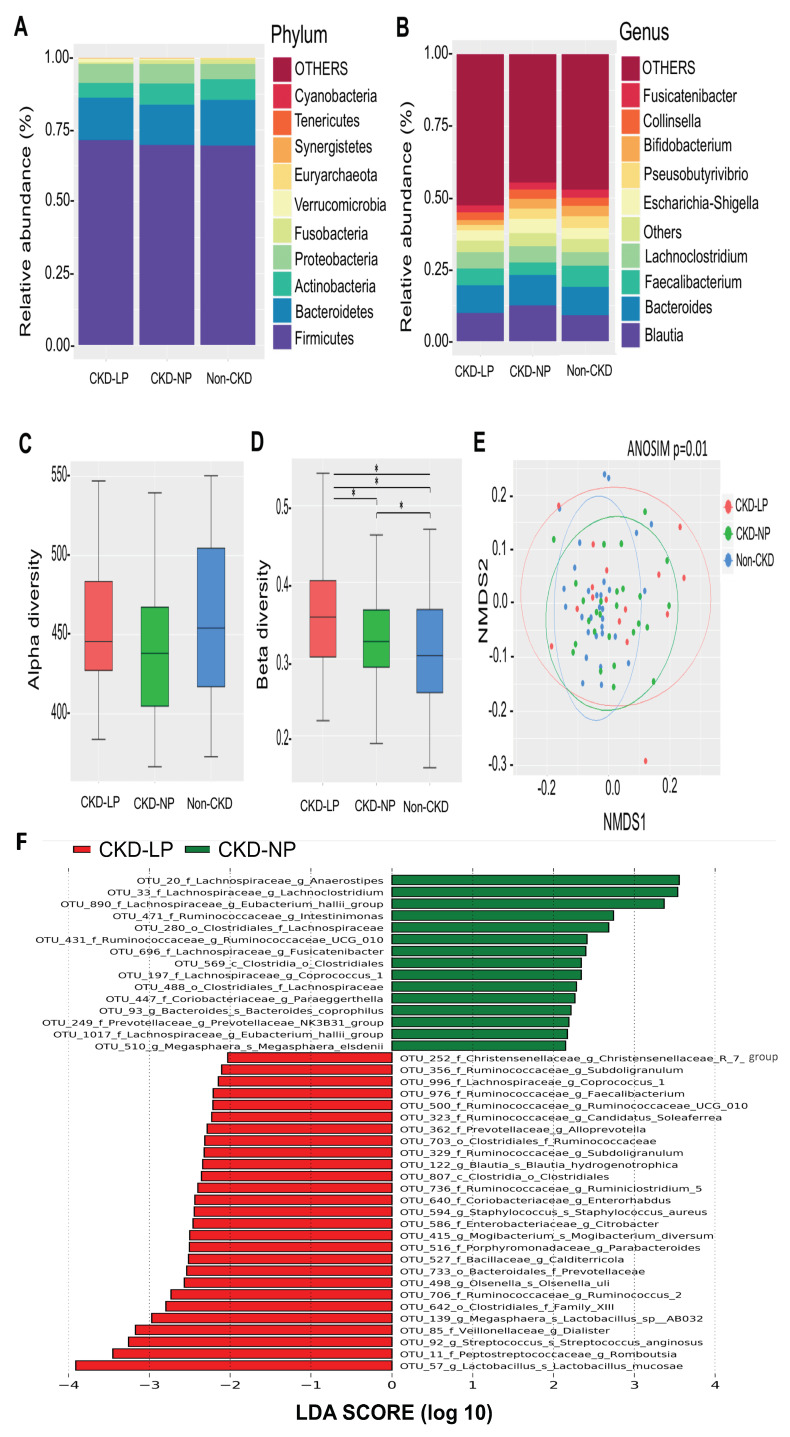
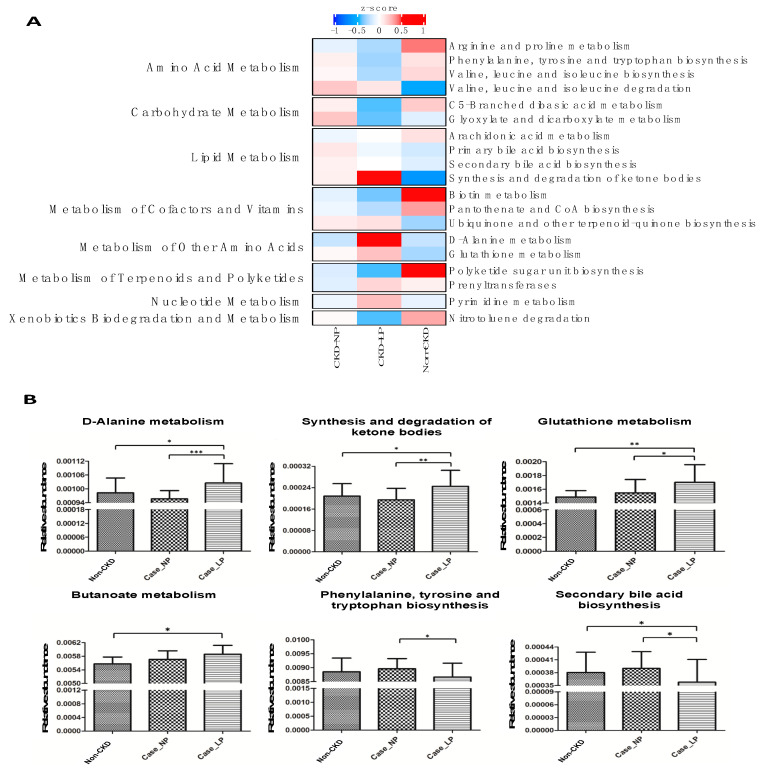
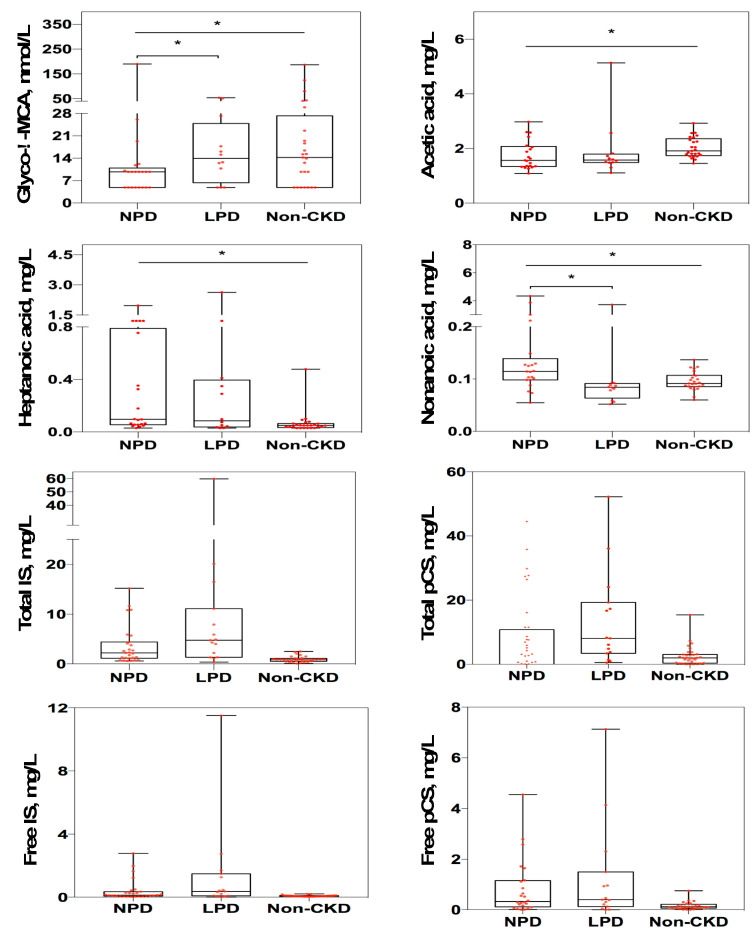
The relationship between change of gut microbiota and host serum metabolomics associated with low protein diet (LPD) has been unraveled incompletely in CKD patients. Fecal 16S rRNA gene sequencing and serum metabolomics profiling were performed. We reported significant changes in the β-diversity of gut microbiota in CKD patients having LPD (CKD-LPD, = 16). We identified 19 genera and 12 species with significant differences in their relative abundance among CKD-LPD patients compared to patients receiving normal protein diet (CKD-NPD, = 27) or non-CKD controls ( = 34), respectively. CKD-LPD had a significant decrease in the abundance of many butyrate-producing bacteria (family and ) associated with enrichment of functional module of butanoate metabolism, leading to concomitant reduction in serum levels of SCFA (acetic, heptanoic and nonanoic acid). A secondary bile acid, glyco λ-muricholic acid, was significantly increased in CKD-LPD patients. Serum levels of indoxyl sulfate and p-cresyl sulfate did not differ among groups. The relationship between abundances of microbes and metabolites remained significant in subset of resampling subjects of comparable characteristics. Enrichment of bacterial gene markers related to D-alanine, ketone bodies and glutathione metabolism was noted in CKD-LPD patients. Our analyses reveal signatures and functions of gut microbiota to adapt dietary protein restriction in renal patients.
在慢性肾脏病(CKD)患者中,尚未完全阐明肠道微生物群的变化与低蛋白饮食(LPD)相关的宿主血清代谢组学之间的关系。进行了粪便 16S rRNA 基因测序和血清代谢组学分析。我们报告了 LPD 患者肠道微生物群β多样性的显著变化(CKD-LPD,n=16)。与接受正常蛋白饮食(CKD-NPD,n=27)或非 CKD 对照(n=34)的患者相比,我们分别在 CKD-LPD 患者中鉴定出 19 个属和 12 个种的相对丰度存在显著差异。与丁酸盐代谢功能模块的富集相关,CKD-LPD 患者中许多产生丁酸盐的细菌(科和科)的丰度显著降低,导致血清 SCFA(乙酸、庚酸和壬酸)水平降低。次级胆汁酸甘氨胆酸的水平在 CKD-LPD 患者中显著增加。各组之间的吲哚硫酸酯和对甲酚硫酸酯的血清水平没有差异。在具有相似特征的重采样亚组中,微生物和代谢物丰度之间的关系仍然显著。在 CKD-LPD 患者中注意到与 D-丙氨酸、酮体和谷胱甘肽代谢相关的细菌基因标志物的富集。我们的分析揭示了肠道微生物群适应肾脏患者饮食蛋白限制的特征和功能。