Departments of Pharmaceutical Sciences, University of California, Irvine, CA 92697-3958, USA.
Department of Chemistry, University of California, Irvine, CA 92697-3958, USA.
Molecules. 2020 Sep 13;25(18):4194. doi: 10.3390/molecules25184194.
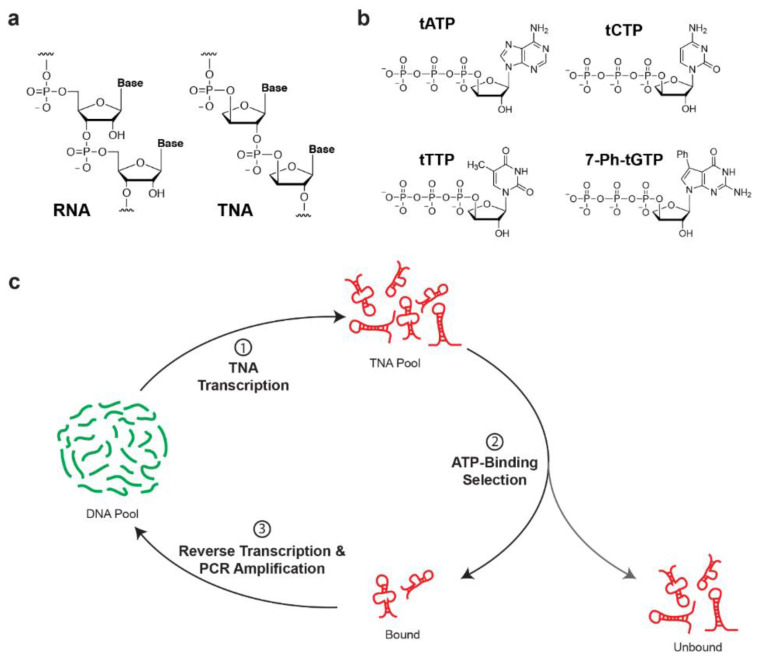
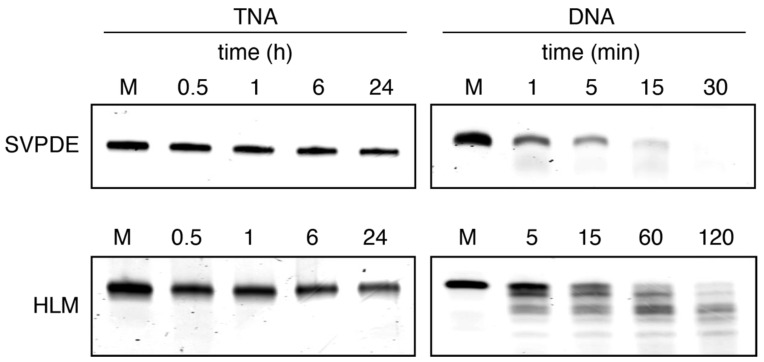
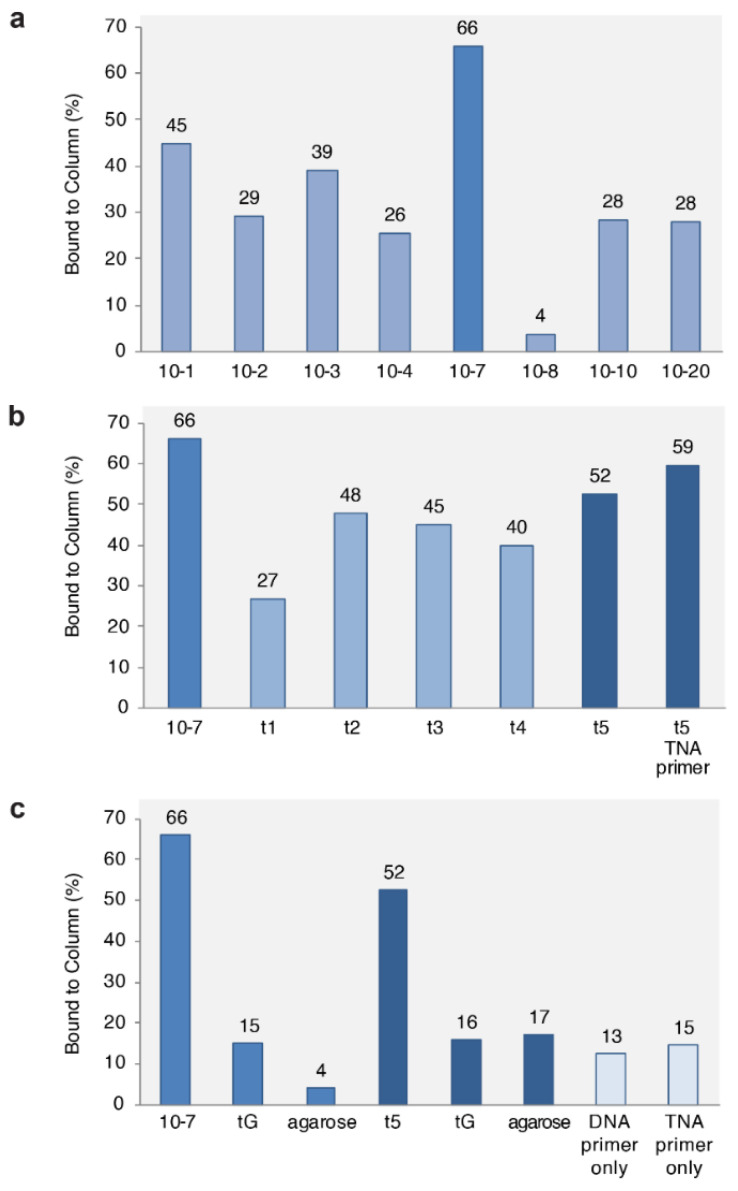
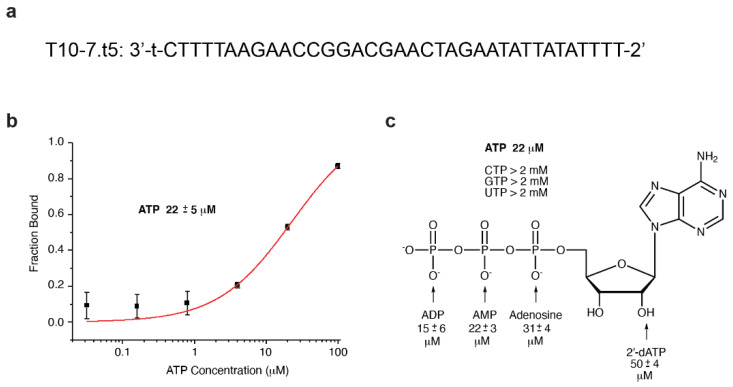
Recent advances in polymerase engineering have made it possible to isolate aptamers from libraries of synthetic genetic polymers (XNAs) with backbone structures that are distinct from those found in nature. However, nearly all of the XNA aptamers produced thus far have been generated against protein targets, raising significant questions about the ability of XNA aptamers to recognize small molecule targets. Here, we report the evolution of an ATP-binding aptamer composed entirely of α-L-threose nucleic acid (TNA). A chemically synthesized version of the best aptamer sequence shows high affinity to ATP and strong specificity against other naturally occurring ribonucleotide triphosphates. Unlike its DNA and RNA counterparts that are susceptible to nuclease digestion, the ATP-binding TNA aptamer exhibits high biological stability against hydrolytic enzymes that rapidly degrade DNA and RNA. Based on these findings, we suggest that TNA aptamers could find widespread use as molecular recognition elements in diagnostic and therapeutic applications that require high biological stability.
最近聚合酶工程的进展使得人们有可能从与自然界中发现的结构不同的合成遗传聚合物(XNA)文库中分离出适体。然而,迄今为止,几乎所有的 XNA 适体都是针对蛋白质靶标产生的,这引发了关于 XNA 适体识别小分子靶标的能力的重大问题。在这里,我们报告了一种完全由α-L-苏糖核酸(TNA)组成的 ATP 结合适体的进化。最佳适体序列的化学合成版本对 ATP 具有高亲和力,并对其他天然存在的核糖核苷酸三磷酸具有很强的特异性。与易受核酸酶消化的 DNA 和 RNA 类似物不同,ATP 结合 TNA 适体对迅速降解 DNA 和 RNA 的水解酶具有很高的生物稳定性。基于这些发现,我们认为 TNA 适体可以作为分子识别元件在需要高生物稳定性的诊断和治疗应用中得到广泛应用。