Alemu Abebaw Yeshambel, Endalamaw Aklilu, Bayih Wubet Alebachew
Department of Paediatrics and Child Health Nursing, College of Health Sciences, Debre Tabor University, Debre Tabor, Ethiopia.
Department of Paediatrics and Child Health Nursing, School of Health Sciences, College of Medicine and Health Sciences, Bahir Dar University, Bahir Dar, Ethiopia.
Trop Med Health. 2020 Sep 7;48:77. doi: 10.1186/s41182-020-00263-2. eCollection 2020.
Different primary studies in Ethiopia showed the burden of nosocomial infection across geographical setting and variant period. However, the national level of burden and types of healthcare-associated infections were unknown. Hence, this systematic review and meta-analysis estimated the overall nationwide burden and types of healthcare-associated infections in Ethiopia.
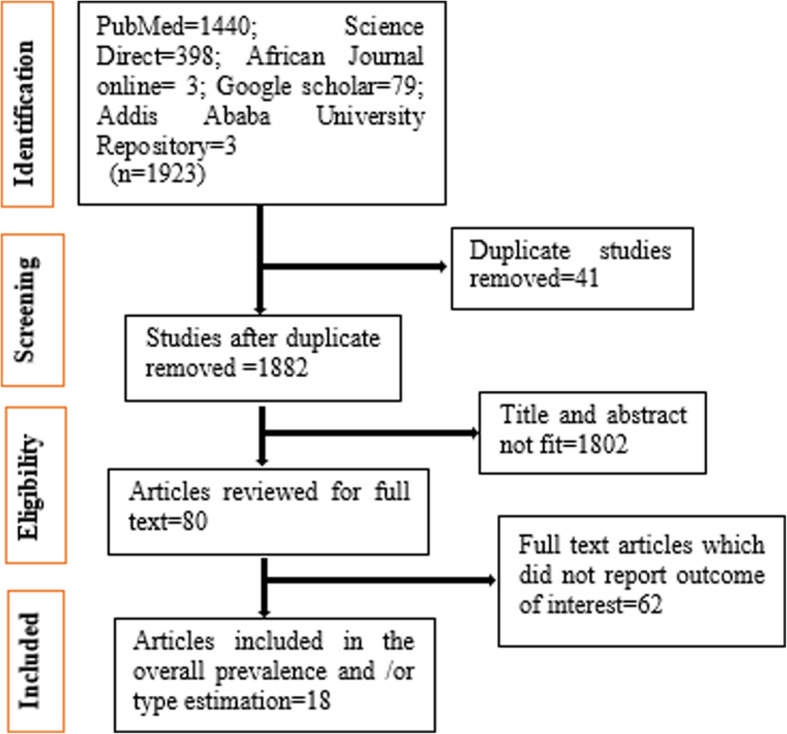
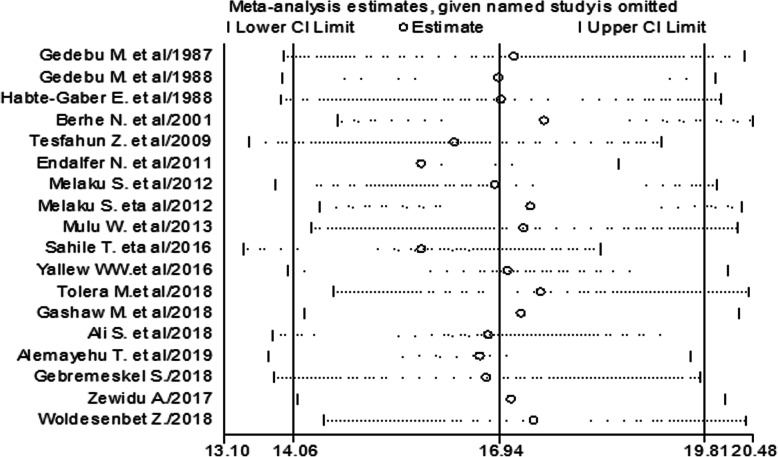
We searched PubMed, Science Direct, Google Scholar, African Journal Online, and Addis Ababa University repository by date April 7, 2020. To assess publication bias, Egger's test regression analysis was applied. Weight-inverse random-effect model meta-analysis was used. Subgroup analysis was conducted based on ward type, study region, study design, sample size and diagnostic method, ward type, and study participants.
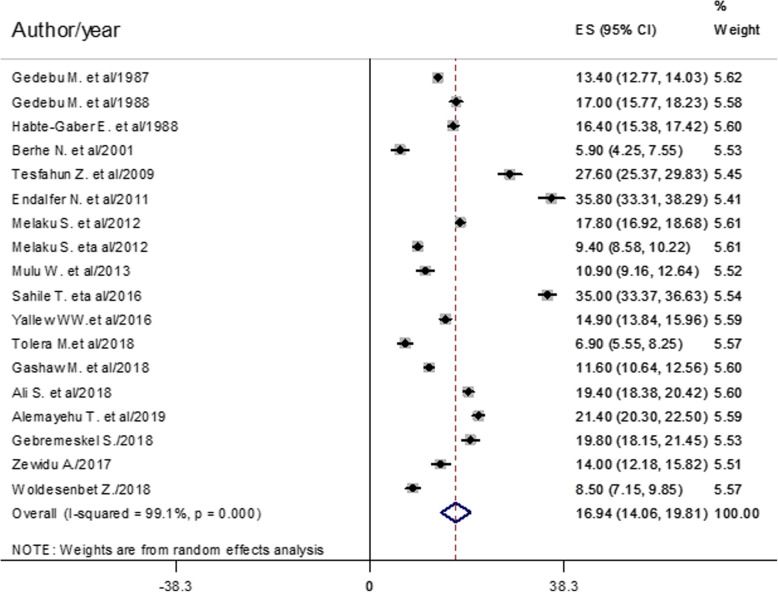
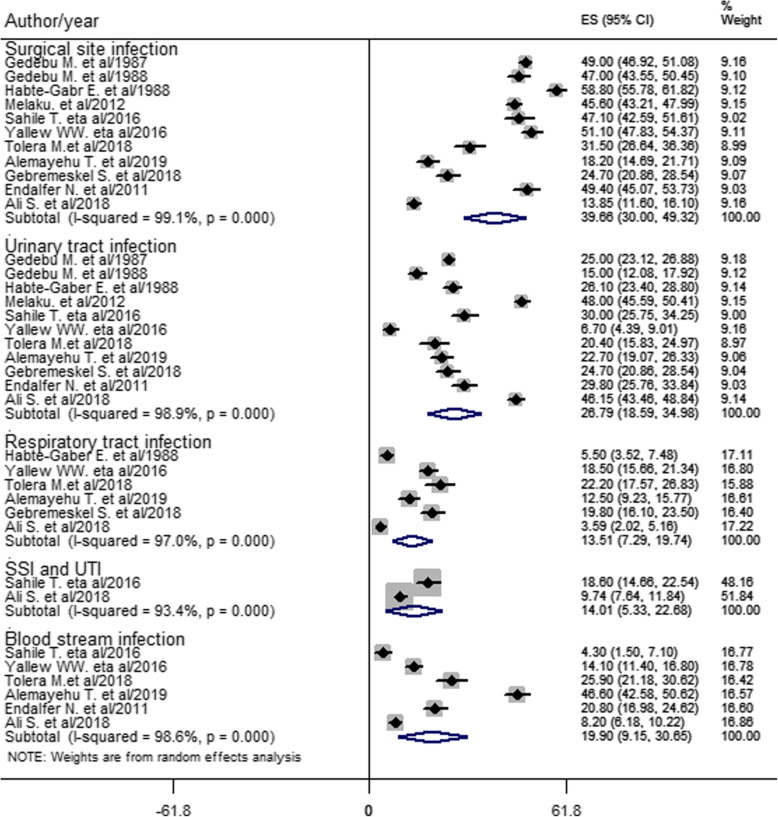
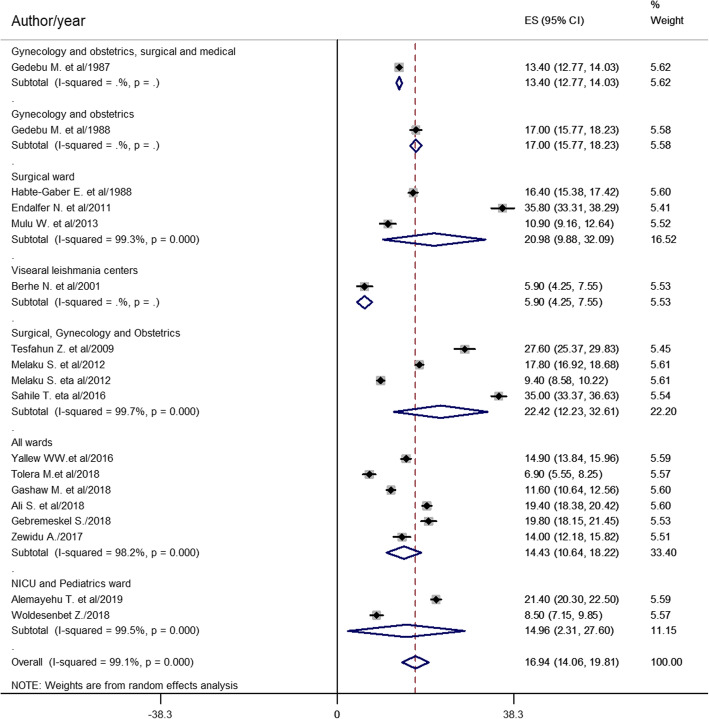
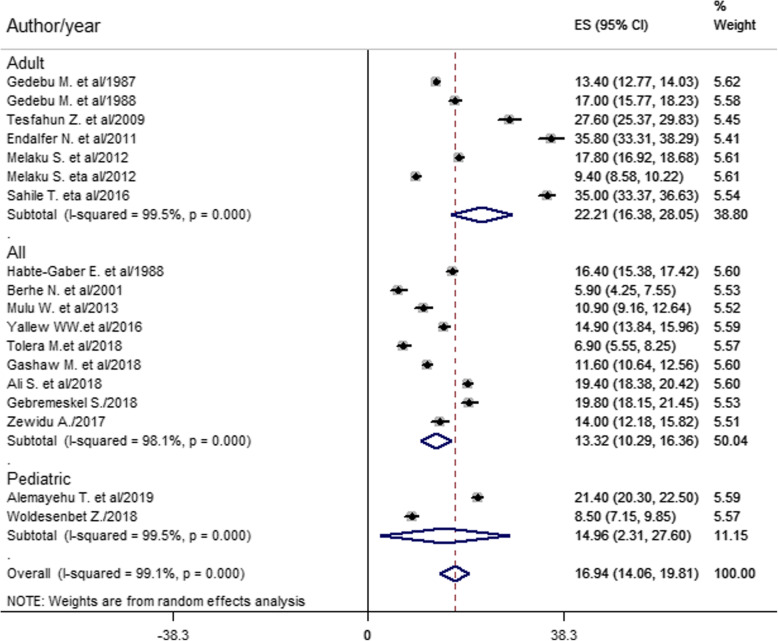
A total of 18 studies with 13,821 patients participated in the overall prevalence estimation. The pooled prevalence of healthcare-associated infection was 16.96% (95% CI 14.10-19.82). Specifically, surgical site infection (39.66%), urinary tract infection (27.69%), bloodstream infection (19.9%), dual infections (SSI and UTI) (14.01%), and respiratory tract (13.51%) were the commonest types of healthcare-associated infection. In subgroup analysis, the highest overall prevalence was observed as surgical, gynecology, and obstetrics ward (22.42%).
The national prevalence of healthcare-associated infection remains high. The most common type of HCAI was surgical site infection, followed by urinary tract infection, bloodstream infection, SSI and UTI, and respiratory tract infection. The overall prevalence was highest in surgical, gynecology, and obstetrics ward. Hence, infection prevention and control should be a priority agenda in healthcare with due emphasis for surgical patients.
埃塞俄比亚不同的初步研究表明,医院感染负担在不同地理区域和不同时期有所不同。然而,全国范围内医院感染的负担及类型尚不清楚。因此,本系统评价和荟萃分析估计了埃塞俄比亚全国范围内医院感染的总体负担及类型。
我们于2020年4月7日在PubMed、科学Direct、谷歌学术、非洲期刊在线和亚的斯亚贝巴大学知识库中进行了检索。为评估发表偏倚,应用了Egger检验回归分析。采用权重倒数随机效应模型进行荟萃分析。基于病房类型、研究地区、研究设计、样本量和诊断方法、病房类型以及研究参与者进行了亚组分析。
共有18项研究、13821名患者参与了总体患病率估计。医院感染的合并患病率为16.96%(95%置信区间14.10 - 19.82)。具体而言,手术部位感染(39.66%)、尿路感染(27.69%)、血流感染(19.9%)、双重感染(手术部位感染和尿路感染)(14.01%)以及呼吸道感染(13.51%)是最常见的医院感染类型。在亚组分析中,手术、妇科和产科病房的总体患病率最高(22.42%)。
全国医院感染患病率仍然很高。最常见的医院感染类型是手术部位感染,其次是尿路感染、血流感染、手术部位感染和尿路感染以及呼吸道感染。手术、妇科和产科病房的总体患病率最高。因此,感染预防与控制应成为医疗保健中的优先议程,尤其要重视手术患者。