MRC Centre for Global Infectious Disease Analysis, Department of Infectious Disease Epidemiology, School of Public Health, Imperial College London, London, United Kingdom.
Section of Immunology, Wright-Fleming Institute, Imperial College School of Medicine, London, United Kingdom.
PLoS Comput Biol. 2020 Sep 17;16(9):e1007470. doi: 10.1371/journal.pcbi.1007470. eCollection 2020 Sep.
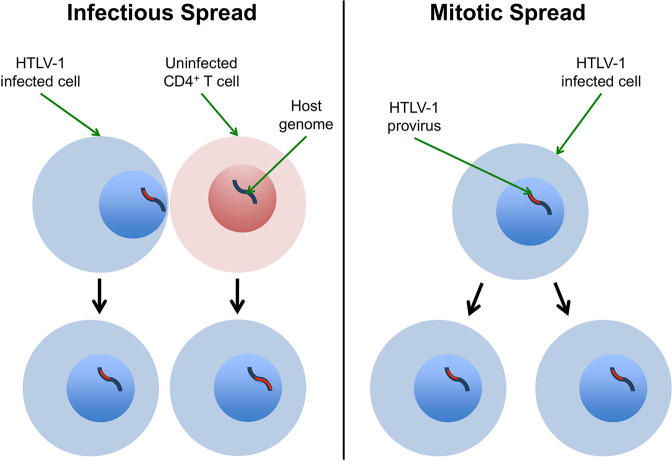
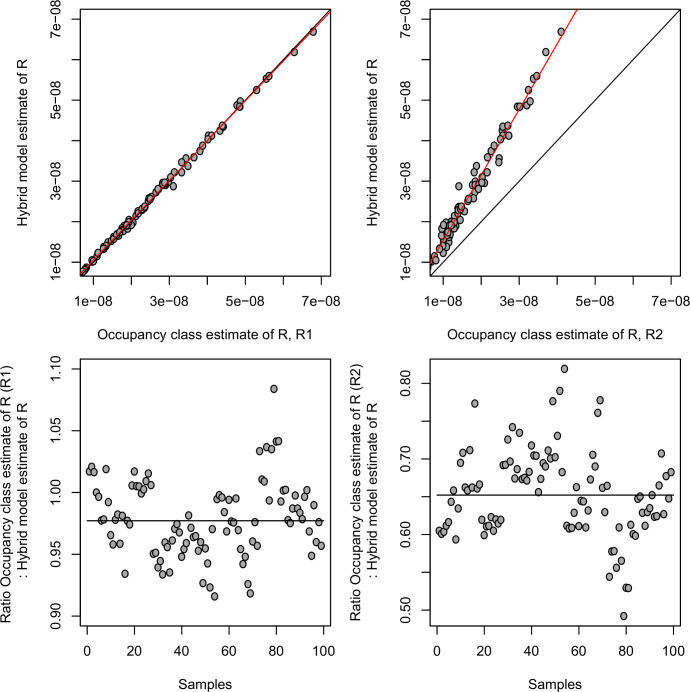
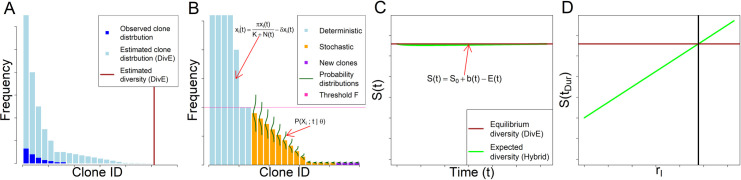
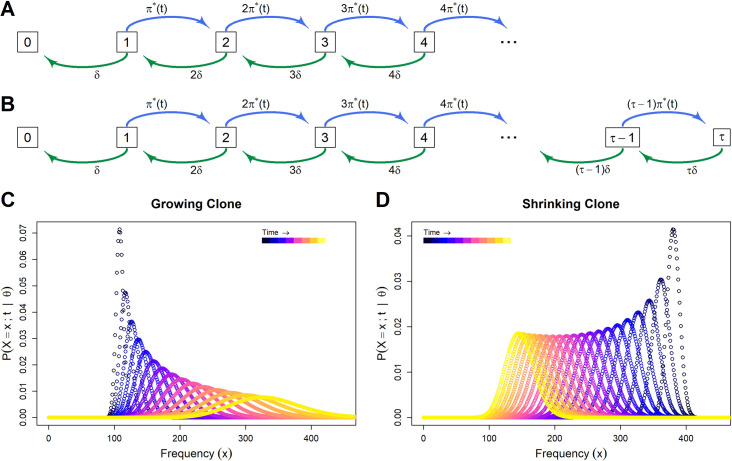
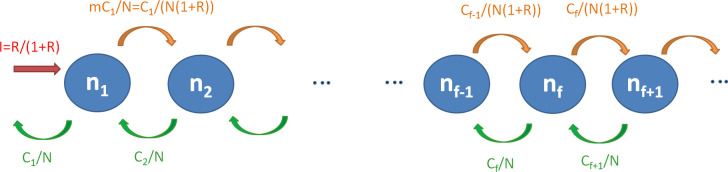
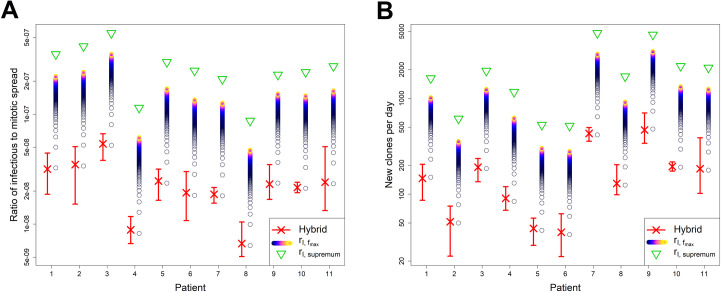
Human T-lymphotropic virus type-1 (HTLV-1) persists within hosts via infectious spread (de novo infection) and mitotic spread (infected cell proliferation), creating a population structure of multiple clones (infected cell populations with identical genomic proviral integration sites). The relative contributions of infectious and mitotic spread to HTLV-1 persistence are unknown, and will determine the efficacy of different approaches to treatment. The prevailing view is that infectious spread is negligible in HTLV-1 persistence beyond early infection. However, in light of recent high-throughput data on the abundance of HTLV-1 clones, and recent estimates of HTLV-1 clonal diversity that are substantially higher than previously thought (typically between 104 and 105 HTLV-1+ T cell clones in the body of an asymptomatic carrier or patient with HTLV-1-associated myelopathy/tropical spastic paraparesis), ongoing infectious spread during chronic infection remains possible. We estimate the ratio of infectious to mitotic spread using a hybrid model of deterministic and stochastic processes, fitted to previously published HTLV-1 clonal diversity estimates. We investigate the robustness of our estimates using three alternative estimators. We find that, contrary to previous belief, infectious spread persists during chronic infection, even after HTLV-1 proviral load has reached its set point, and we estimate that between 100 and 200 new HTLV-1 clones are created and killed every day. We find broad agreement between all estimators. The risk of HTLV-1-associated malignancy and inflammatory disease is strongly correlated with proviral load, which in turn is correlated with the number of HTLV-1-infected clones, which are created by de novo infection. Our results therefore imply that suppression of de novo infection may reduce the risk of malignant transformation.
人类 T 淋巴细胞白血病病毒 1 型(HTLV-1)通过感染性传播(新感染)和有丝分裂传播(受感染细胞增殖)在宿主中持续存在,形成多个克隆的群体结构(具有相同基因组前病毒整合位点的受感染细胞群体)。感染性传播和有丝分裂传播对 HTLV-1 持续存在的相对贡献尚不清楚,这将决定不同治疗方法的疗效。目前的观点是,在早期感染后,HTLV-1 的感染性传播在其持续存在中可以忽略不计。然而,鉴于最近关于 HTLV-1 克隆丰度的高通量数据,以及最近对 HTLV-1 克隆多样性的估计,这些估计值远高于先前的估计(通常在无症状携带者或 HTLV-1 相关脊髓病/热带痉挛性截瘫患者的体内有 104 到 105 个 HTLV-1+T 细胞克隆),在慢性感染期间仍可能存在持续的感染性传播。我们使用确定性和随机过程的混合模型来估计感染性传播与有丝分裂传播的比例,并将其拟合到先前发表的 HTLV-1 克隆多样性估计值中。我们使用三种替代估计器来研究我们的估计值的稳健性。我们发现,与先前的观点相反,即使在 HTLV-1 前病毒载量达到其设定点后,感染性传播仍在慢性感染中持续存在,我们估计每天会产生和杀死 100 到 200 个新的 HTLV-1 克隆。我们发现所有估计器之间都有广泛的一致性。HTLV-1 相关恶性肿瘤和炎症性疾病的风险与前病毒载量密切相关,而前病毒载量又与 HTLV-1 感染克隆的数量相关,这些克隆是通过新感染产生的。因此,我们的研究结果表明,抑制新感染可能会降低恶性转化的风险。