Department of Life, Health and Chemical Sciences, The Open University, Milton Keynes, United Kingdom.
Academic Department of Neuroscience and Sheffield, NIHR Translational Neuroscience BRC, Sheffield Teaching Hospitals, NHS Foundation Trust, University of Sheffield, Sheffield, United Kingdom.
PLoS One. 2020 Sep 17;15(9):e0236611. doi: 10.1371/journal.pone.0236611. eCollection 2020.
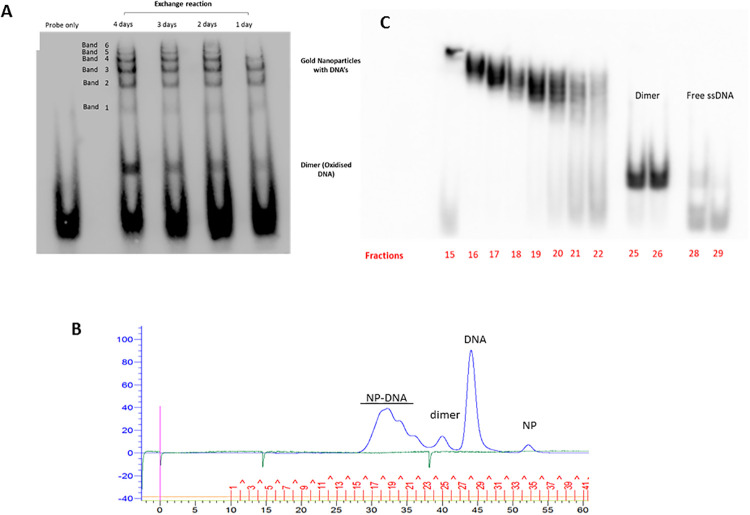
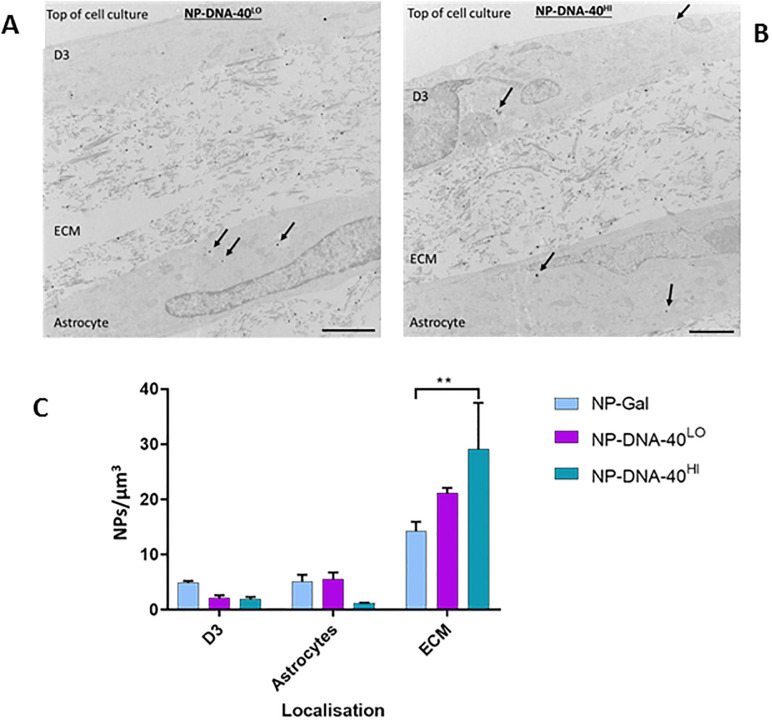
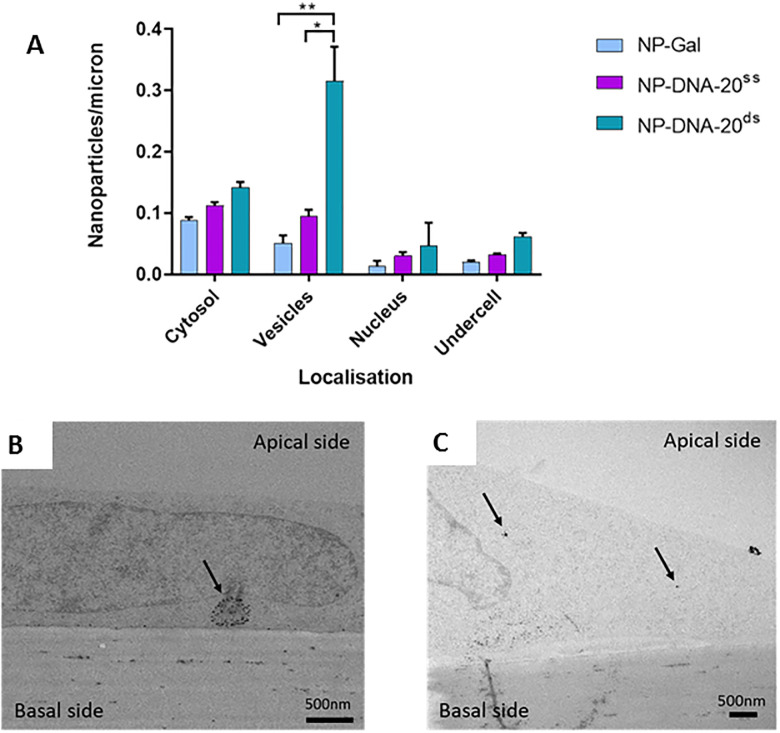
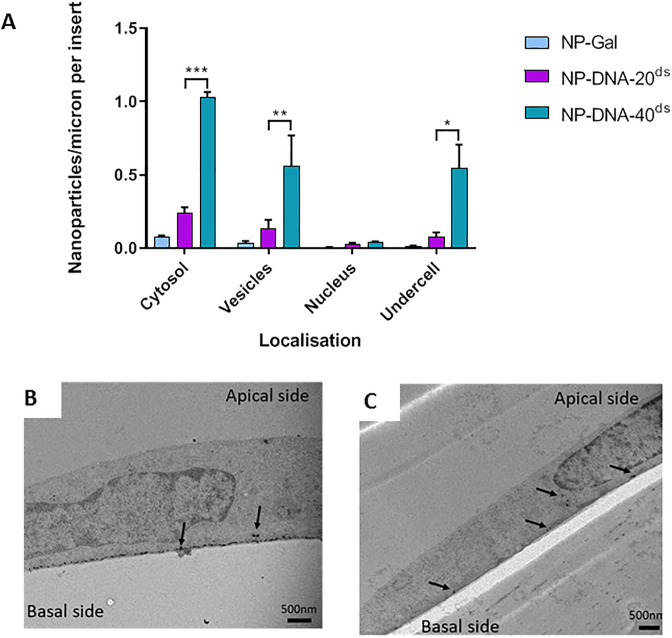
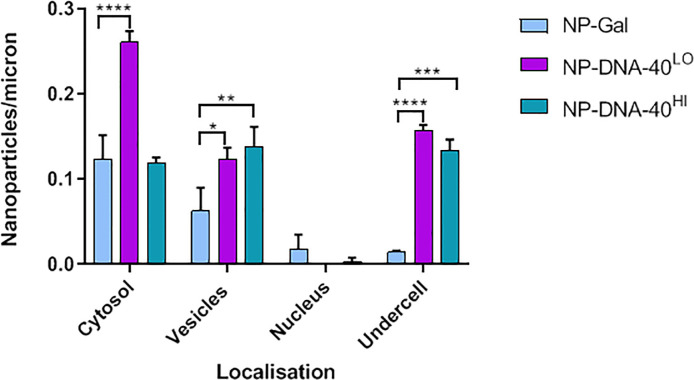
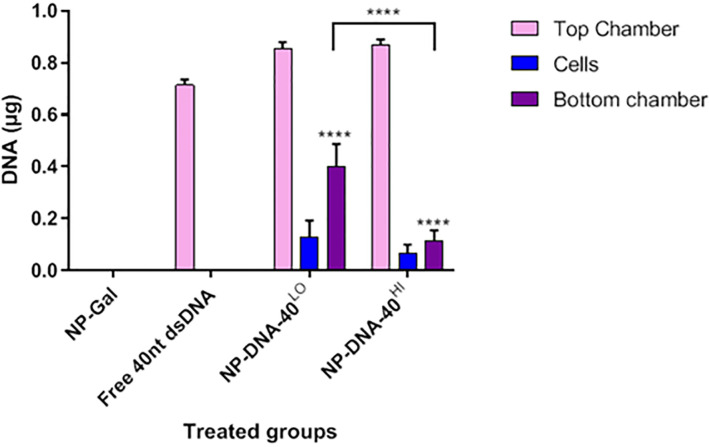
Treatment of diseases that affect the CNS by gene therapy requires delivery of oligonucleotides to target cells within the brain. As the blood brain barrier prevents movement of large biomolecules, current approaches involve direct injection of the oligonucleotides, which is invasive and may have only a localised effect. The aim of this study was to investigate the potential of 2 nm galactose-coated gold nanoparticles (NP-Gal) as a delivery system of oligonucleotides across brain endothelium. DNA oligonucleotides of different types were attached to NP-Gal by the place exchange reaction and were characterised by EMSA (electrophoretic mobility shift assay). Several nanoparticle formulations were created, with single- or double-stranded (20nt or 40nt) DNA oligonucleotides, or with different amounts of DNA attached to the carriers. These nanocarriers were applied to transwell cultures of human brain endothelium in vitro (hCMEC/D3 cell-line) or to a 3D-hydrogel model of the blood-brain barrier including astrocytes. Transfer rates were measured by quantitative electron microscopy for the nanoparticles and qPCR for DNA. Despite the increase in nanoparticle size caused by attachment of oligonucleotides to the NP-Gal carrier, the rates of endocytosis and transcytosis of nanoparticles were both considerably increased when they carried an oligonucleotide cargo. Carriers with 40nt dsDNA were most efficient, accumulating in vesicles, in the cytosol and beneath the basal membrane of the endothelium. The oligonucleotide cargo remained attached to the nanocarriers during transcytosis and the transport rate across the endothelial cells was increased at least 50fold compared with free DNA. The nanoparticles entered the extracellular matrix and were taken up by the astrocytes in biologically functional amounts. Attachment of DNA confers a strong negative charge to the nanoparticles which may explain the enhanced binding to the endothelium and transcytosis by both vesicular transport and the transmembrane/cytosol pathway. These gold nanoparticles have the potential to transport therapeutic amounts of nucleic acids into the CNS.
通过基因治疗治疗影响中枢神经系统的疾病需要将寡核苷酸递送到大脑内的靶细胞。由于血脑屏障阻止了大分子生物的运动,目前的方法包括直接注射寡核苷酸,这是一种侵入性的方法,可能只有局部作用。本研究旨在研究 2nm 半乳糖包覆的金纳米粒子(NP-Gal)作为穿过脑内皮递送寡核苷酸的潜在载体。不同类型的 DNA 寡核苷酸通过位置交换反应与 NP-Gal 连接,并通过电泳迁移率变动分析(EMSA)进行了表征。创建了几种纳米颗粒制剂,其中含有单链或双链(20nt 或 40nt)DNA 寡核苷酸,或带有不同数量的 DNA 附着在载体上。这些纳米载体应用于体外人脑内皮细胞(hCMEC/D3 细胞系)的 Transwell 培养物或包括星形胶质细胞的 3D 血脑屏障水凝胶模型中。通过定量电子显微镜测量纳米颗粒的转移率和 qPCR 测量 DNA 的转移率。尽管由于寡核苷酸与 NP-Gal 载体的连接而导致纳米颗粒的尺寸增加,但当它们携带寡核苷酸货物时,内吞作用和转胞作用的速率都大大增加。携带 40nt dsDNA 的载体效率最高,在囊泡中、细胞质中和内皮基底膜下积累。寡核苷酸货物在转胞运输过程中仍附着在纳米载体上,与游离 DNA 相比,穿过内皮细胞的运输速率至少增加了 50 倍。纳米颗粒进入细胞外基质,并被星形胶质细胞以生物功能的量摄取。DNA 的附着赋予纳米颗粒强烈的负电荷,这可能解释了其与内皮的结合增强以及通过囊泡运输和跨膜/细胞质途径的转胞作用。这些金纳米颗粒具有将治疗量的核酸递送到中枢神经系统的潜力。