Institute of Behavioral Science and Department of Sociology, University of Colorado Boulder, UCB 483, 1440 15th St, Boulder, CO, 80309-0483, USA.
Department of Sociology, University of Nevada-Las Vegas, 4505 S. Maryland Pkwy, Las Vegas, NV, 89154, USA.
Soc Sci Med. 2020 Nov;265:113182. doi: 10.1016/j.socscimed.2020.113182. Epub 2020 Jul 29.
A health lifestyles approach holds promise for understanding change in women's and men's health behaviors and reducing gendered health disparities. The emerging theoretical and empirical literature on health lifestyles (individuals' bundled health behaviors that are shaped by group-based identities and norms) helps elucidate complex disparities in health behaviors, but research is needed on how gender shapes the development of health lifestyles. This study proposed and assessed a dynamic multilevel framework for understanding health lifestyles that draws on insights from contemporary gender and life course scholarship.
Using the transition from adolescence into adulthood as an empirical case, we analyzed US data from the National Longitudinal Study of Adolescent to Adult Health (Add Health; N = 6605), which followed adolescents through young adulthood, collecting information on their health behaviors and social contexts.
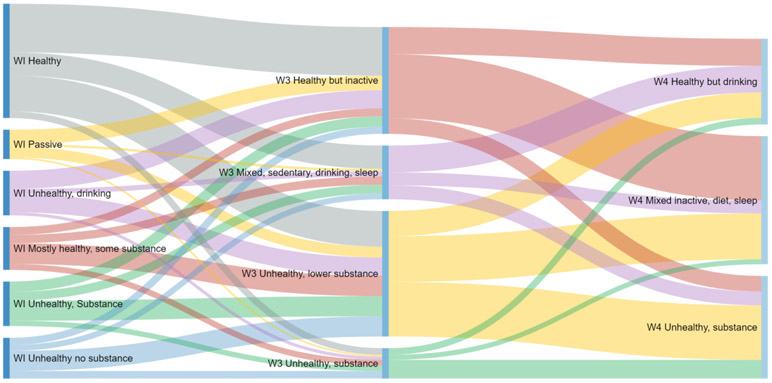
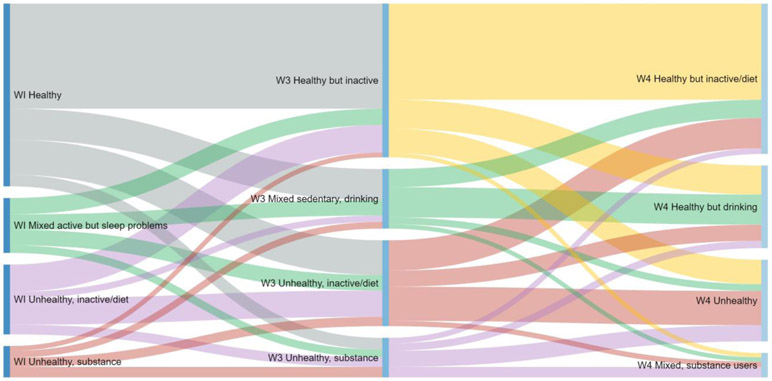
Latent class analyses showed that health lifestyles differed significantly by gender. Results supported the dynamic multilevel framework, finding more variation in health lifestyle behaviors within genders than between, high levels of change across ages, intersections of gender with age, and socioeconomic status as a structural pathway for gender's influence.
Taken together, these findings suggest that conceptualizing gender as a dynamic multilevel system intersecting with other social statuses is fruitful for understanding how health lifestyles form and change. These findings can inform more effective policies to change health behaviors.
健康生活方式方法有望帮助理解女性和男性健康行为的变化,并减少性别健康差距。关于健康生活方式(个体受群体身份和规范影响而形成的综合健康行为)的新兴理论和经验文献有助于阐明健康行为方面的复杂差异,但需要研究性别如何影响健康生活方式的发展。本研究提出并评估了一个理解健康生活方式的动态多层框架,该框架借鉴了当代性别和生活历程学术研究的见解。
我们以青少年向成年期的过渡为例,分析了美国青少年健康纵向研究(Add Health;N=6605)的数据,该研究跟踪青少年直至成年期,收集他们的健康行为和社会背景信息。
潜在类别分析表明,健康生活方式在性别上存在显著差异。结果支持动态多层框架,发现性别内的健康生活方式行为变化比性别间更大,年龄跨度上的变化水平较高,性别与年龄的交叉以及社会经济地位作为性别影响的结构途径。
综上所述,这些发现表明,将性别概念化为与其他社会地位交叉的动态多层系统对于理解健康生活方式的形成和变化是富有成效的。这些发现可以为改变健康行为的更有效政策提供信息。