Jerome Jeyakumar John Martin, Ali Asif, Wang Wen-Ming, Thiruvengadam Muthu
Rice Research Institute and Key Lab for Major Crop Diseases, Sichuan Agricultural University, Wenjiang, Chengdu 625014, China.
State Key Laboratory of Crop Gene Exploration and Utilization in Southwest China, Institute of Rice Research, Sichuan Agricultural University, Wenjiang, Chengdu 625014, China.
Plants (Basel). 2020 Sep 15;9(9):1206. doi: 10.3390/plants9091206.
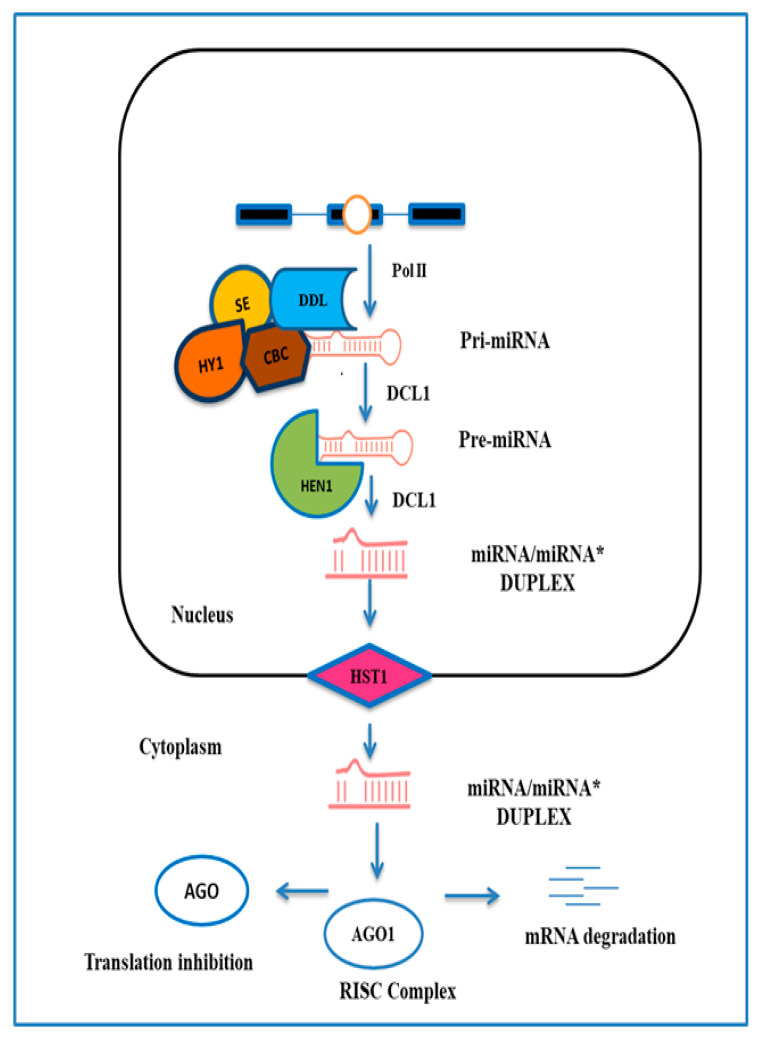
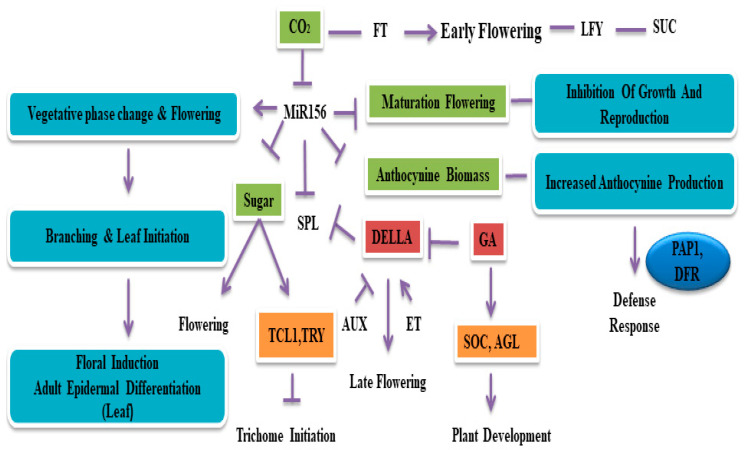
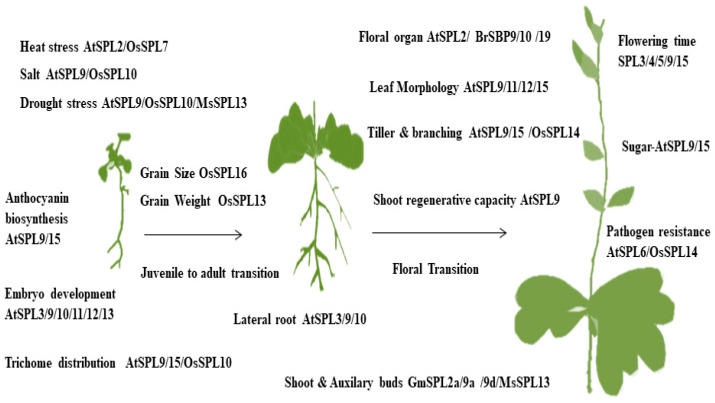
MicroRNA (miRNA) is a short, single-stranded, non-coding RNA found in eukaryotic cells that can regulate the expression of many genes at the post-transcriptional level. Among various plant miRNAs with diverse functions, miR156 plays a key role in biological processes, including developmental regulation, immune response, metabolic regulation, and abiotic stress. MiRNAs have become the regulatory center for plant growth and development. MicroRNA156 (miR156) is a highly conserved and emerging tool for the improvement of plant traits, including crop productivity and stress tolerance. Fine-tuning of squamosa promoter biding-like (SPL) gene expression might be a useful strategy for crop improvement. Here, we studied the regulation of the miR156 module and its interaction with SPL factors to understand the developmental transition of various plant species. Furthermore, this review provides a strong background for plant biotechnology and is an important source of information for further molecular breeding to optimize farming productivity.
微小RNA(miRNA)是一种存在于真核细胞中的短链单链非编码RNA,它可以在转录后水平调节许多基因的表达。在具有多种功能的各种植物miRNA中,miR156在包括发育调控、免疫反应、代谢调控和非生物胁迫等生物学过程中发挥着关键作用。miRNA已成为植物生长发育的调控中心。微小RNA156(miR156)是一种高度保守且新兴的用于改善植物性状(包括作物生产力和胁迫耐受性)的工具。精细调节鳞状启动子结合样(SPL)基因的表达可能是作物改良的一种有用策略。在这里,我们研究了miR156模块的调控及其与SPL因子的相互作用,以了解各种植物物种的发育转变。此外,本综述为植物生物技术提供了坚实的背景,并且是进一步进行分子育种以优化农业生产力的重要信息来源。