King's College London, De Crespigny Park, UK.
University of California Los Angeles, USA.
J Atten Disord. 2021 Dec;25(14):2014-2027. doi: 10.1177/1087054720956714. Epub 2020 Sep 18.
We aimed to understand the association between MW frequency and clinical measures, context regulation of MW and group differences in task performance.
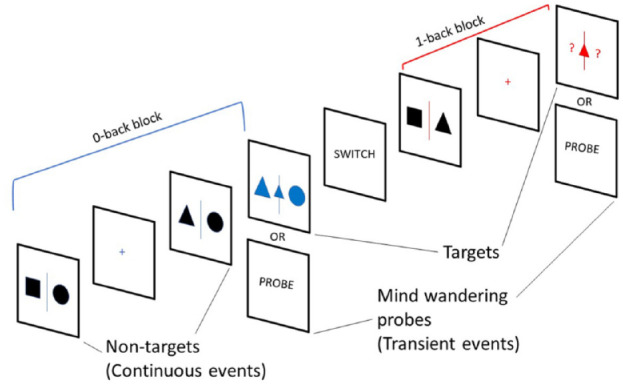
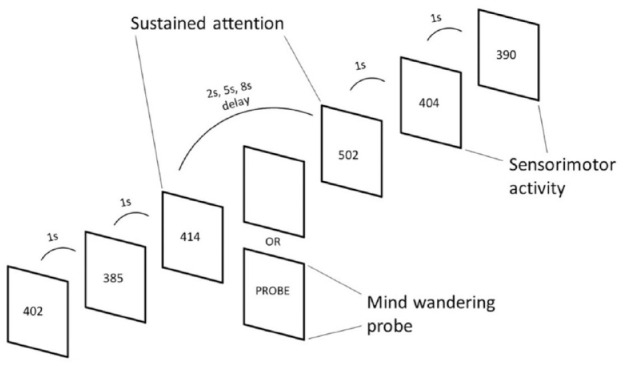
27 adults with ADHD and 29 controls performed tasks manipulating demand on working memory and sustained attention, and recorded their MW frequency using probes.
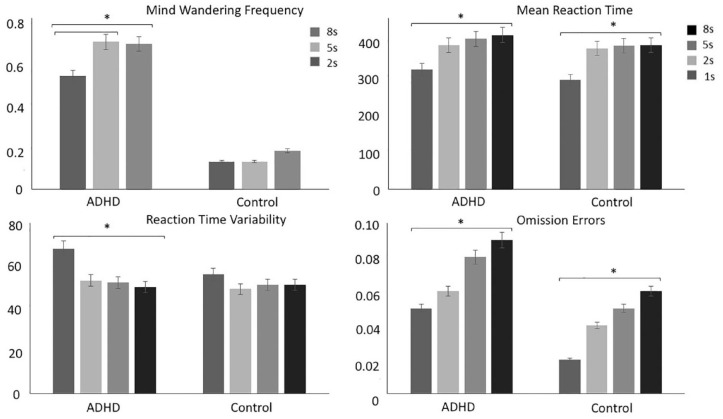
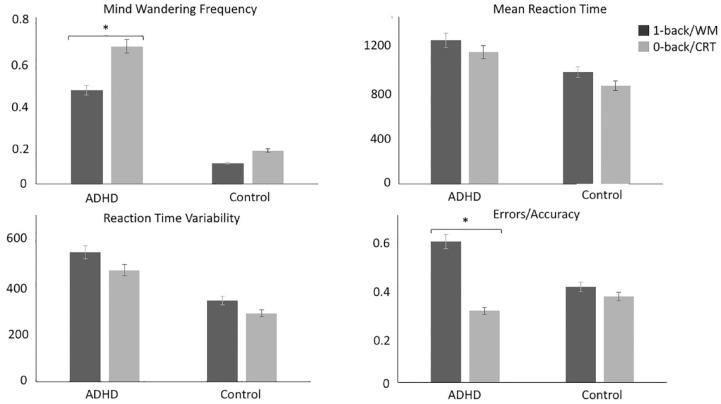
A significant association between MW frequency and the clinical measures was demonstrated. Along with increased MW frequency, individuals with ADHD reported decreasing MW frequency during increasing demands on working memory (context regulation), but not on sustained attention (deficient context regulation). Controls, however, maintained continuous task focus across all conditions. Group differences in task performance were no longer significant after adding MW frequency as a covariate.
Deficient context regulation during increasing demands on sustained attention suggests that sustained attention deficits may play a more important role in regulation of MW in ADHD. MW frequency might also underpin performance deficits in ADHD.
我们旨在了解 MW 频率与临床指标之间的关系,MW 的情境调节以及任务表现的组间差异。
27 名 ADHD 患者和 29 名对照组参与者完成了一系列需要工作记忆和持续注意力的任务,并使用探针记录了他们的 MW 频率。
MW 频率与临床指标之间存在显著关联。随着 MW 频率的增加,ADHD 患者在工作记忆需求增加时(情境调节)报告的 MW 频率降低,但在持续注意力需求增加时(情境调节不足)则不会降低。然而,对照组在所有条件下都保持了持续的任务焦点。在加入 MW 频率作为协变量后,任务表现的组间差异不再显著。
在持续注意力需求增加时的情境调节不足表明,持续注意力缺陷可能在 ADHD 患者的 MW 调节中发挥更重要的作用。MW 频率也可能是 ADHD 患者表现缺陷的基础。