Department of Experimental and Applied Psychology, Vrije Universiteit Amsterdam.
Institute of Brain and Behavior Amsterdam.
Psychol Sci. 2020 Oct;31(10):1211-1221. doi: 10.1177/0956797620960011. Epub 2020 Sep 17.
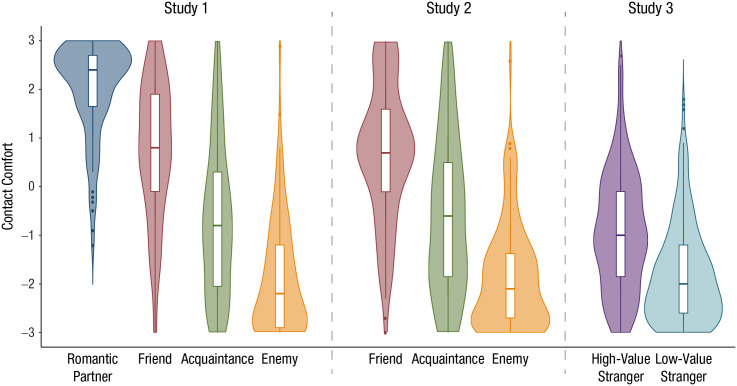
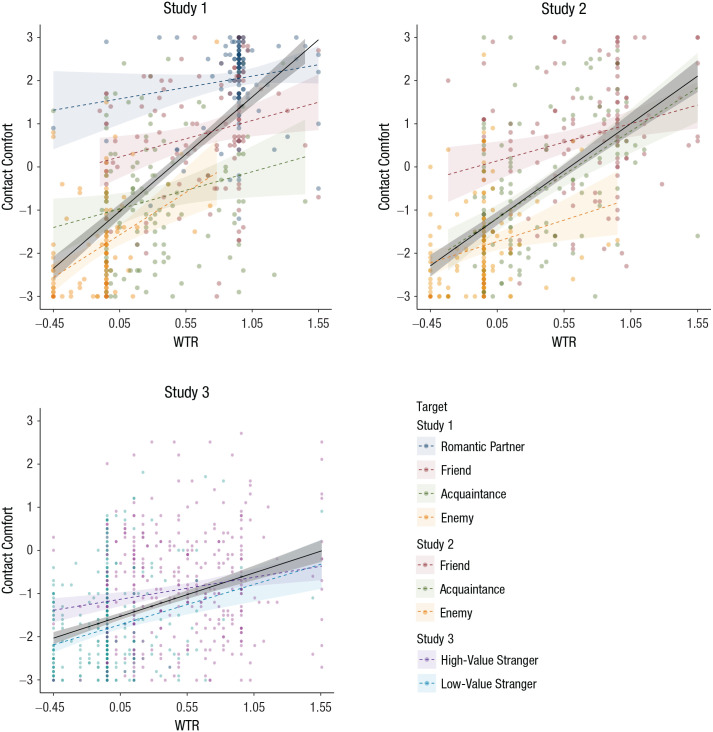
Behavioral-immune-system research has illuminated how people detect and avoid signs of infectious disease. But how do we regulate exposure to pathogens that produce no symptoms in their hosts? This research tested the proposition that estimates of interpersonal value are used for this task. The results of three studies ( = 1,694), each conducted using U.S. samples, are consistent with this proposition: People are less averse to engaging in infection-risky acts not only with friends relative to foes but also with honest and agreeable strangers relative to dishonest and disagreeable ones. Further, a continuous measure of how much a person values a target covaries with comfort with infection-risky acts with that target, even within relationship categories. Findings indicate that social prophylactic motivations arise not only from cues to infectiousness but also from interpersonal value. Consequently, pathogen transmission within social networks might be exacerbated by relaxed contamination aversions with highly valued social partners.
行为免疫系统的研究阐明了人们如何发现和避免传染病的迹象。但是,我们如何控制与宿主没有症状的病原体的接触呢?这项研究检验了这样一种假设,即人际价值的估计被用于完成这项任务。三项研究的结果(n=1694),每一项都使用美国样本进行,都与这一假设一致:人们不仅与朋友而不是敌人相比,与诚实和友善的陌生人而不是不诚实和不友善的陌生人相比,更不容易回避有感染风险的行为。此外,一个人对目标的重视程度的连续衡量标准与与该目标进行有感染风险的行为的舒适度相关,即使在关系类别内也是如此。研究结果表明,社会预防动机不仅来自于传染性的线索,也来自于人际价值。因此,与高度重视的社会伙伴的放松污染回避可能会加剧社交网络内的病原体传播。