Department of Anthropology, Center for Behavior, Evolution, and Culture, University of California, Los Angeles, CA, 90095, USA.
Department of Anthropology, Center for Behavior, Evolution, and Culture, Bedari Kindness Institute, University of California, Los Angeles, CA, 90095, USA.
Sci Rep. 2023 Apr 11;13(1):4969. doi: 10.1038/s41598-023-29655-0.
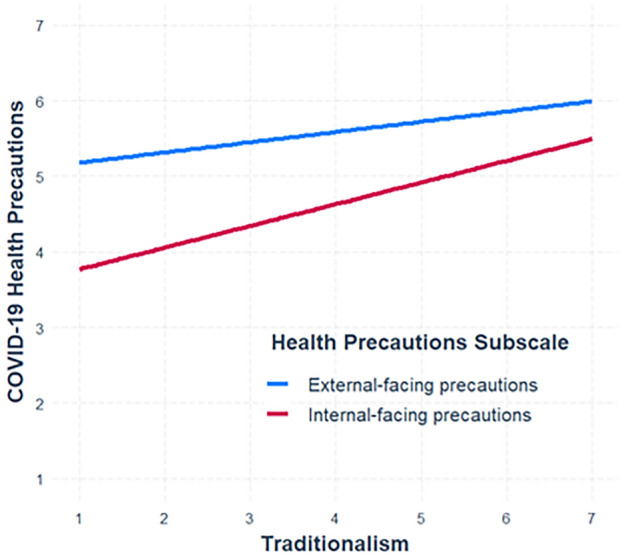
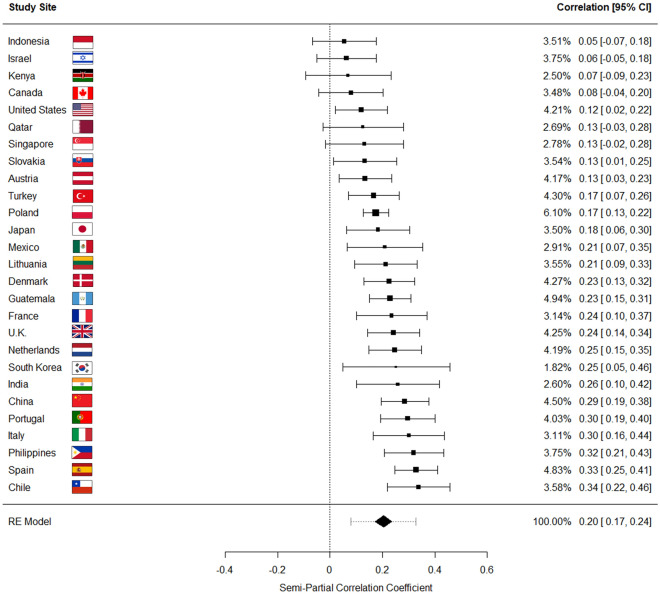
People vary both in their embrace of their society's traditions, and in their perception of hazards as salient and necessitating a response. Over evolutionary time, traditions have offered avenues for addressing hazards, plausibly resulting in linkages between orientations toward tradition and orientations toward danger. Emerging research documents connections between traditionalism and threat responsivity, including pathogen-avoidance motivations. Additionally, because hazard-mitigating behaviors can conflict with competing priorities, associations between traditionalism and pathogen avoidance may hinge on contextually contingent tradeoffs. The COVID-19 pandemic provides a real-world test of the posited relationship between traditionalism and hazard avoidance. Across 27 societies (N = 7844), we find that, in a majority of countries, individuals' endorsement of tradition positively correlates with their adherence to costly COVID-19-avoidance behaviors; accounting for some of the conflicts that arise between public health precautions and other objectives further strengthens this evidence that traditionalism is associated with greater attention to hazards.
人们在接受社会传统方面存在差异,在感知危险方面也存在差异,认为危险是突出的,需要做出反应。在进化过程中,传统为应对危险提供了途径,这可能导致人们对传统和对危险的态度之间存在联系。新兴的研究文献记录了传统主义与威胁反应之间的联系,包括对病原体回避的动机。此外,由于减轻危险的行为可能与竞争的优先事项相冲突,因此传统主义与病原体回避之间的关联可能取决于具体情况的权衡。新冠疫情为传统主义与危险回避之间假定的关系提供了现实世界的检验。在 27 个社会(N=7844)中,我们发现,在大多数国家,个人对传统的认可与他们对昂贵的新冠病毒回避行为的坚持呈正相关;考虑到公共卫生预防措施和其他目标之间出现的一些冲突,这进一步证明了传统主义与对危险的更大关注有关。