Senyanzobe J M V, Mulei Josephine M, Bizuru Elias, Nsengimuremyi Concorde
University of Rwanda, Rwanda.
University of Eldoret, Kenya.
Heliyon. 2020 Sep 3;6(9):e04806. doi: 10.1016/j.heliyon.2020.e04806. eCollection 2020 Sep.
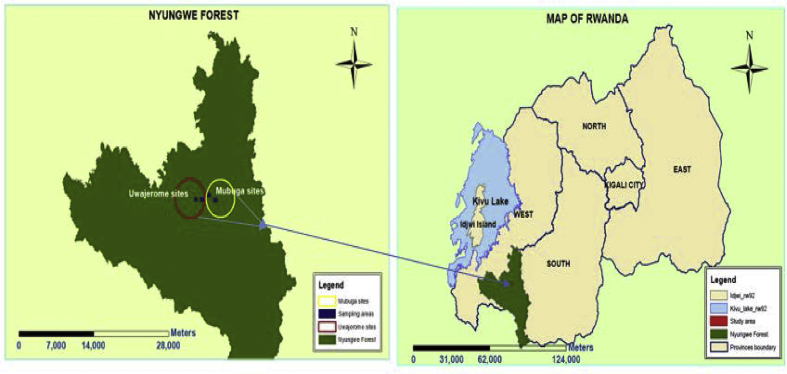
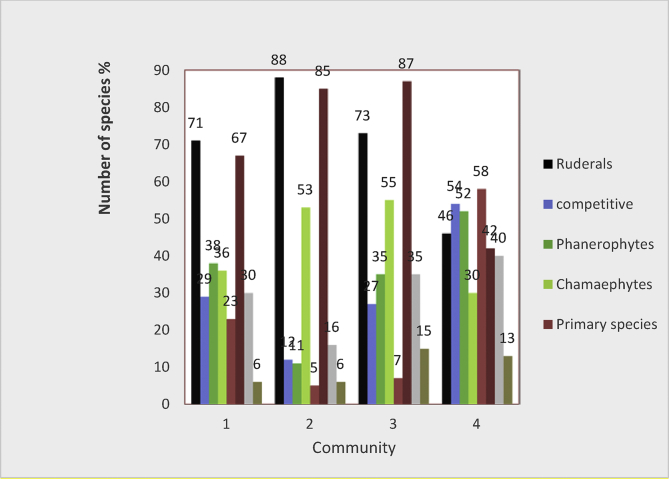
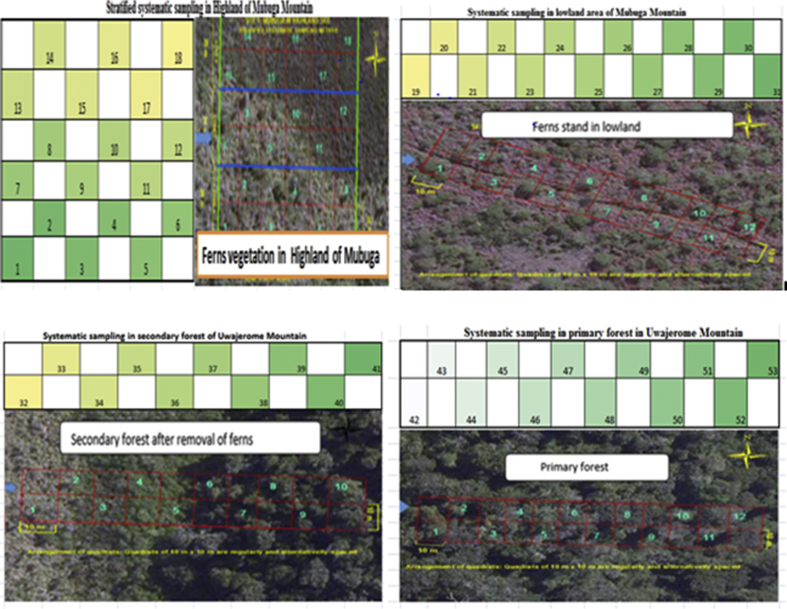
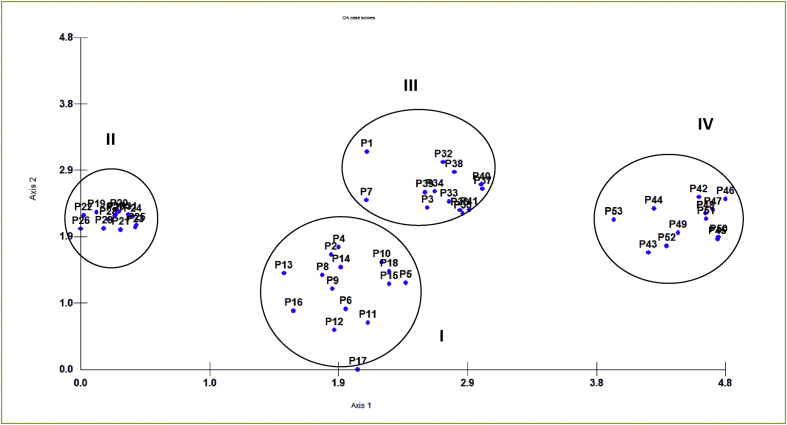
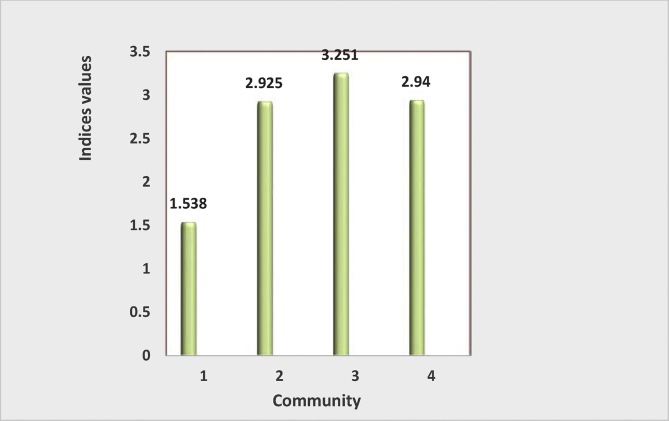
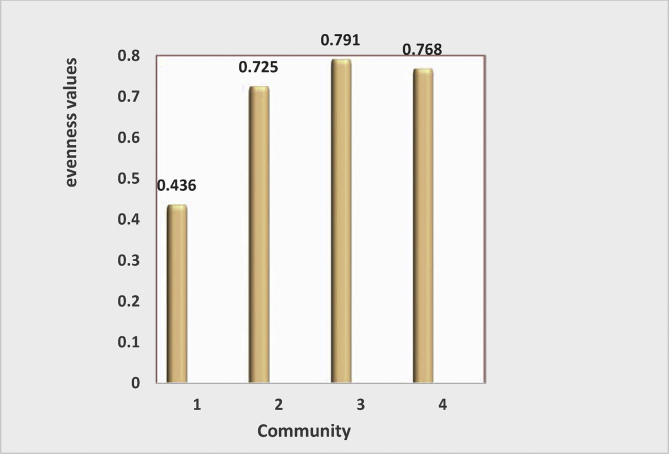
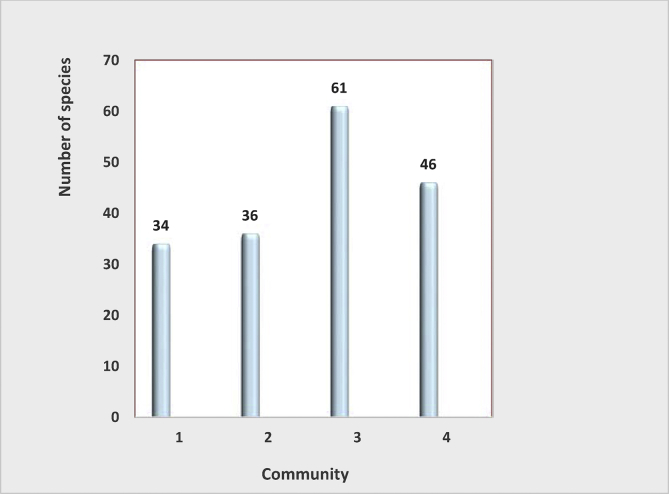
acts as an important ecological filters in dominated communities. A study to investigate the effects of its dominance in the vegetation of Nyungwe was conducted. Sampling was done in Mubuga and Uwajerome mountains. A total of 53 alternate plots measuring 10 m × 10 m were sampled along a transect at regular interval of 10 m. In each plot, the species were identified and the cover abundance measured subjectively. Plant strategies, succession, biological forms, distribution and conservation status of each species were also determined. Data on species composition and cover abundance were analyzed using MVSP software and Shannon -Weiner index was used to determine diversity of communities. Descriptive statistics were used to assess the characteristics of the species. A total of 141 species belonging to 100 genera and 54 families and distributed in four plant communities were identified. were dominant in communities I, II and III, with average cover of 31%, 6% and 4% respectively. The primary forest was dominated by and in community IV, with 21% and 10% coverage respectively. Shannon- Weiner and evenness indices were 1.538, 2.925, 3.251 and 2.940 and 0.436, 0.716, 0.791 and 0.768 in communities I, II, III and IV respectively. Species richness were 34, 36, 61 and 46 in communities I, II, III and IV respectively. Ruderal, chamaephytes, secondary, Africa tropical and least concerns plant species predominated in vegetation areas with 76% 48%, 69%, 43% and 90% of total species respectively. Competitive, phanerophytes, primary, Afromontane and least concerns plant species dominated in non-dominated area with 54%, 52%, 58%, 40% and 88% of total species respectively. restricted the growth of trees as exhibited by the presence of few phanerophytes and enhanced the growth of ruderal species, both of which are indicators of disturbed forest. The tree species observed in cut-areas was .
在优势群落中起着重要的生态过滤作用。开展了一项研究,以调查其在纽恩圭植被中的优势地位所产生的影响。在穆布加山和乌瓦杰罗梅山进行了采样。沿着一条样带,每隔10米定期对总共53个10米×10米的交替样地进行采样。在每个样地中,识别物种并主观测量盖度丰度。还确定了每个物种的植物策略、演替、生物型、分布和保护状况。使用MVSP软件分析物种组成和盖度丰度数据,并使用香农 - 韦纳指数来确定群落的多样性。使用描述性统计来评估物种的特征。共识别出141个物种,隶属于100属54科,分布在四个植物群落中。在群落I、II和III中占优势,平均盖度分别为31%、6%和4%。在群落IV中,原始森林以 和 为主,盖度分别为21%和10%。群落I、II、III和IV的香农 - 韦纳指数和均匀度指数分别为1.538、2.925、3.251和2.940以及0.436、0.716、0.791和0.768。群落I、II、III和IV的物种丰富度分别为34、36、61和46。在 植被区域,杂草性植物、地上芽植物、次生植物、非洲热带植物和无危植物物种占主导,分别占总物种的76%、48%、69%、43%和90%。在非优势区域,竞争型植物、高位芽植物、原生植物、亚高山植物和无危植物物种占主导,分别占总物种的54%、52%、58%、40%和88%。 限制了树木的生长,表现为高位芽植物数量较少,同时促进了杂草性物种的生长,这两者都是森林受到干扰的指标。在 砍伐区域观察到的树种是 。