Translational and Clinical Research Institute, Newcastle University, Newcastle upon Tyne, UK.
Novo Nordisk Foundation Center for Basic Metabolic Research, Faculty of Health and Medical Sciences, University of Copenhagen, Copenhagen, Denmark.
J Clin Endocrinol Metab. 2021 Jan 1;106(1):80-90. doi: 10.1210/clinem/dgaa653.
Pancreatic beta-cell glucose sensitivity is the slope of the plasma glucose-insulin secretion relationship and is a key predictor of deteriorating glucose tolerance and development of type 2 diabetes. However, there are no large-scale studies looking at the genetic determinants of beta-cell glucose sensitivity.
To understand the genetic determinants of pancreatic beta-cell glucose sensitivity using genome-wide meta-analysis and candidate gene studies.
We performed a genome-wide meta-analysis for beta-cell glucose sensitivity in subjects with type 2 diabetes and nondiabetic subjects from 6 independent cohorts (n = 5706). Beta-cell glucose sensitivity was calculated from mixed meal and oral glucose tolerance tests, and its associations between known glycemia-related single nucleotide polymorphisms (SNPs) and genome-wide association study (GWAS) SNPs were estimated using linear regression models.
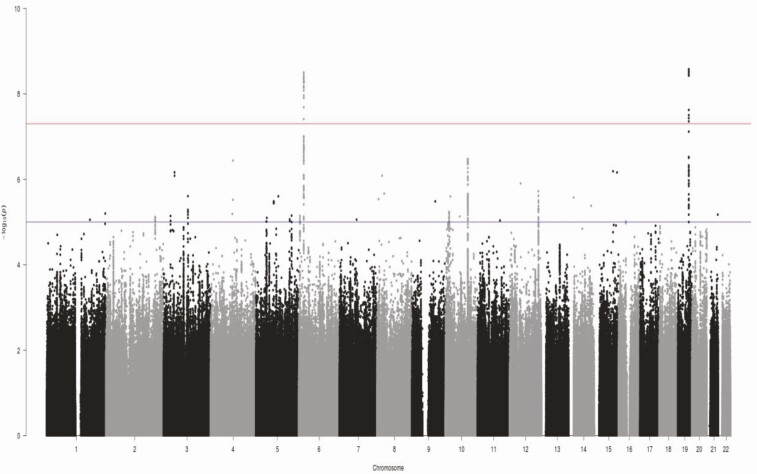
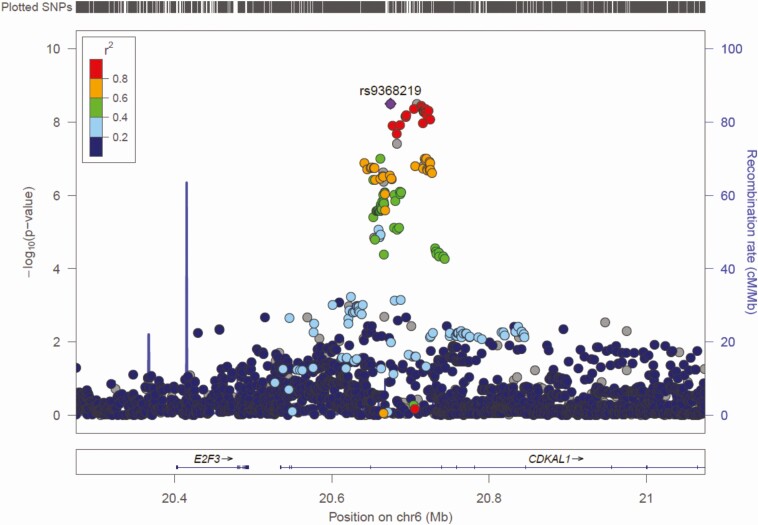
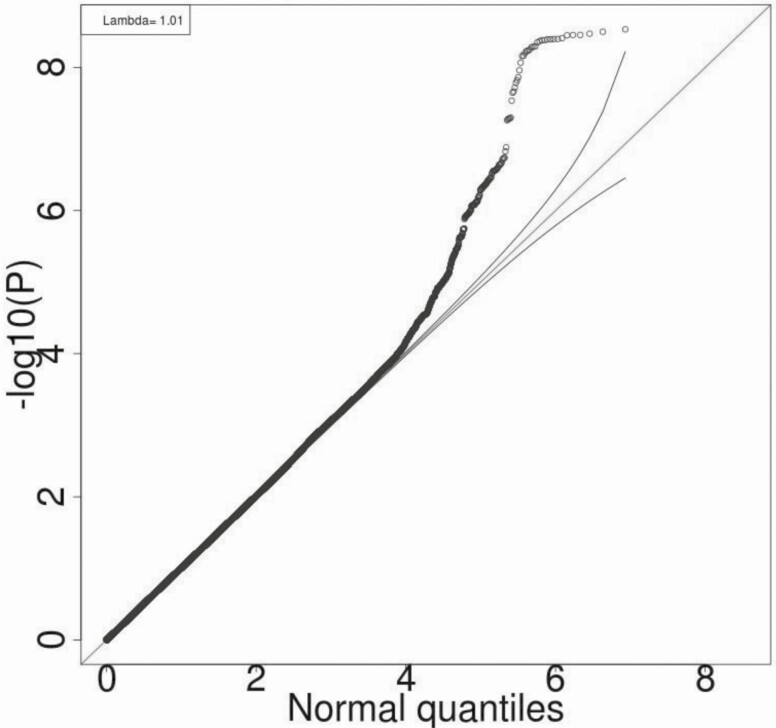
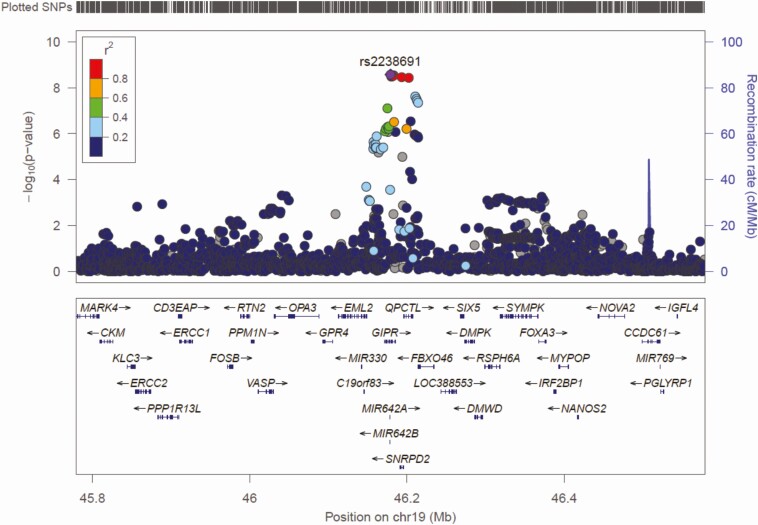
Beta-cell glucose sensitivity was moderately heritable (h2 ranged from 34% to 55%) using SNP and family-based analyses. GWAS meta-analysis identified multiple correlated SNPs in the CDKAL1 gene and GIPR-QPCTL gene loci that reached genome-wide significance, with SNP rs2238691 in GIPR-QPCTL (P value = 2.64 × 10⁻⁹) and rs9368219 in the CDKAL1 (P value = 3.15 × 10⁻⁹) showing the strongest association with beta-cell glucose sensitivity. These loci surpassed genome-wide significance when the GWAS meta-analysis was repeated after exclusion of the diabetic subjects. After correction for multiple testing, glycemia-associated SNPs in or near the HHEX and IGF2B2 loci were also associated with beta-cell glucose sensitivity.
We show that, variation at the GIPR-QPCTL and CDKAL1 loci are key determinants of pancreatic beta-cell glucose sensitivity.
胰腺β细胞的葡萄糖敏感性是血糖-胰岛素分泌关系的斜率,是预测糖耐量恶化和 2 型糖尿病发展的关键指标。然而,目前还没有大规模的研究来探讨β细胞葡萄糖敏感性的遗传决定因素。
通过全基因组荟萃分析和候选基因研究,了解胰腺β细胞葡萄糖敏感性的遗传决定因素。
我们对来自 6 个独立队列(n=5706)的 2 型糖尿病患者和非糖尿病患者进行了全基因组荟萃分析,以评估β细胞葡萄糖敏感性。β细胞葡萄糖敏感性是通过混合餐和口服葡萄糖耐量试验计算得出的,已知与血糖相关的单核苷酸多态性(SNP)和全基因组关联研究(GWAS)SNP 与β细胞葡萄糖敏感性之间的关系,使用线性回归模型进行估计。
使用 SNP 和基于家族的分析,β细胞葡萄糖敏感性具有中度的遗传力(h2 范围为 34%至 55%)。GWAS 荟萃分析在 CDKAL1 基因和 GIPR-QPCTL 基因座中发现了多个相关 SNP,达到了全基因组显著性水平,其中 GIPR-QPCTL 基因座中的 SNP rs2238691(P 值=2.64×10⁻⁹)和 CDKAL1 基因座中的 SNP rs9368219(P 值=3.15×10⁻⁹)与β细胞葡萄糖敏感性的相关性最强。当排除糖尿病患者后,重新进行 GWAS 荟萃分析,这些基因座的结果仍具有全基因组显著性。在进行多次检验校正后,HHEX 和 IGF2B2 基因座附近或附近的与血糖相关的 SNP 也与β细胞葡萄糖敏感性相关。
我们表明,GIPR-QPCTL 和 CDKAL1 基因座的变异是胰腺β细胞葡萄糖敏感性的关键决定因素。