Department of Anatomy and Convergence Medical Science, College of Medicine, Gyeongsang National University, Jinju, South Gyeongsang 52727, Republic of Korea.
Department of Ophthalmology, Gyeongsang National University Changwon Hospital, Changwon, Gyeongsangnam‑do 51472, Republic of Korea.
Mol Med Rep. 2020 Oct;22(4):2733-2740. doi: 10.3892/mmr.2020.11344. Epub 2020 Jul 16.
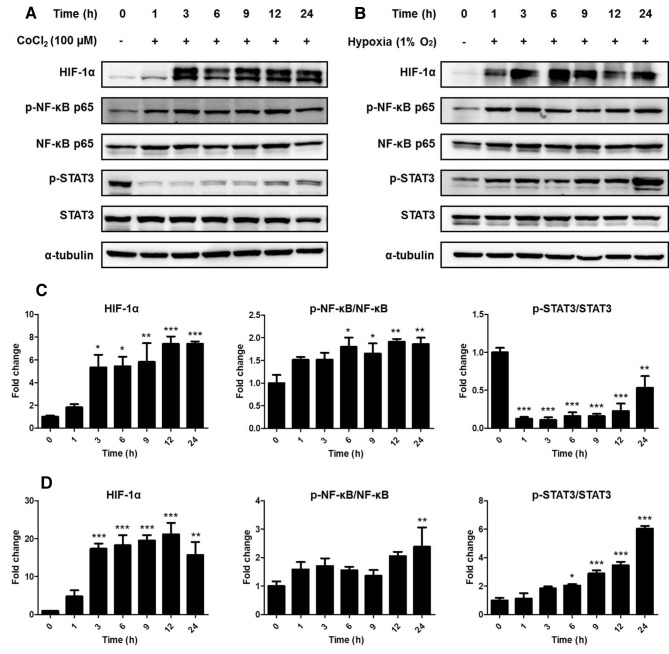
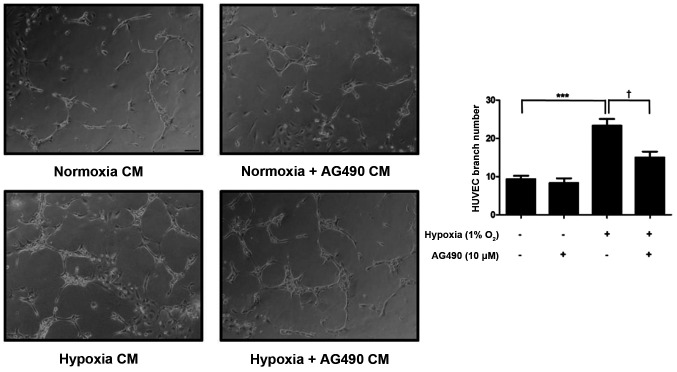
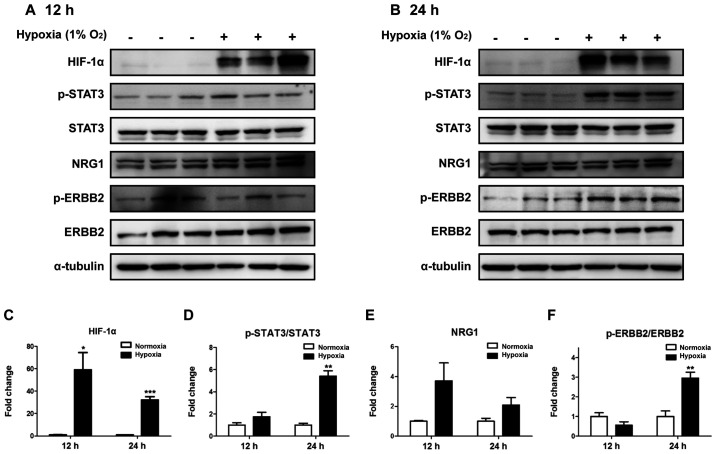
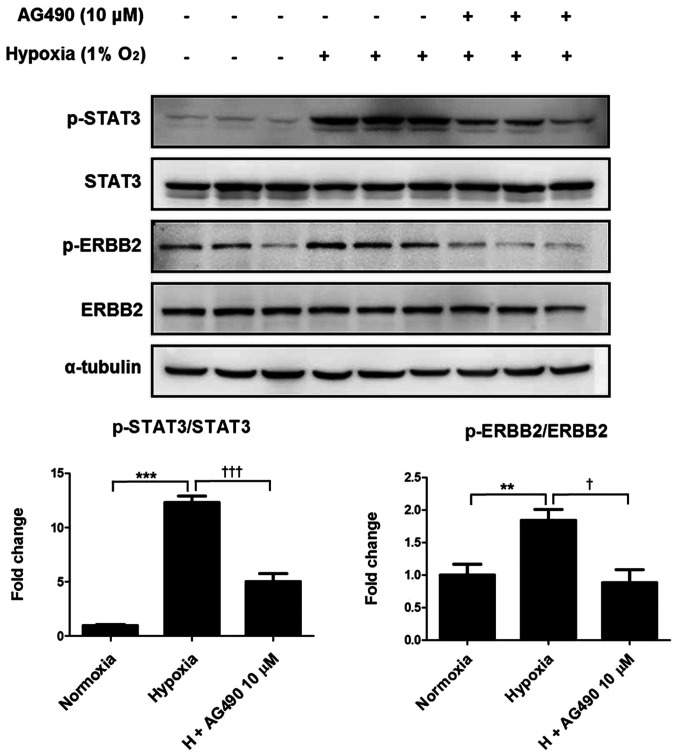
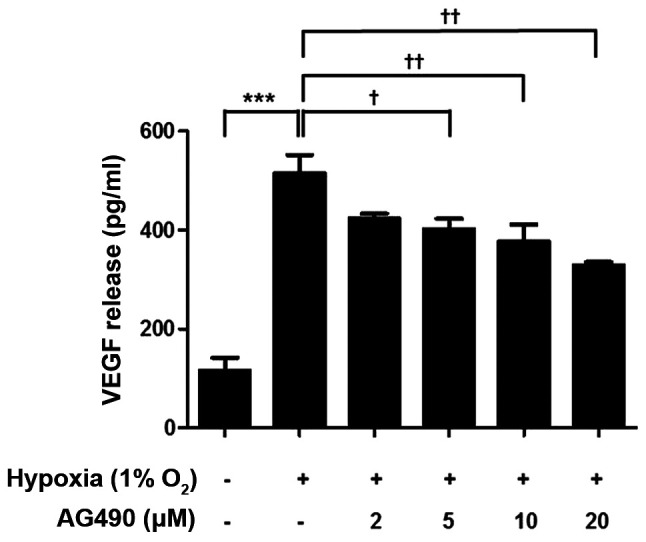
Neovascularization in the retina can cause loss of vision. Vascular endothelial growth factor (VEGF) serves an important role in the pathogenesis of retinal vascular diseases. Hypoxia is a notable cause of VEGF release and both STAT3 and ERBB2 are known to be associated with VEGF. In addition, STAT3 and ERBB2 interact with each other. In the present study, it was hypothesized that signal transducer and activator of transcription 3 (STAT3) and erbB‑2 receptor tyrosine kinase 2 (ERBB2) may be involved in the regulation of hypoxia‑induced VEGF in the retina. Cells of the retinal pigment epithelium (RPE) are an important source of VEGF. Therefore, the RPE‑derived human cell line ARPE‑19 was exposed to hypoxia. Hypoxia‑induced phosphorylation of STAT3 and ERBB2 in ARPE‑19 cells was decreased by AG490, an inhibitor of Janus kinase 2, as were hypoxia‑induced VEGF release and tube formation in human umbilical vein endothelial cells. Thus, phosphorylation of ERBB2 and STAT3 regulates hypoxia‑induced VEGF release in ARPE‑19 cells. The results of the present study suggested that inhibition of ERBB2 and STAT3‑mediated pathways under hypoxia may represent a new strategy for treating retinal vascular disease.
视网膜新生血管可导致视力丧失。血管内皮生长因子 (VEGF) 在视网膜血管疾病的发病机制中起重要作用。缺氧是 VEGF 释放的一个显著原因,STAT3 和 ERBB2 都与 VEGF 有关。此外,STAT3 和 ERBB2 相互作用。在本研究中,假设信号转导和转录激活因子 3 (STAT3) 和 erbB-2 受体酪氨酸激酶 2 (ERBB2) 可能参与调节视网膜中的缺氧诱导的 VEGF。视网膜色素上皮 (RPE) 的细胞是 VEGF 的重要来源。因此,将 RPE 来源的人细胞系 ARPE-19 暴露于缺氧环境中。Janus 激酶 2 的抑制剂 AG490 可降低 ARPE-19 细胞中缺氧诱导的 STAT3 和 ERBB2 的磷酸化,以及人脐静脉内皮细胞中缺氧诱导的 VEGF 释放和管形成。因此,ERBB2 和 STAT3 的磷酸化调节 ARPE-19 细胞中缺氧诱导的 VEGF 释放。本研究的结果表明,抑制缺氧下 ERBB2 和 STAT3 介导的通路可能代表治疗视网膜血管疾病的一种新策略。