Institute of Aerospace Medicine, German Aerospace Center, Cologne, Germany.
Space Medicine Team, European Astronaut Centre, European Space Agency, Cologne, Germany.
PLoS One. 2020 Sep 18;15(9):e0239228. doi: 10.1371/journal.pone.0239228. eCollection 2020.
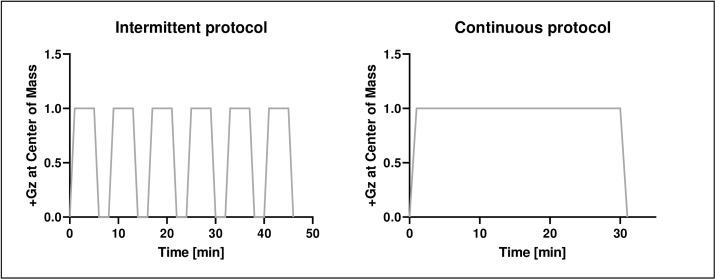
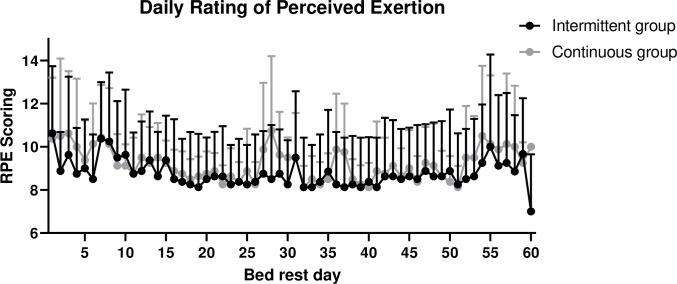
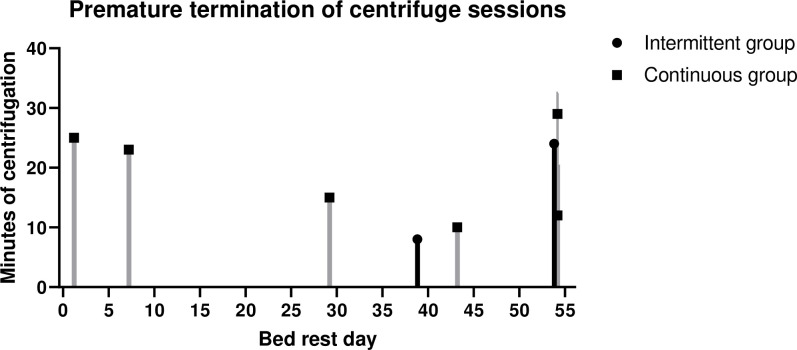
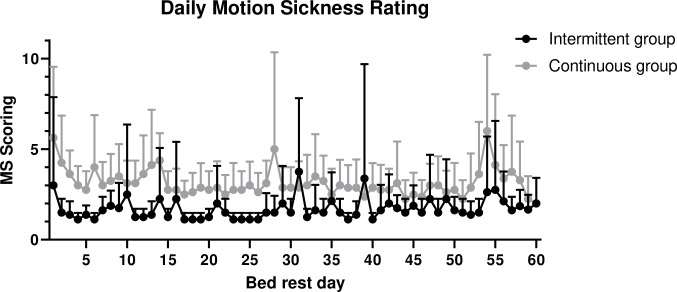
Artificial gravity through short-arm centrifugation has potential as a multi-system countermeasure for deconditioning and cranial fluid shifts that may underlie ocular issues in microgravity. However, the optimal short-arm centrifugation protocol that is effective whilst remaining tolerable has yet to be determined. Given that exposure to centrifugation is associated with presyncope and syncope and in addition motion sickness an intermittent protocol has been suggested to be more tolerable. Therefore, we assessed cardiovascular loading and subjective tolerability of daily short arm centrifugation with either an intermittent or a continuous protocol during long-term head-down bed rest as model for microgravity exposure in a mixed sex cohort. During the Artificial Gravity Bed Rest with European Space Agency (AGBRESA) 60 day 6° head down tilt bed rest study we compared the tolerability of daily +1 Gz exposure at the center of mass centrifugation, either performed continuously for 30 minutes, or intermittedly (6 x 5 minutes). Heart rate and blood pressure were assessed daily during centrifugation along with post motion sickness scoring and rate of perceived exertion. During bed rest, 16 subjects (6 women, 10 men), underwent 960 centrifuge runs in total. Ten centrifuge runs had to be terminated prematurely, 8 continuous runs and 2 intermittent runs, mostly due to pre-syncopal symptoms and not motion sickness. All subjects were, however, able to resume centrifuge training on subsequent days. We conclude that both continuous and intermittent short-arm centrifugation protocols providing artificial gravity equivalent to +1 Gz at the center of mass is tolerable in terms of cardiovascular loading and motion sickness during long-term head down tilt bed rest. However, intermittent centrifugation appears marginally better tolerated, albeit differences appear minor.
人工重力通过短臂离心具有作为一种多系统对策的潜力,可以对抗微重力下的失健和颅液转移,这些可能是眼部问题的基础。然而,有效的最佳短臂离心方案,同时保持可耐受,尚未确定。鉴于暴露于离心会导致晕厥前和晕厥,并伴有运动病,因此建议间歇方案更耐受。因此,我们评估了心血管负荷和在长期头低位卧床休息期间,每日短臂离心的主观耐受性,该卧床休息是模拟微重力暴露的混合性别队列。在人工重力卧床休息与欧洲航天局(AGBRESA)60 天 6°头低位倾斜卧床休息研究中,我们比较了每日在质心进行+1Gz 暴露的耐受性,要么连续进行 30 分钟,要么间歇进行(6 x 5 分钟)。在离心过程中,每天评估心率和血压,以及运动病评分和感知用力率。在卧床休息期间,16 名受试者(6 名女性,10 名男性)总共进行了 960 次离心跑。由于预晕厥症状而不是运动病,10 次连续运行和 2 次间歇运行不得不提前终止。然而,所有受试者都能够在随后的日子里恢复离心训练。我们的结论是,在长期头低位倾斜卧床休息期间,连续和间歇短臂离心方案都能提供质心等效于+1Gz 的人工重力,在心血管负荷和运动病方面是可耐受的。然而,间歇离心似乎更耐受,尽管差异似乎很小。