Pathogen Genomics Center, National Institute of Infectious Diseases, Tokyo, Japan.
PLoS One. 2020 Sep 18;15(9):e0239403. doi: 10.1371/journal.pone.0239403. eCollection 2020.
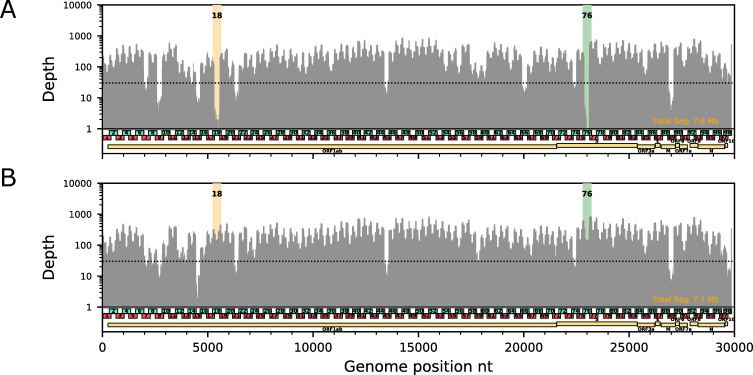
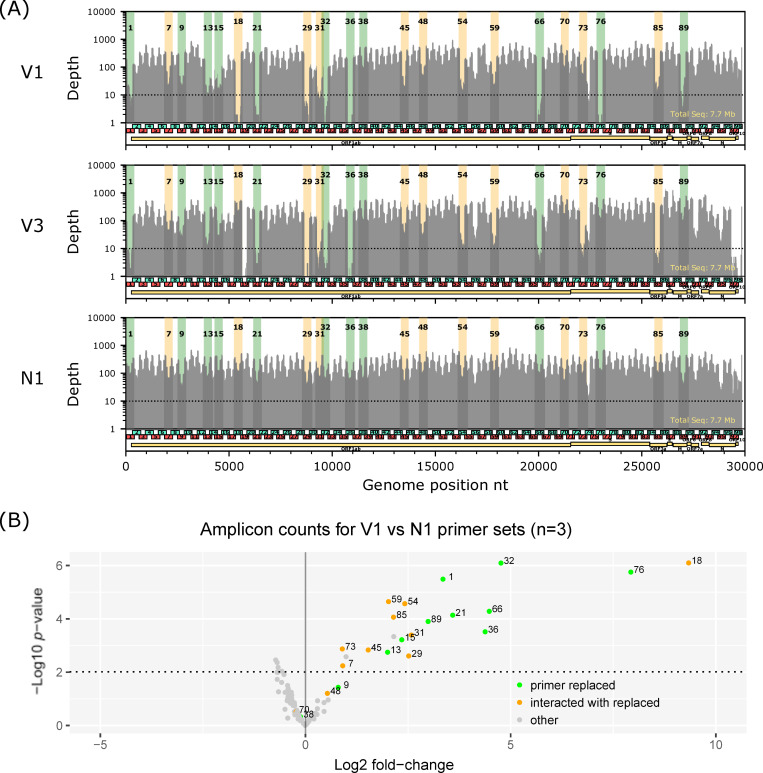
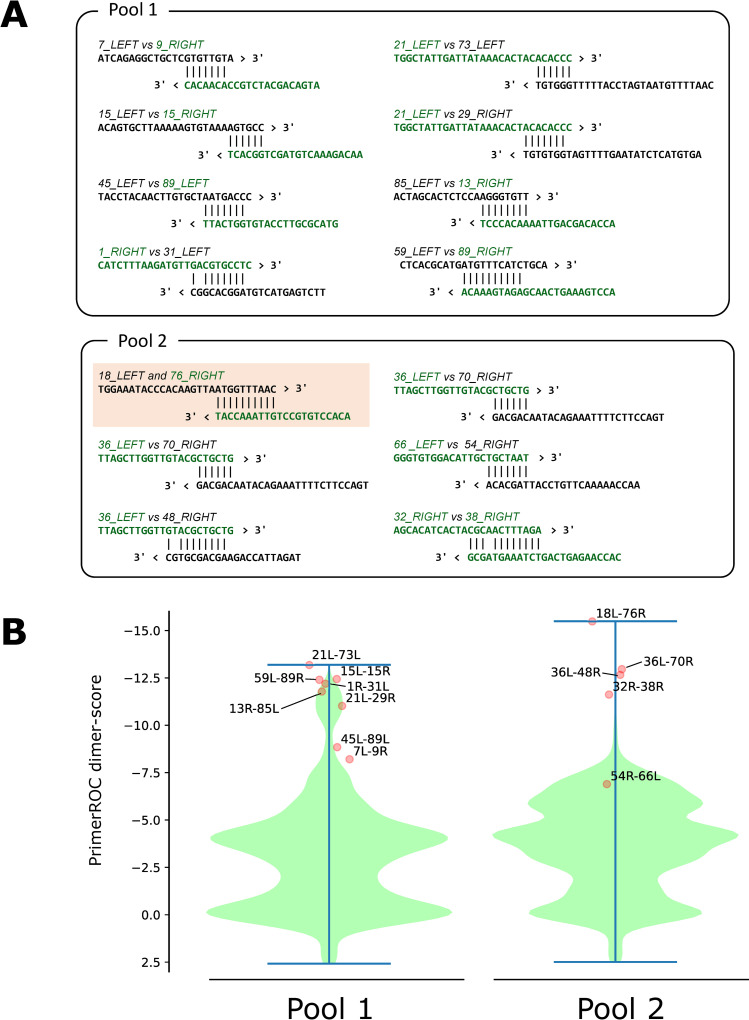
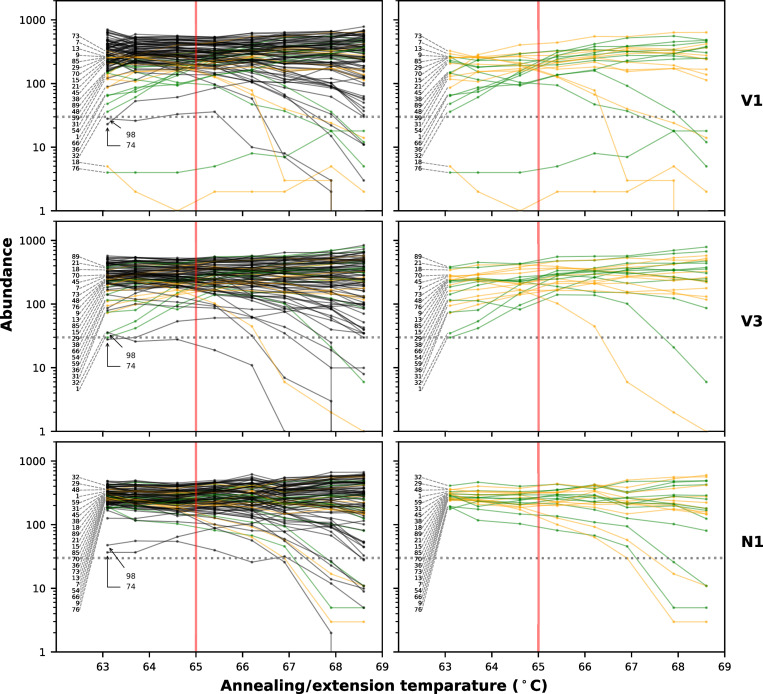
Since December 2019, the coronavirus disease 2019 (COVID-19) caused by a novel coronavirus SARS-CoV-2 has rapidly spread to almost every nation in the world. Soon after the pandemic was recognized by epidemiologists, a group of biologists comprising the ARTIC Network, has devised a multiplexed polymerase chain reaction (PCR) protocol and primer set for targeted whole-genome amplification of SARS-CoV-2. The ARTIC primer set amplifies 98 amplicons, which are separated only in two PCRs, across a nearly entire viral genome. The original primer set and protocol showed a fairly small amplification bias when clinical samples with relatively high viral loads were used. However, as sample's viral load become low, rapid decrease in abundances of several amplicons were seen. In this report, we will show that dimer formations between some primers are the major cause of coverage bias in the multiplex PCR. Based on this, we propose 12 alternative primers in total in the ARTIC primer set that were predicted to be involved in 14 primer interactions. The resulting primer set, version N1 (NIID-1), exhibits improved overall coverage compared to the ARTIC Network's original (V1) and modified (V3) primer set.
自 2019 年 12 月以来,由新型冠状病毒 SARS-CoV-2 引起的 2019 年冠状病毒病(COVID-19)迅速蔓延到世界几乎每个国家。在流行病学家认识到这一大流行之后不久,一个由生物学家组成的 ARTIC 网络就设计了一种多重聚合酶链反应(PCR)方案和引物组,用于靶向 SARS-CoV-2 的全基因组扩增。ARTIC 引物组在两个 PCR 中仅分离出 98 个扩增子,跨越了几乎整个病毒基因组。当使用具有相对高病毒载量的临床样本时,原始引物组和方案显示出相当小的扩增偏倚。然而,随着样本病毒载量的降低,几个扩增子的丰度迅速下降。在本报告中,我们将表明一些引物之间的二聚体形成是多重 PCR 中覆盖偏差的主要原因。基于此,我们总共提出了 ARTIC 引物组中的 12 个替代引物,这些引物被预测涉及 14 个引物相互作用。由此产生的引物组版本 N1(NIID-1)与 ARTIC 网络的原始(V1)和修改(V3)引物组相比,整体覆盖率得到了提高。