Zhou Wenmin, Wang Hui, Yang Yuqi, Chen Zhe-Sheng, Zou Chang, Zhang Jianye
Key Laboratory of Molecular Target & Clinical Pharmacology and the State Key Laboratory of Respiratory Disease, School of Pharmaceutical Sciences & the Fifth Affiliated Hospital, Guangzhou Medical University, Guangzhou, 511436, PR China.
Key Laboratory of Molecular Target & Clinical Pharmacology and the State Key Laboratory of Respiratory Disease, School of Pharmaceutical Sciences & the Fifth Affiliated Hospital, Guangzhou Medical University, Guangzhou, 511436, PR China; Guangzhou Institute of Pediatrics/Guangzhou Women and Children's Medical Center, Guangzhou Medical University, Guangzhou, 510623, PR China; The First Affiliated Hospital, Hainan Medical University, Haikou, 571199, PR China.
Drug Discov Today. 2020 Sep 16;25(11):2012-22. doi: 10.1016/j.drudis.2020.09.010.
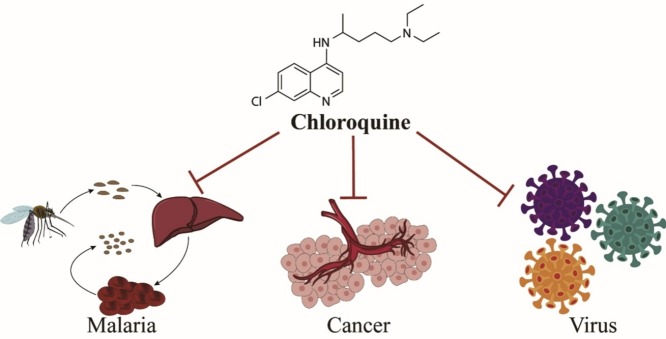
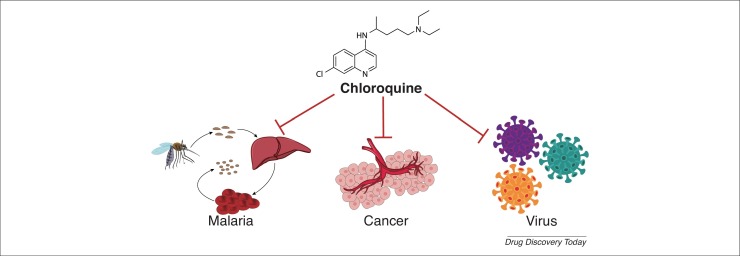
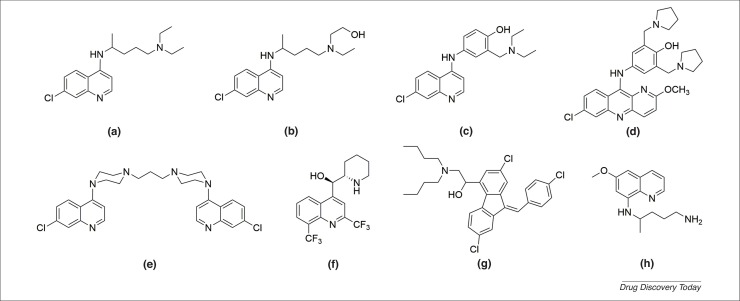
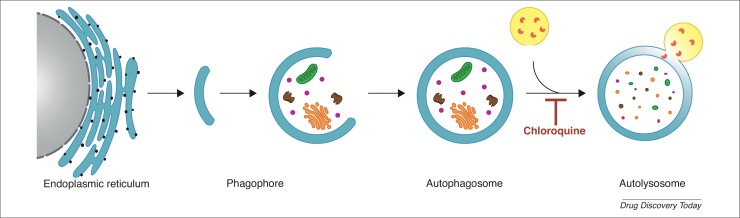
Quinoline (QN) derivatives are often used for the prophylaxis and treatment of malaria. Chloroquine (CQ), a protonated, weakly basic drug, exerts its antimalarial effect mainly by increasing pH and accumulating in the food vacuole of the parasites. Repurposing CQ is an emerging strategy for new indications. Given the inhibition of autophagy and its immunomodulatory action, CQ shows positive efficacy against cancer and viral diseases, including Coronavirus 2019 (COVID-19). Here, we review the underlying mechanisms behind the antimalarial, anticancer and antiviral effects of CQ. We also discuss the clinical evidence for the use of CQ and hydroxychloroquine (HCQ) against COVID-19.
喹啉(QN)衍生物常用于疟疾的预防和治疗。氯喹(CQ)是一种质子化的弱碱性药物,其抗疟作用主要是通过提高pH值并在寄生虫的食物泡中蓄积来实现的。将氯喹重新用于新的适应症是一种新兴策略。鉴于其对自噬的抑制作用及其免疫调节作用,氯喹对癌症和病毒性疾病,包括2019冠状病毒病(COVID-19)显示出积极疗效。在此,我们综述氯喹抗疟、抗癌和抗病毒作用背后的潜在机制。我们还讨论了使用氯喹和羟氯喹(HCQ)治疗COVID-19的临床证据。