Ericson D, Ellen R P, Buivids I
J Bacteriol. 1987 Jun;169(6):2507-15. doi: 10.1128/jb.169.6.2507-2515.1987.
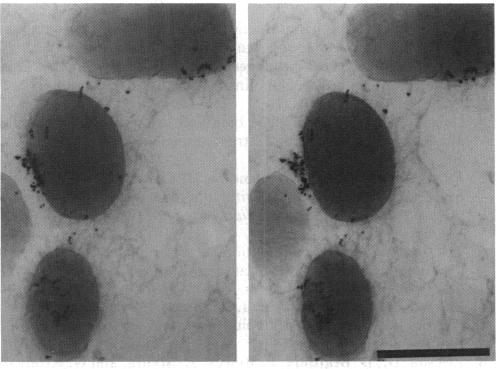
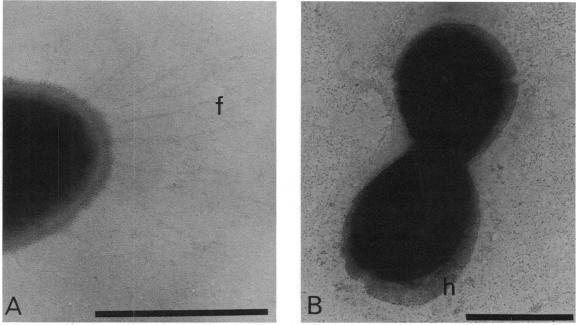
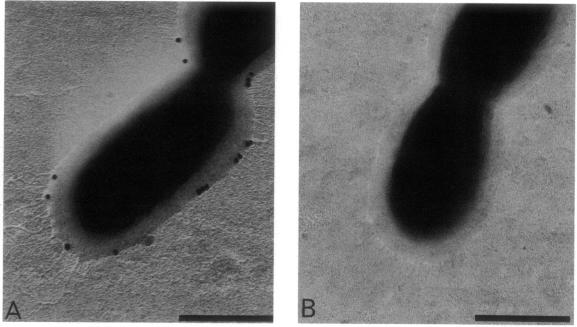
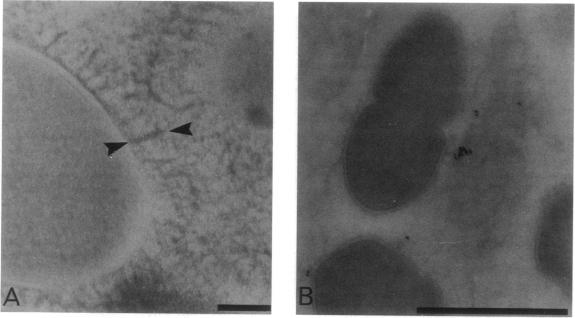
As little detail is known about the surface structure of streptococci in the mutans group and the relationship of surface structure to host ligand-binding functions, the twofold purpose of this investigation was to examine in detail, by a range of electron microscopic techniques, the surface structures of streptococci in the different species of the mutans group and to investigate the distribution of beta 2-microglobulin (beta 2m)-binding sites on such structures. Strains representing Streptococcus mutans, S. cricetus, S. rattus, S. sobrinus, and four fresh isolates were studied by shadowcasting and histochemical staining of whole-mounted cells as well as by ultrathin and thick sectioning of embedded specimens. beta 2m-binding site distribution was visualized by indirect immunogold electron microscopy and by direct bacterial binding of beta 2m-conjugated gold probes. Shadowcast preparations revealed binding of gold probes to the cell surface of known beta 2m-binding strains but not to their polar fibrillar appendages. These long fibrils, common to all strains, were trypsin and sonication sensitive and stained with lead citrate but not with uranyl acetate or ruthenium red. More gold particles were bound by the indirect technique. For grid-mounted bacteria, the gold was mostly bound in clusters at the periphery of the cells. When gold probes were reacted in suspension with bacteria before mounting onto grids, a more even distribution of the gold was seen, but the bacteria were aggregated. Heating the bacteria eliminated beta 2m-gold binding but had no effect on the morphology of the fibrils. Thick sections of embedded bacteria prereacted with beta 2m-conjugated gold probes were analyzed by stereo imaging. A wispy, uranyl acetate-stained fuzzy layer, distinct from the fibrils seen by shadowcasting and extending up to one cell diameter from the cell wall, contained the gold probes. These findings introduce a concept that binding sites for some salivary ligands on mutans streptococci may be clustered on very delicate, nonfibrillar structures extending much further from the cell wall than previously appreciated. As for beta 2m, which composes part of the human histocompatibility antigens, part of the bacterial surface would be coated at a distance from its body with a protein not necessarily recognized as foreign by the host.
由于对变形链球菌组中链球菌的表面结构以及表面结构与宿主配体结合功能之间的关系了解甚少,本研究的双重目的是通过一系列电子显微镜技术详细检查变形链球菌组不同物种中链球菌的表面结构,并研究β2-微球蛋白(β2m)结合位点在这些结构上的分布。通过对整装细胞进行投影和组织化学染色以及对包埋标本进行超薄和厚切片,对代表变形链球菌、仓鼠链球菌、大鼠链球菌、远缘链球菌的菌株以及四个新分离株进行了研究。通过间接免疫金电子显微镜和β2m偶联金探针的直接细菌结合来观察β2m结合位点的分布。投影制备显示金探针与已知β2m结合菌株的细胞表面结合,但不与它们的极性纤维状附属物结合。这些所有菌株共有的长纤维对胰蛋白酶和超声处理敏感,用柠檬酸铅染色,但不用醋酸铀或钌红染色。间接技术结合的金颗粒更多。对于网格上的细菌,金大多聚集在细胞周边。当金探针在悬浮液中与细菌反应后再固定到网格上时,金的分布更均匀,但细菌会聚集。加热细菌消除了β2m-金的结合,但对纤维的形态没有影响。通过立体成像分析了预先用β2m偶联金探针反应的包埋细菌的厚切片。一个纤细的、用醋酸铀染色的模糊层,与投影所见的纤维不同,从细胞壁延伸到一个细胞直径的距离,包含金探针。这些发现引出了一个概念,即变形链球菌上一些唾液配体的结合位点可能聚集在非常精细的、非纤维状的结构上,这些结构从细胞壁延伸的距离比以前认为的要远得多。至于构成人类组织相容性抗原一部分的β2m,细菌表面的一部分会在远离菌体的一定距离处被一种宿主不一定视为外来的蛋白质覆盖。