Palmer Antony J, Poveda Jose Luis, Martinez-Laguna Daniel, Reyes Carlen, de Bont Jeroen, Silman Alan, Carr Andrew J, Duarte-Salles Talita, Prieto-Alhambra Daniel
Nuffield Department of Orthopaedics, Rheumatology and Musculoskeletal Sciences, University of Oxford, Oxford, UK.
GREMPAL Research Group, Fundació Institut Universitari per a la recerca a l'Atenció Primària de Salut Jordi Gol i Gurina (IDIAPJGol) and CIBERFes, Barcelona, Spain.
BMJ Open. 2020 Sep 17;10(9):e036023. doi: 10.1136/bmjopen-2019-036023.
To assess the association between age, sex, socioeconomic group, weight status and back pain risk in a large general population cohort of children.
A dynamic cohort of children aged 4 years in the Information System for Research in Primary Care (SIDIAP) electronic primary care records data in Catalonia. Multivariable Cox models were fitted to explore the association between back pain and weight status categories according to the WHO 2007 growth reference groups (body mass index for age z-score). Models were adjusted for age, sex, socioeconomic status and nationality.
Children seen at age 4 years at paediatric primary care clinics between 1 January 2006 and 31 December 2013 and followed up until 31 December 2016 or age 15 years.
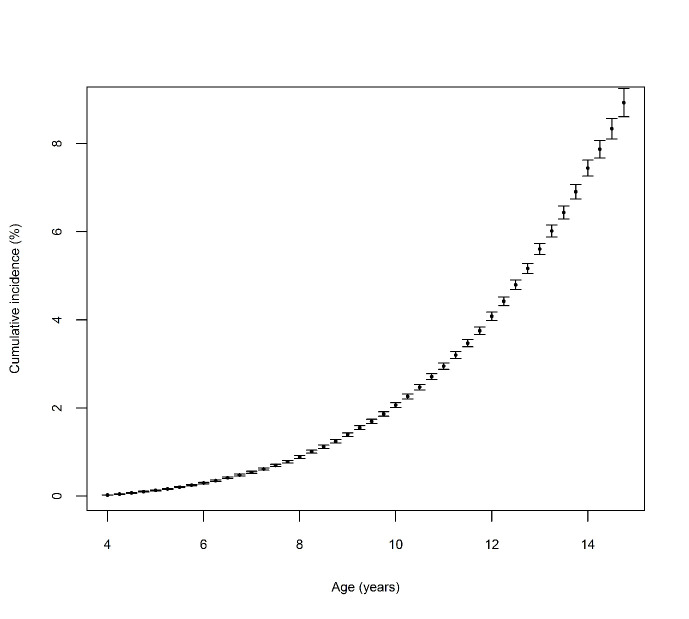
Incident back pain registered by paediatricians at primary care using the International Statistical Classification of Diseases and Health Related Problems, 10th Edition code M54.
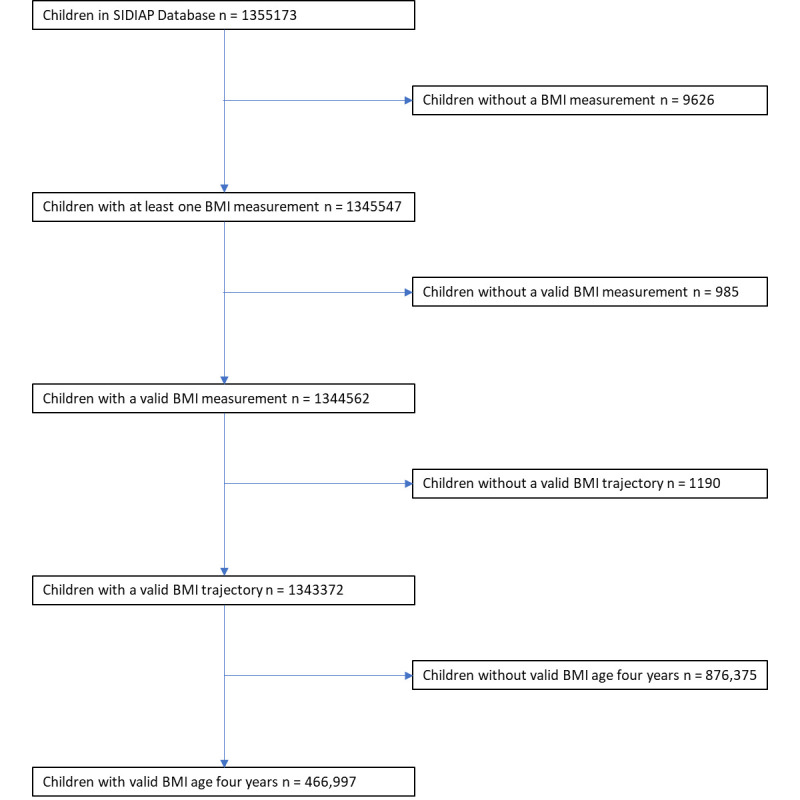
466 997 children were followed for a median 5.0 years (IQR 5.1). In multivariable models, overweight and obesity increased back pain risk, with adjusted HRs of 1.18 (95% CI 1.09 to 1.27) and 1.34 (95%CI 1.19 to 1.51) for overweight and obesity, respectively. Females were at greater risk of back pain than males with adjusted HR 1.40 (95%CI 1.35 to 1.46). Adjusted HR was 1.43 (95%CI 1.33 to 1.55) for back pain in children from the most deprived socioeconomic groups compared with the least deprived socioeconomic groups.
Maintaining a healthy weight from an early age may reduce the prevalence of back pain in both children and adults. Overweight female children from deprived socioeconomic groups are at greatest risk of back pain and represent a target population for intervention.
评估在一个大型儿童普通人群队列中,年龄、性别、社会经济群体、体重状况与背痛风险之间的关联。
一项动态队列研究,研究对象为加泰罗尼亚初级医疗研究信息系统(SIDIAP)电子初级医疗记录数据中4岁的儿童。采用多变量Cox模型,根据世界卫生组织2007年生长参考组(年龄别体重指数z评分),探讨背痛与体重状况类别之间的关联。模型对年龄、性别、社会经济状况和国籍进行了校正。
2006年1月1日至2013年12月31日期间在儿科初级保健诊所接受检查的4岁儿童,并随访至2016年12月31日或15岁。
初级保健儿科医生使用《疾病和有关健康问题的国际统计分类》第10版代码M54记录的新发背痛。
466997名儿童的中位随访时间为5.0年(四分位间距5.1年)。在多变量模型中,超重和肥胖会增加背痛风险,超重和肥胖的校正风险比分别为1.18(95%置信区间1.09至1.27)和1.34(95%置信区间1.19至1.51)。女性背痛风险高于男性,校正风险比为1.40(95%置信区间1.35至1.46)。与社会经济状况最不贫困的群体相比,社会经济状况最贫困群体儿童背痛的校正风险比为1.43(95%置信区间1.33至1.55)。
从小保持健康体重可能会降低儿童和成人背痛的患病率。社会经济状况贫困群体中超重的女童背痛风险最高,是干预的目标人群。