Smith Brooke M, Twohy Alexander J, Smith Gregory S
Department of Psychology, Western Michigan University, 1903 W. Michigan Ave. Mail Stop 5439, Kalamazoo, MI, 49008, USA.
School of Behavior Analysis, Florida Institute of Psychology, 150 W. University Blvd., Melbourne, FL 32901, USA.
J Contextual Behav Sci. 2020 Oct;18:162-174. doi: 10.1016/j.jcbs.2020.09.005. Epub 2020 Sep 14.
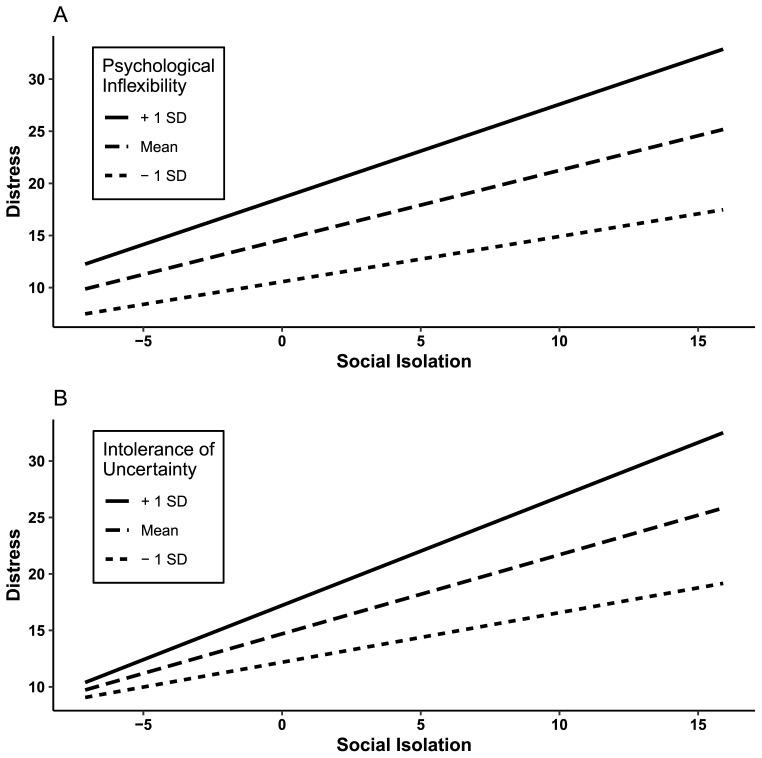
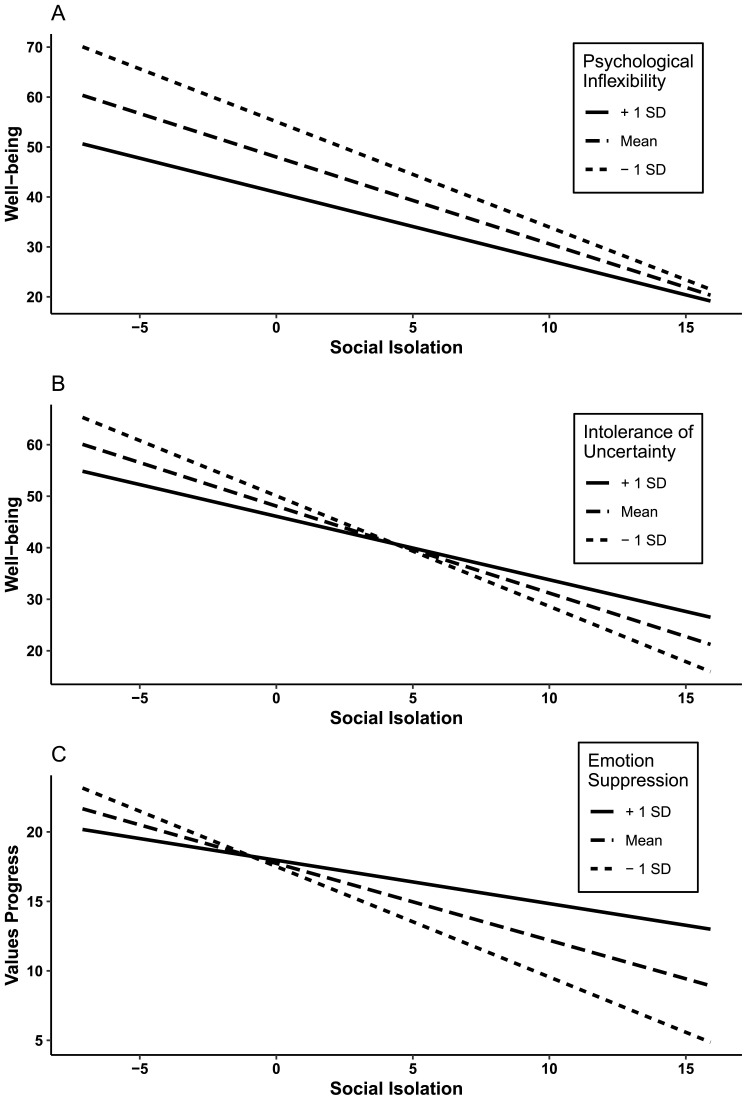
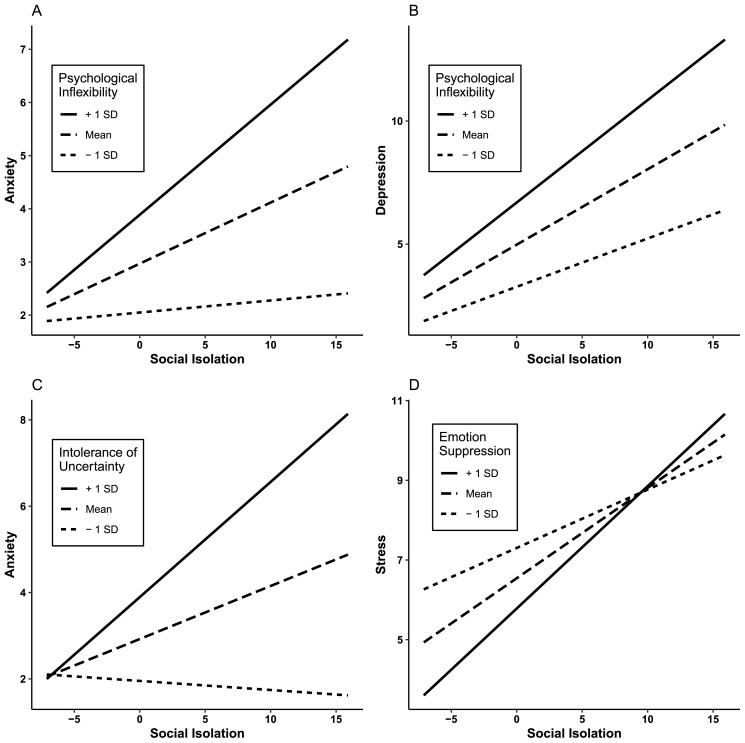
The COVID-19 pandemic has had an enormous impact on human activity worldwide, in part due to many governments issuing stay-at-home orders and limiting the types of social interactions in which citizens can engage. Previous research has shown that social isolation can contribute to psychological distress. The impact of increased social isolation on mental health functioning during the COVID-19 crisis, as well as potential mechanisms to buffer this impact, have yet to be investigated. The current study explored the moderating role of psychological flexibility and related constructs on the relationships between social isolation and mental health outcomes during the COVID-19 pandemic. Cross-sectional data from 278 participants, the majority residing in the United States, were collected during a 3-week period from mid-April to early May 2020 via online survey. A series of hierarchical linear regression analyses indicated statistically significant relationships between social isolation and psychological distress (depression, anxiety, and stress), well-being, and valued living. Psychological inflexibility, intolerance of uncertainty, and emotional suppression significantly moderated these relationships in a number of instances. Greater psychological flexibility and acceptance of difficult experiences appeared to act as a buffer against the negative effects of increased social isolation, while amplifying the benefits of social connectedness. Implications for promoting mental health and buffering against the harmful effects of social isolation during the COVID-19 pandemic and beyond are discussed.
新冠疫情对全球人类活动产生了巨大影响,部分原因是许多政府发布了居家令,并限制了公民可以参与的社交互动类型。先前的研究表明,社会隔离会导致心理困扰。新冠疫情期间社会隔离增加对心理健康功能的影响以及缓冲这种影响的潜在机制尚未得到研究。当前的研究探讨了心理灵活性及相关构念在新冠疫情期间社会隔离与心理健康结果之间关系中的调节作用。2020年4月中旬至5月初的3周内,通过在线调查收集了278名参与者的横断面数据,其中大多数居住在美国。一系列分层线性回归分析表明,社会隔离与心理困扰(抑郁、焦虑和压力)、幸福感和有价值的生活之间存在统计学上的显著关系。在许多情况下,心理僵化、对不确定性的不耐受和情绪抑制显著调节了这些关系。更高的心理灵活性和对困难经历的接纳似乎可以缓冲社会隔离增加带来的负面影响,同时放大社会联系的益处。本文讨论了在新冠疫情期间及之后促进心理健康和缓冲社会隔离有害影响的意义。