CIRI-Centre International de Recherche en Infectiologie, Univ Lyon, Université Claude Bernard Lyon 1, Inserm, U1111, CNRS, UMR5308, ENS Lyon, 46 allée d'Italie, Lyon, France.
Institute for Virology, FB10-Veterinary Medicine, Justus-Liebig University, Gießen, Germany.
PLoS Pathog. 2020 Sep 21;16(9):e1008850. doi: 10.1371/journal.ppat.1008850. eCollection 2020 Sep.
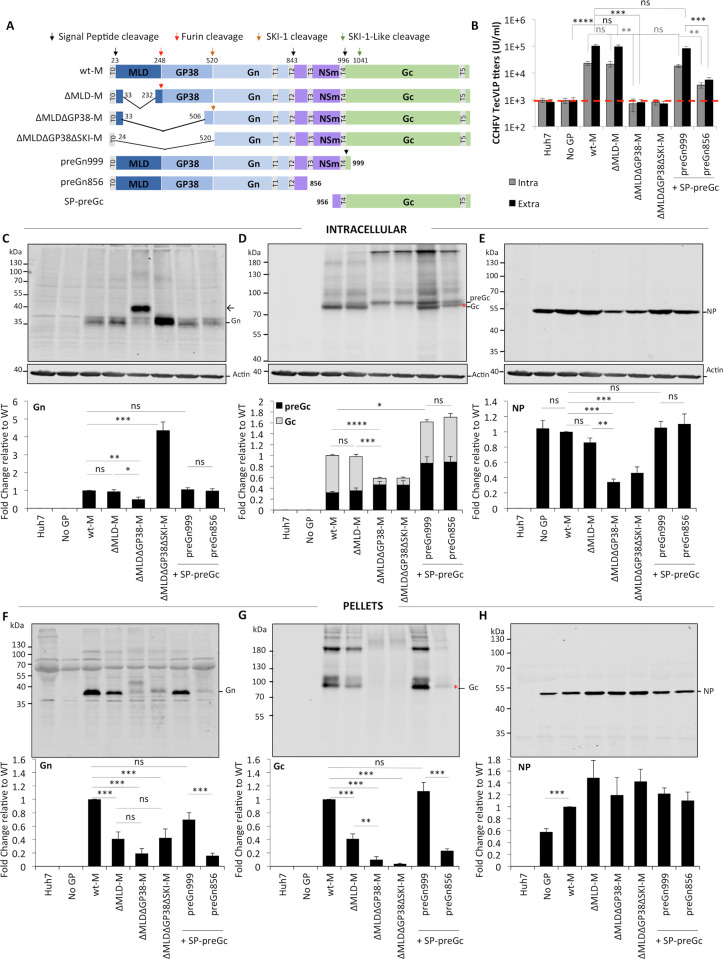
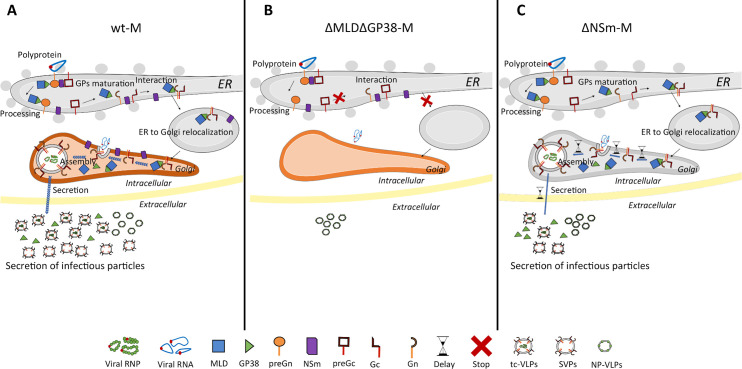
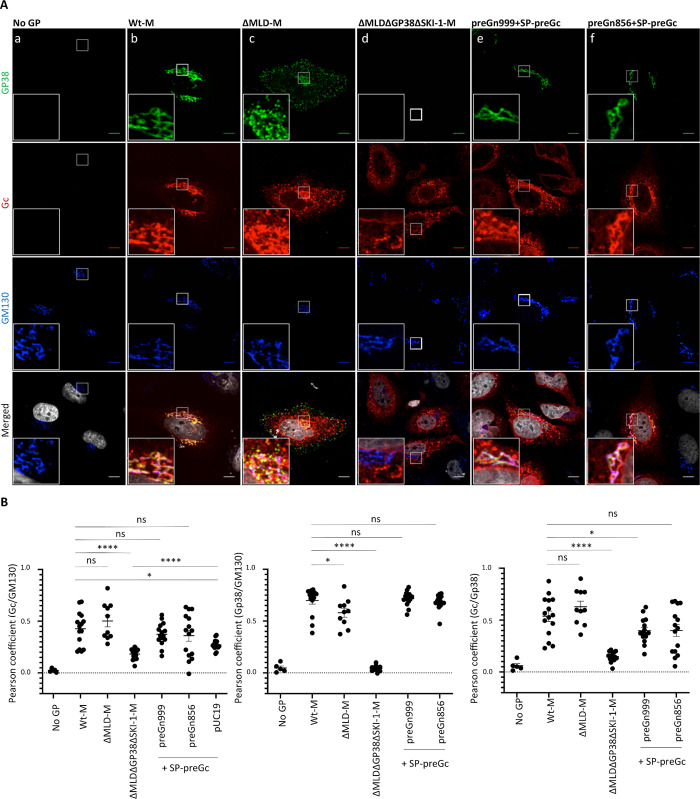
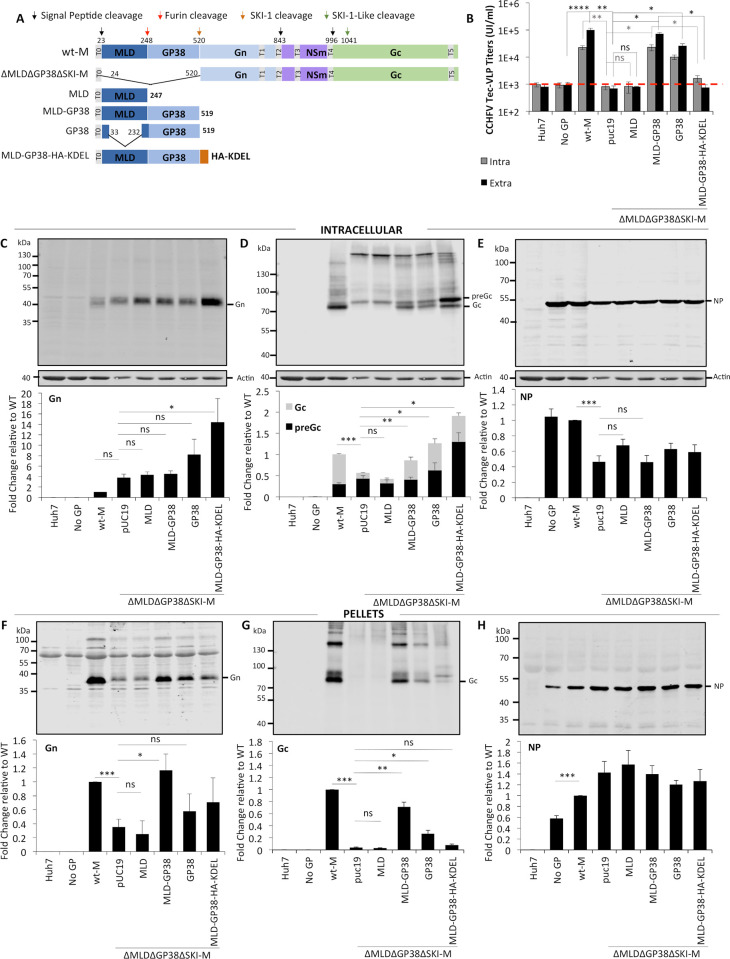
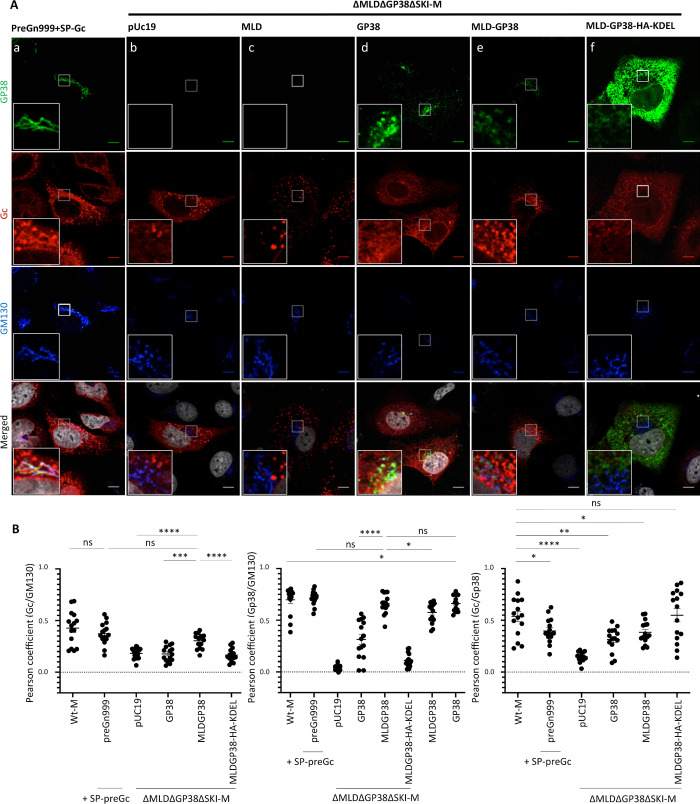
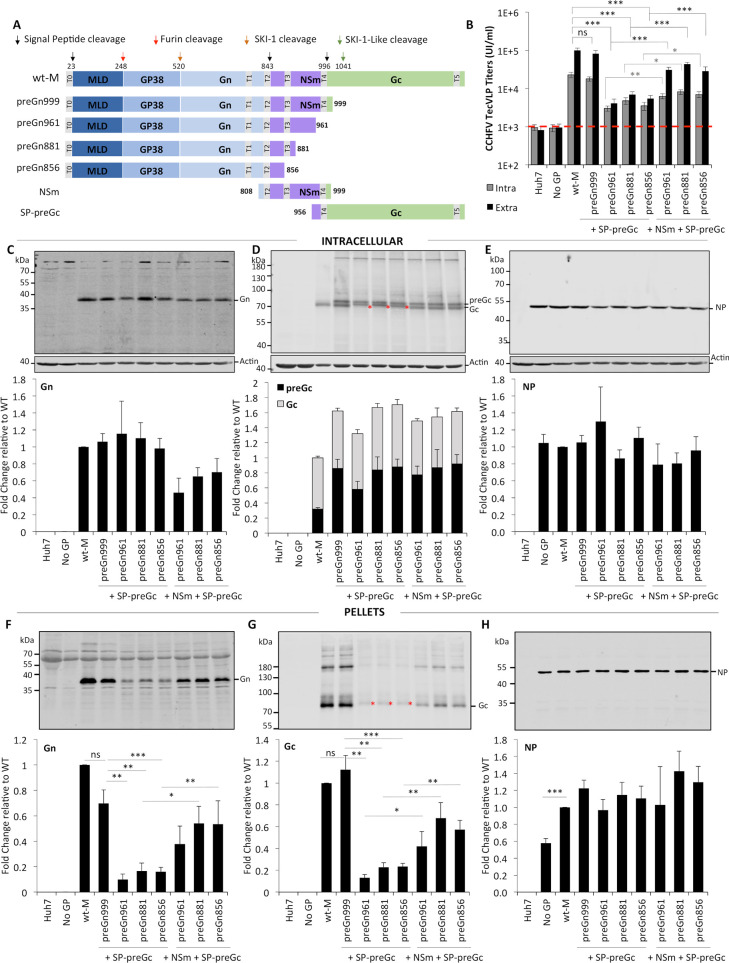
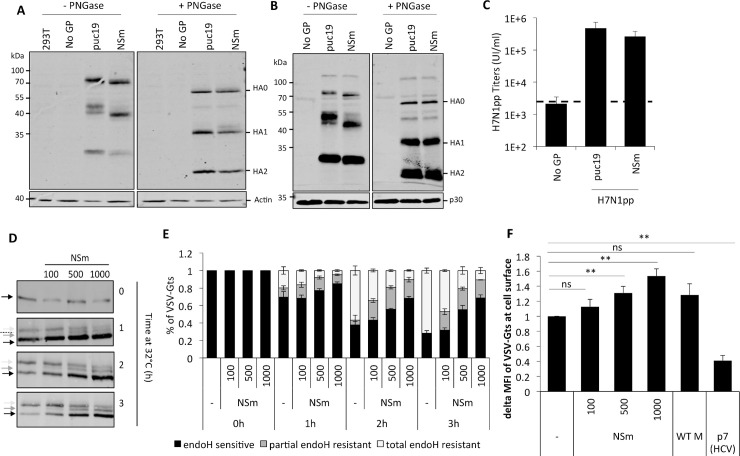
Crimean-Congo hemorrhagic fever virus (CCHFV) is a tick-borne orthonairovirus that has become a serious threat to the public health. CCHFV has a single-stranded, tripartite RNA genome composed of L, M, and S segments. Cleavage of the M polyprotein precursor generates the two envelope glycoproteins (GPs) as well as three secreted nonstructural proteins GP38 and GP85 or GP160, representing GP38 only or GP38 linked to a mucin-like protein (MLD), and a double-membrane-spanning protein called NSm. Here, we examined the relevance of each M-segment non-structural proteins in virus assembly, egress and infectivity using a well-established CCHFV virus-like-particle system (tc-VLP). Deletion of MLD protein had no impact on infectivity although it reduced by 60% incorporation of GPs into particles. Additional deletion of GP38 abolished production of infectious tc-VLPs. The loss of infectivity was associated with impaired Gc maturation and exclusion from the Golgi, showing that Gn is not sufficient to target CCHFV GPs to the site of assembly. Consistent with this, efficient complementation was achieved in cells expressing MLD-GP38 in trans with increased levels of preGc to Gc conversion, co-targeting to the Golgi, resulting in particle incorporation and restored infectivity. Contrastingly, a MLD-GP38 variant retained in the ER allowed preGc cleavage but failed to rescue miss-localization or infectivity. NSm deletion, conversely, did not affect trafficking of Gc but interfered with Gc processing, particle formation and secretion. NSm expression affected N-glycosylation of different viral proteins most likely due to increased speed of trafficking through the secretory pathway. This highlights a potential role of NSm in overcoming Golgi retention and facilitating CCHFV egress. Thus, deletions of GP38 or NSm demonstrate their important role on CCHFV particle production and infectivity. GP85 is an essential viral factor for preGc cleavage, trafficking and Gc incorporation into particles, whereas NSm protein is involved in CCHFV assembly and virion secretion.
克里米亚-刚果出血热病毒(CCHFV)是一种蜱媒正呼肠孤病毒,已成为公共卫生的严重威胁。CCHFV 具有单链、三分体 RNA 基因组,由 L、M 和 S 片段组成。M 多蛋白前体的裂解生成两种包膜糖蛋白(GP)以及三种分泌型非结构蛋白 GP38 和 GP85 或 GP160,代表仅 GP38 或与粘蛋白样蛋白(MLD)相连的 GP38 和双膜跨膜蛋白 NSm。在这里,我们使用成熟的 CCHFV 病毒样颗粒系统(tc-VLP)研究了每个 M 片段非结构蛋白在病毒组装、出芽和感染性中的相关性。尽管 MLD 蛋白的缺失降低了 60%的 GP 掺入颗粒,但对感染性没有影响。GP38 的额外缺失会使感染性 tc-VLP 的产生完全丧失。感染性丧失与 Gc 成熟受损和从高尔基体排除有关,表明 Gn 不足以将 CCHFV GP 靶向组装部位。与此一致的是,在表达 MLD-GP38 的细胞中转录表达增加的 preGc 到 Gc 转化率可以有效地进行互补,从而共同靶向高尔基体,导致颗粒掺入和恢复感染性。相比之下,保留在 ER 中的 MLD-GP38 变体允许 preGc 切割,但不能挽救定位错误或感染性。相反,NSm 缺失不影响 Gc 的运输,但干扰 Gc 加工、颗粒形成和分泌。NSm 表达影响不同病毒蛋白的 N-糖基化,这很可能是由于通过分泌途径的运输速度加快。这突出了 NSm 在克服高尔基体滞留和促进 CCHFV 出芽方面的潜在作用。因此,GP38 或 NSm 的缺失表明它们在 CCHFV 颗粒产生和感染性方面的重要作用。GP85 是 preGc 切割、运输和 Gc 掺入颗粒所必需的病毒因子,而 NSm 蛋白参与 CCHFV 组装和病毒粒子分泌。