Berlin Institute of Health (BIH) Center for Regenerative Therapies (B-CRT), Charité - Universitätsmedizin Berlin, 13353 Berlin, Germany; Berlin Center for Advanced Therapies (BeCAT), Charité - Universitätsmedizin Berlin, 13353 Berlin, Germany; Institute of Medical Immunology, Charité - Universitätsmedizin Berlin, 13353 Berlin, Germany.
Berlin Institute of Health (BIH) Center for Regenerative Therapies (B-CRT), Charité - Universitätsmedizin Berlin, 13353 Berlin, Germany; Berlin Center for Advanced Therapies (BeCAT), Charité - Universitätsmedizin Berlin, 13353 Berlin, Germany.
Mol Ther. 2021 Jan 6;29(1):32-46. doi: 10.1016/j.ymthe.2020.09.011. Epub 2020 Sep 8.
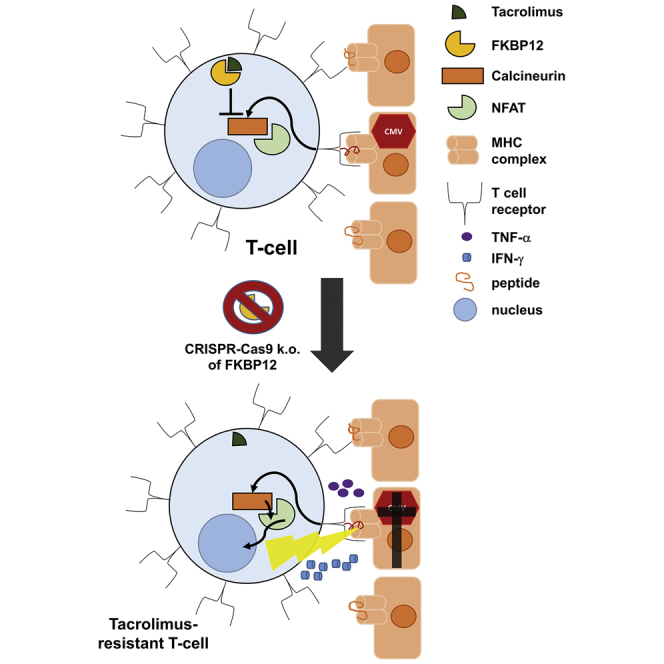
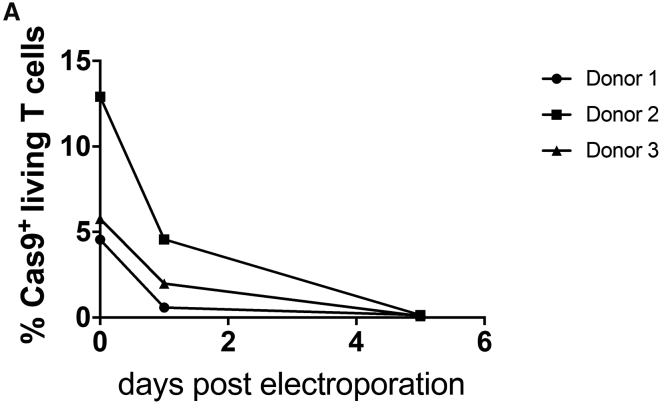
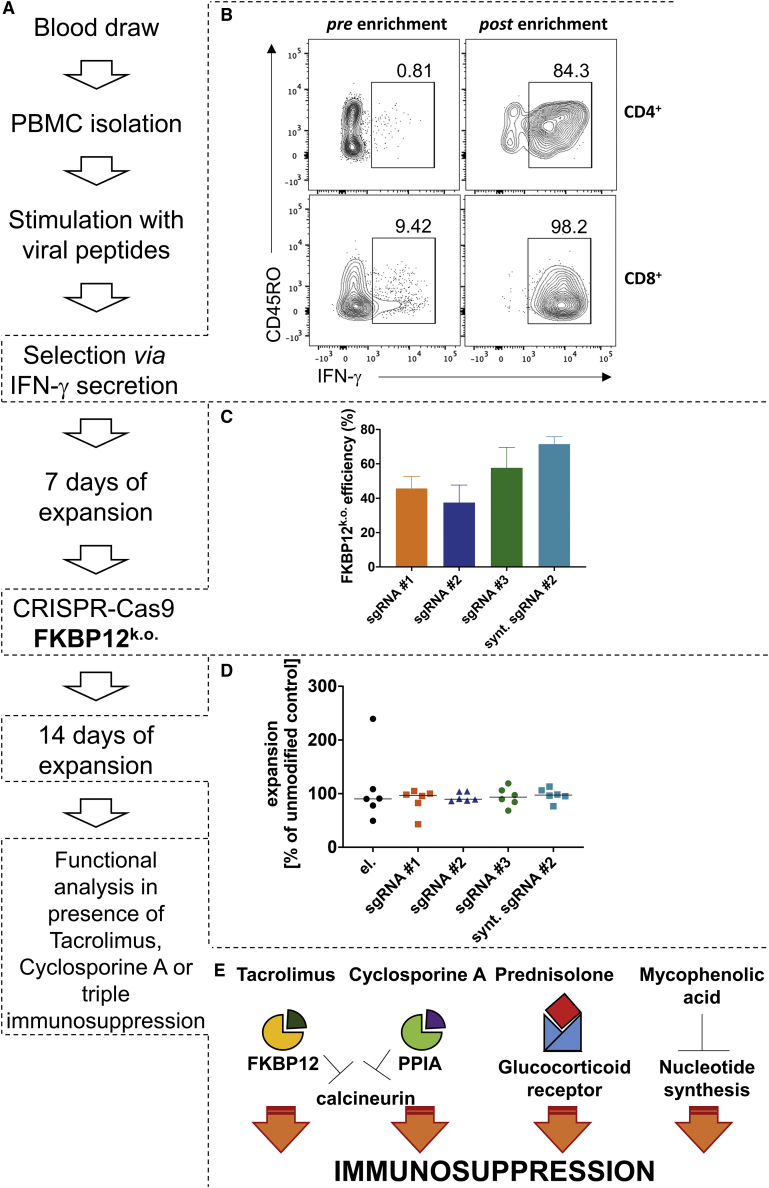
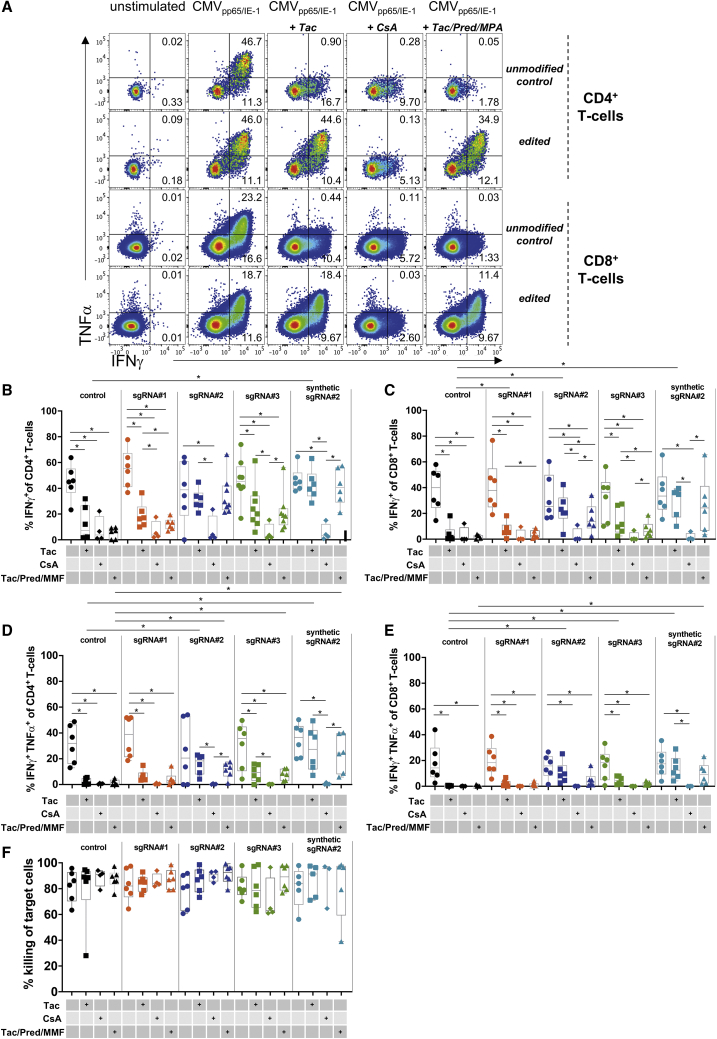
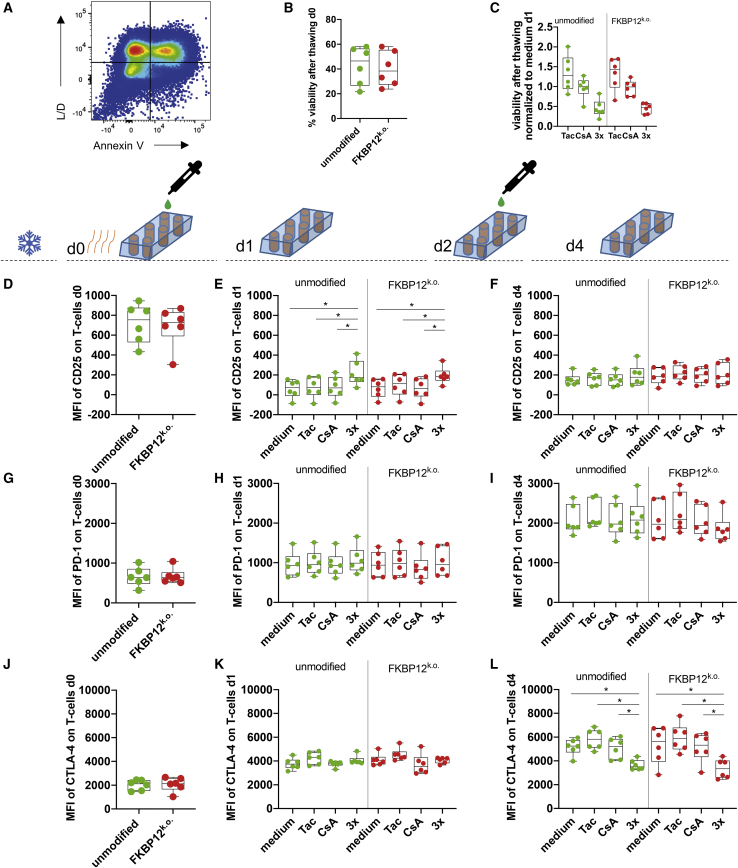
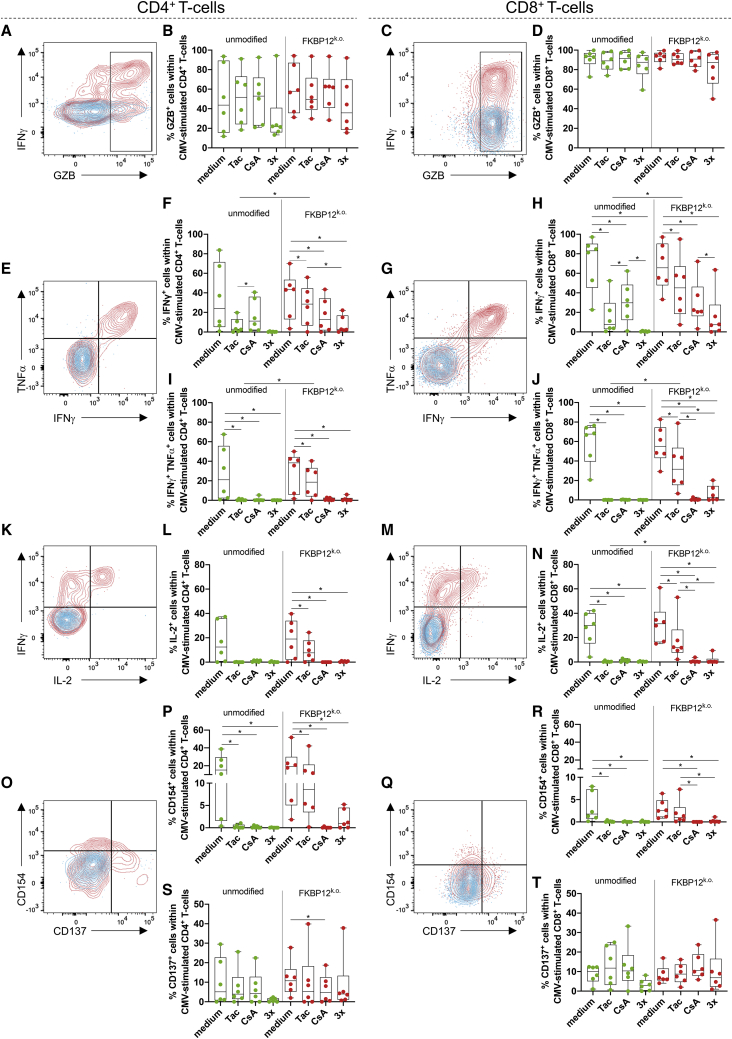
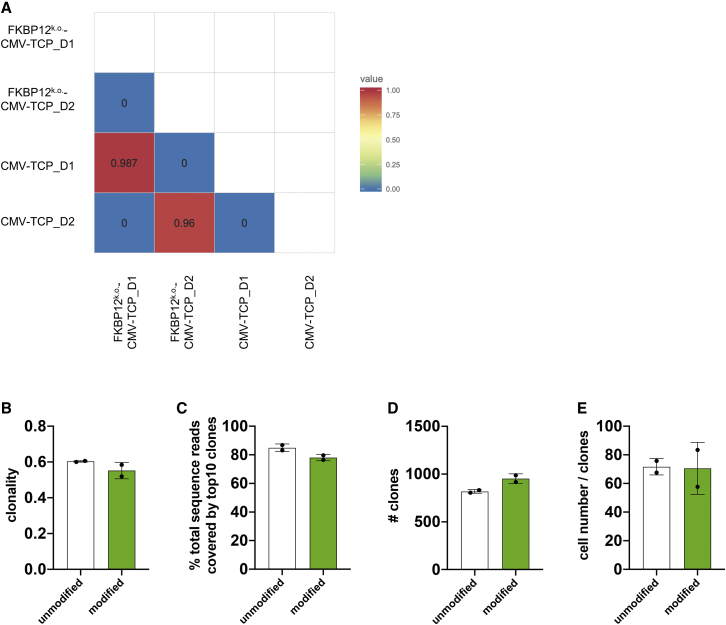
Viral infections, such as with cytomegalovirus (CMV), remain a major risk factor for mortality and morbidity of transplant recipients because of their requirement for lifelong immunosuppression (IS). Antiviral drugs often cause toxicity and sometimes fail to control disease. Thus, regeneration of the antiviral immune response by adoptive antiviral T cell therapy is an attractive alternative. Our recent data, however, show only short-term efficacy in some solid organ recipients, possibly because of malfunction in transferred T cells caused by ongoing IS. We developed a vector-free clustered regularly interspaced short palindromic repeats (CRISPR)-Cas9-based good manufacturing practice (GMP)-compliant protocol that efficiently targets and knocks out the gene for the adaptor protein FK506-binding protein 12 (FKBP12), required for the immunosuppressive function of tacrolimus. This was achieved by transient delivery of ribonucleoprotein complexes into CMV-specific T cells by electroporation. We confirmed the tacrolimus resistance of our gene-edited T cell products in vitro and demonstrated performance comparable with non-tacrolimus-treated unmodified T cells. The alternative calcineurin inhibitor cyclosporine A can be administered as a safety switch to shut down tacrolimus-resistant T cell activity in case of adverse effects. Furthermore, we performed safety assessments as a prerequisite for translation to first-in-human applications.
病毒感染,如巨细胞病毒(CMV),仍然是移植受者死亡和发病的主要危险因素,因为它们需要终身免疫抑制(IS)。抗病毒药物通常会引起毒性,有时无法控制疾病。因此,通过过继性抗病毒 T 细胞治疗来再生抗病毒免疫反应是一种有吸引力的替代方法。然而,我们最近的数据显示,在一些实体器官受者中仅具有短期疗效,可能是因为持续的 IS 导致转移 T 细胞功能障碍。我们开发了一种无载体的簇状规则间隔短回文重复序列(CRISPR)-Cas9 基于良好生产规范(GMP)的协议,该协议可有效靶向并敲除 FK506 结合蛋白 12(FKBP12)的基因,该基因是他克莫司免疫抑制功能所必需的。这是通过电穿孔将核糖核蛋白复合物瞬时递送至 CMV 特异性 T 细胞来实现的。我们在体外证实了我们基因编辑的 T 细胞产品对他克莫司的耐药性,并证明其性能与未经他克莫司处理的未修饰 T 细胞相当。替代钙调神经磷酸酶抑制剂环孢素 A 可作为安全开关,在出现不良反应时关闭他克莫司耐药 T 细胞的活性。此外,我们进行了安全性评估,作为转化为首次人体应用的前提。