Department of Cardiology, Santa Maria della Misericordia Hospital, Rovigo, Italy.
Department of Cardiology, Santa Maria della Misericordia Hospital, Rovigo, Italy; University of Ferrara, School of Medicine, Ferrara, Italy.
Eur J Intern Med. 2020 Dec;82:29-37. doi: 10.1016/j.ejim.2020.09.006. Epub 2020 Sep 17.
Acute pulmonary embolism (PE) has been described as a frequent and prognostically relevant complication of COVID-19 infection.
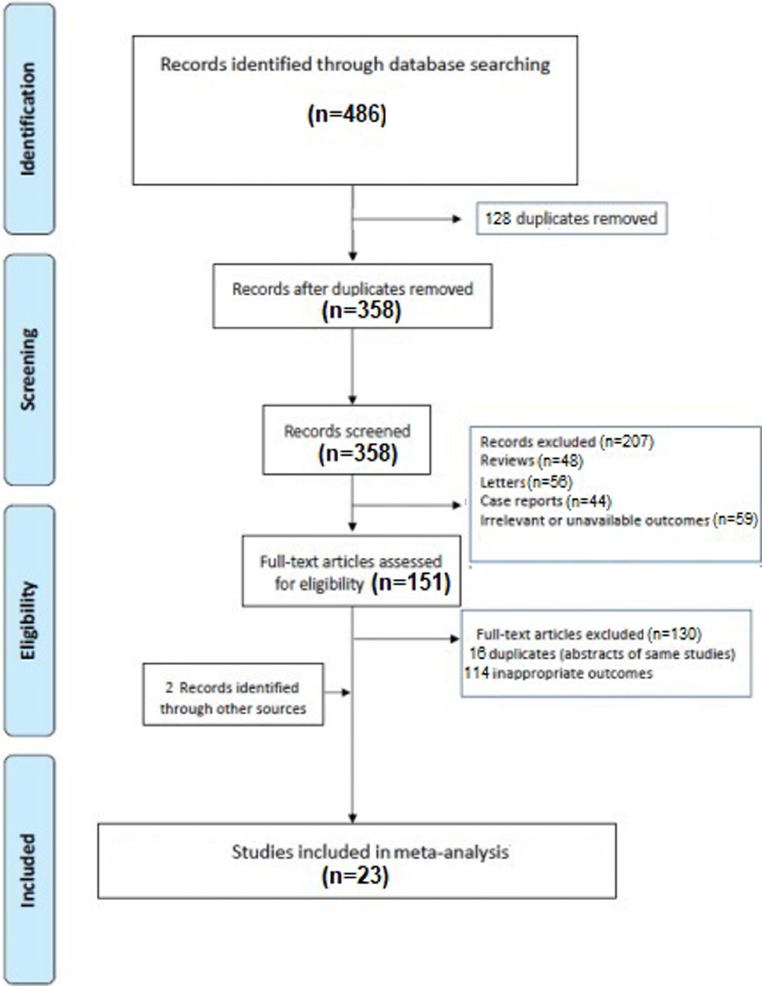
We performed a systematic review and meta-analysis of the in-hospital incidence of acute PE among COVID-19 patients based on studies published within four months of COVID-19 outbreak.
Systematic Reviews and Meta-Analyses (PRISMA) guidelines were followed in abstracting data and assessing validity. We searched Medline, Scopus and Web of Science to locate all articles published up to August 1, 2020 reporting the incidence of acute PE (or lung thrombosis) in COVID-19 patients. The pooled in-hospital incidence of acute PE among COVID-19 patients was calculated using a random effects model and presenting the related 95% confidence interval (CI). Statistical heterogeneity was measured using the Higgins I statistic.
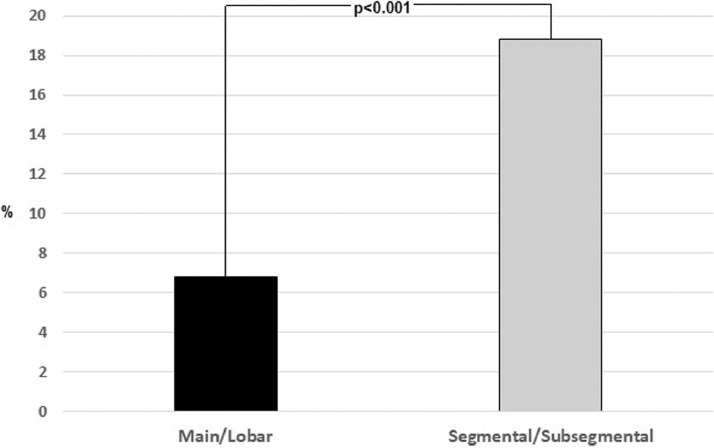
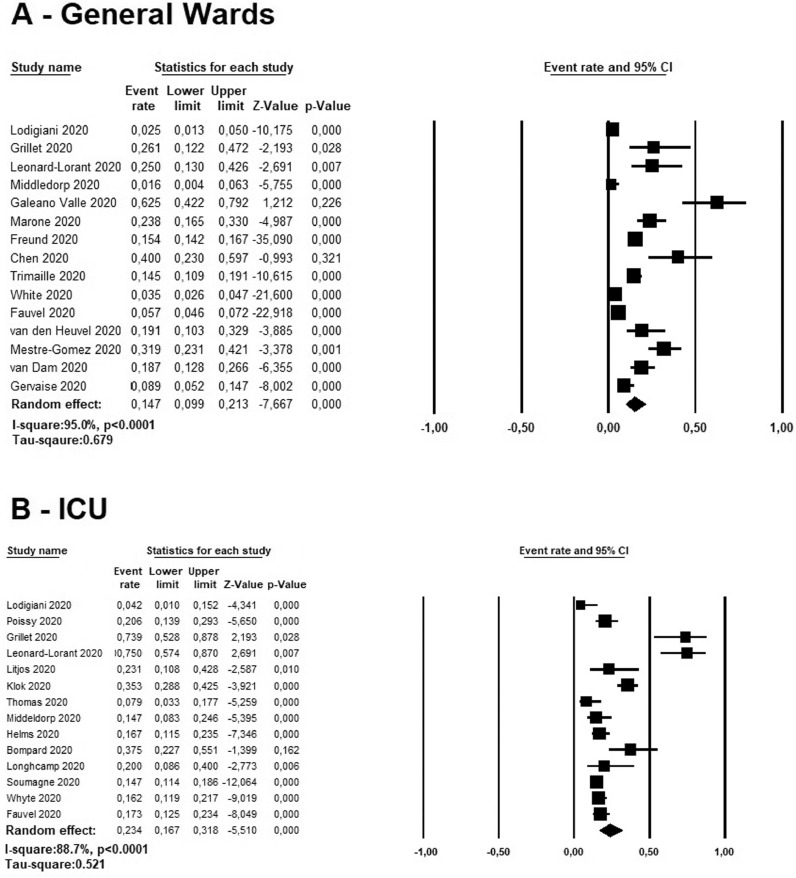
We analysed data from 7178 COVID-19 patients [mean age 60.4 years] included in twenty-three studies. Among patients hospitalized in general wards and intensive care unit (ICU), the pooled in-hospital incidence of PE (or lung thrombosis) was 14.7% of cases (95% CI: 9.9-21.3%, I=95.0%, p<0.0001) and 23.4% (95% CI:16.7-31.8%, I2=88.7%, p<0.0001), respectively. Segmental/sub-segmental pulmonary arteries were more frequently involved compared to main/lobar arteries (6.8% vs18.8%, p<0.001). Computer tomography pulmonary angiogram (CTPA) was used only in 35.3% of patients with COVID-19 infection across six studies.
The in-hospital incidence of acute PE among COVID-19 patients is higher in ICU patients compared to those hospitalized in general wards. CTPA was rarely used suggesting a potential underestimation of PE cases.
急性肺栓塞(PE)已被描述为 COVID-19 感染的一种常见且预后相关的并发症。
我们对 COVID-19 患者住院期间发生急性 PE 的发生率进行了系统评价和荟萃分析,这些研究是在 COVID-19 爆发后四个月内发表的。
按照系统评价和荟萃分析(PRISMA)指南提取数据并评估有效性。我们检索了 Medline、Scopus 和 Web of Science,以查找截至 2020 年 8 月 1 日报告 COVID-19 患者中急性 PE(或肺血栓形成)发生率的所有文章。使用随机效应模型计算 COVID-19 患者住院期间急性 PE 的总发生率,并给出相关的 95%置信区间(CI)。使用 Higgins I 统计量衡量统计异质性。
我们分析了 23 项研究中 7178 例 COVID-19 患者[平均年龄 60.4 岁]的数据。在普通病房和重症监护病房(ICU)住院的患者中,PE(或肺血栓形成)的住院总发生率为 14.7%(95%CI:9.9-21.3%,I=95.0%,p<0.0001)和 23.4%(95%CI:16.7-31.8%,I2=88.7%,p<0.0001)。与主/叶肺动脉相比,段/亚段肺动脉受累更为常见(6.8%比 18.8%,p<0.001)。6 项研究中有 35.3%的 COVID-19 感染患者仅使用了计算机断层肺动脉造影(CTPA)。
与普通病房住院患者相比,ICU 患者 COVID-19 患者住院期间急性 PE 的发生率更高。CTPA 很少使用,提示可能低估了 PE 病例。