Graduate School of Engineering, Tokyo University of Agriculture and Technology, Tokyo 184-8588, Japan.
Department of Pediatrics, Saitama Medical University, Saitama 350-0495, Japan.
Int J Environ Res Public Health. 2020 Sep 19;17(18):6844. doi: 10.3390/ijerph17186844.
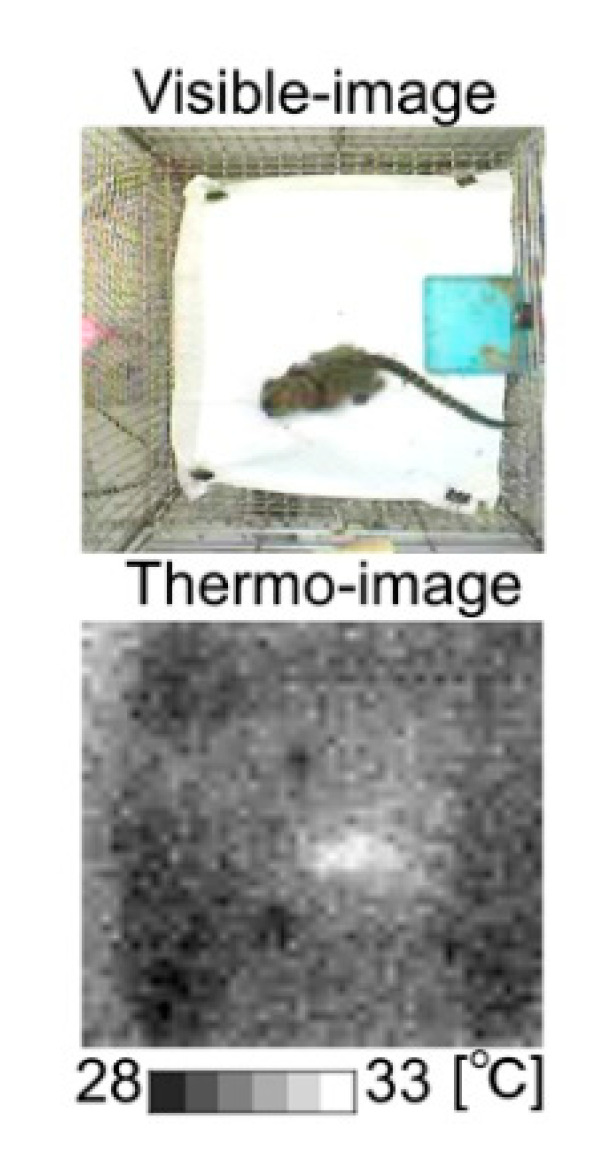
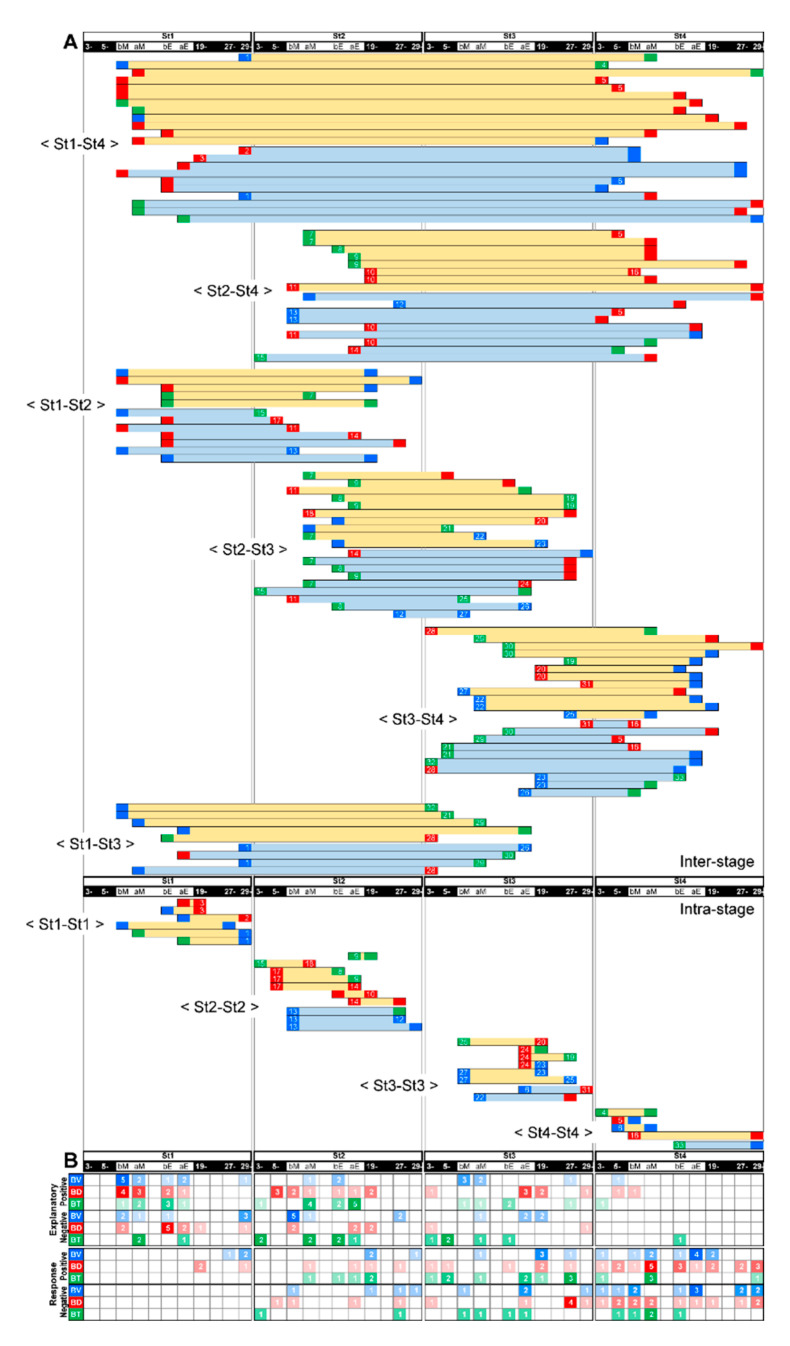
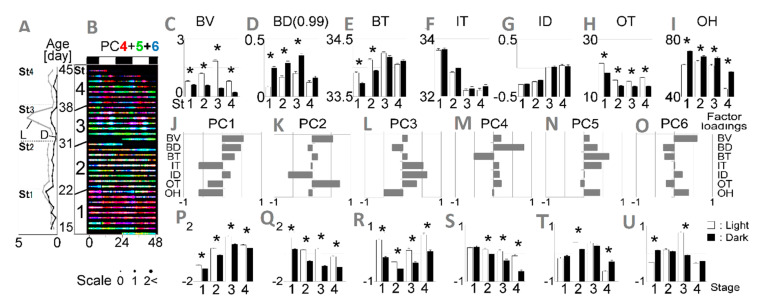
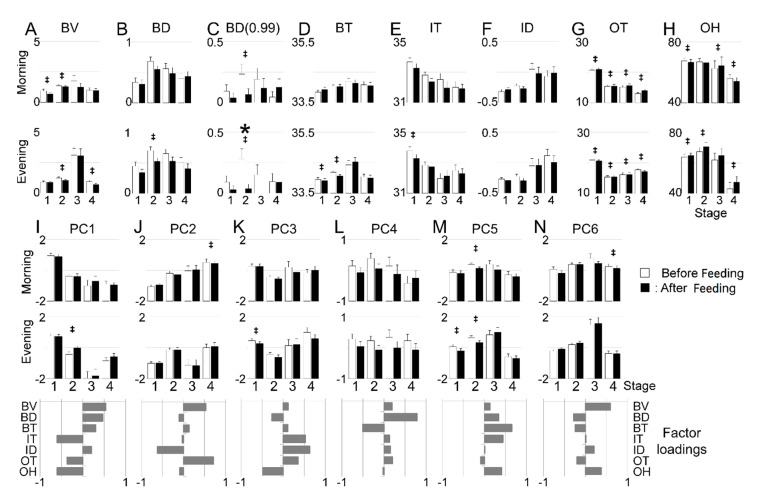
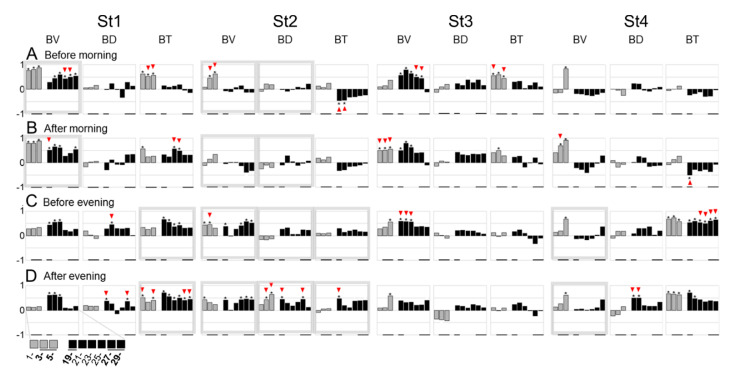
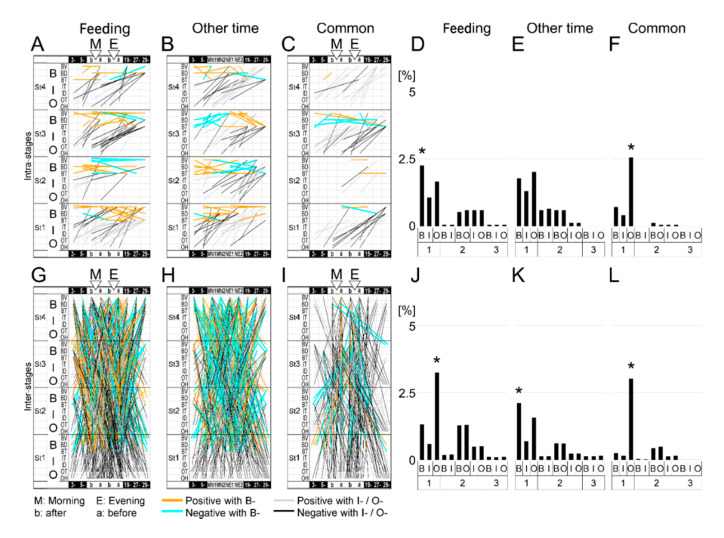
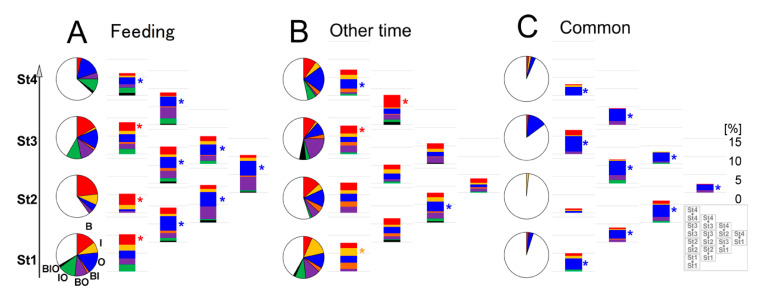
The use of home-based image sensors for biological and environmental monitoring provides novel insight into health and development but it is difficult to evaluate people during their normal activities in their home. Therefore, we developed a low-cost infrared (IR) technology-based motion, location, temperature and thermal environment detection system that can be used non-invasively for long-term studies in the home environment. We tested this technology along with the associated analysis algorithm to visualize the effects of parental care and thermal environment on developmental state change in a non-human primate model, the common marmoset (). To validate this system, we first compared it to a manual analysis technique and we then assessed the development of circadian rhythms in common marmosets from postnatal day 15-45. The semi-automatically tracked biological indices of locomotion velocity (BV) and body surface temperature (BT) and the potential psychological index of place preference toward the door (BD), showed age-dependent shifts in circadian phase patterns. Although environmental variables appeared to affect circadian rhythm development, principal component analysis and signal superimposing imaging methods revealed a novel phasic pattern of BD-BT correlation day/night switching in animals older than postnatal day 38 (approximately equivalent to one year of age in humans). The origin of this switch was related to earlier development of body temperature (BT) rhythms and alteration of psychological behavior rhythms (BD) around earlier feeding times. We propose that this cost-effective, inclusive sensing and analytic technique has value for understanding developmental care conditions for which continual home non-invasive monitoring would be beneficial and further suggest the potential to adapt this technique for use in humans.
基于家庭使用的图像传感器进行生物和环境监测为健康和发育提供了新的视角,但很难在人们的正常活动中对其进行评估。因此,我们开发了一种基于低成本红外线(IR)技术的运动、位置、温度和热环境检测系统,可以在家庭环境中进行长期的非侵入性研究。我们测试了这项技术及其相关的分析算法,以可视化父母照顾和热环境对非人类灵长类动物模型(普通狨猴)发育状态变化的影响。为了验证该系统,我们首先将其与手动分析技术进行了比较,然后评估了普通狨猴从出生后第 15 天到 45 天的昼夜节律发育。半自动跟踪的生物指标包括运动速度(BV)和体表温度(BT)以及对门的潜在心理指标偏好(BD),显示出与年龄相关的昼夜节律相位模式变化。尽管环境变量似乎会影响昼夜节律的发展,但主成分分析和信号叠加成像方法揭示了一种新的相位模式,即动物在出生后第 38 天(相当于人类一岁)之后,BD-BT 相关性昼夜切换的相位模式。这种转变的起源与体温(BT)节律的早期发展以及更早的喂养时间对心理行为节律(BD)的改变有关。我们提出,这种具有成本效益、包容性的传感和分析技术对于了解持续家庭非侵入性监测有益的发育护理条件具有价值,并进一步建议有可能适应这种技术用于人类。