Dey Parama, Wang Alexander, Ziegler Yvonne, Kim Sung Hoon, El-Ashry Dorraya, Katzenellenbogen John A, Katzenellenbogen Benita S
Department of Molecular and Integrative Physiology, University of Illinois at Urbana-Champaign, Urbana, IL 61801, USA.
Department of Chemistry, University of Illinois at Urbana-Champaign, Urbana, IL 61801, USA.
Cancers (Basel). 2020 Sep 19;12(9):2677. doi: 10.3390/cancers12092677.
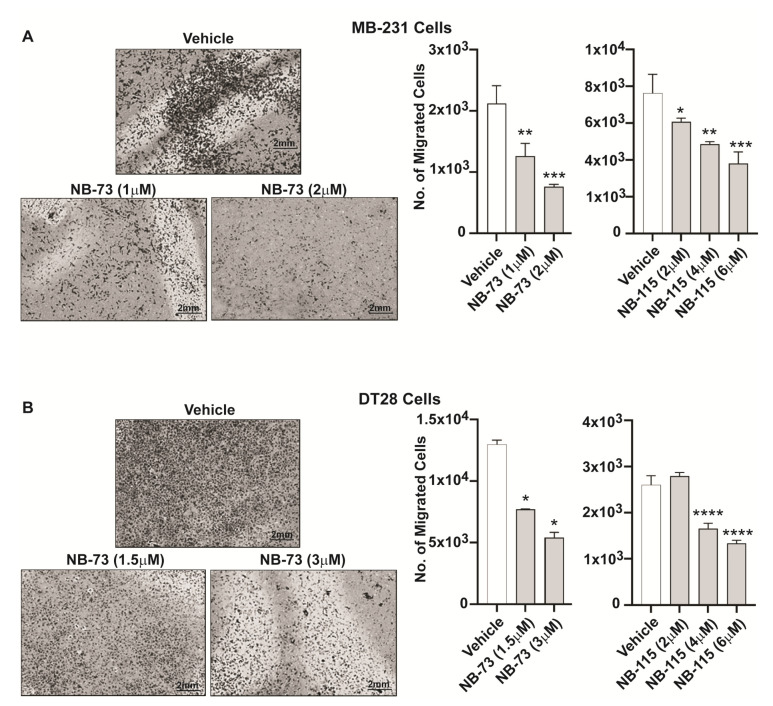
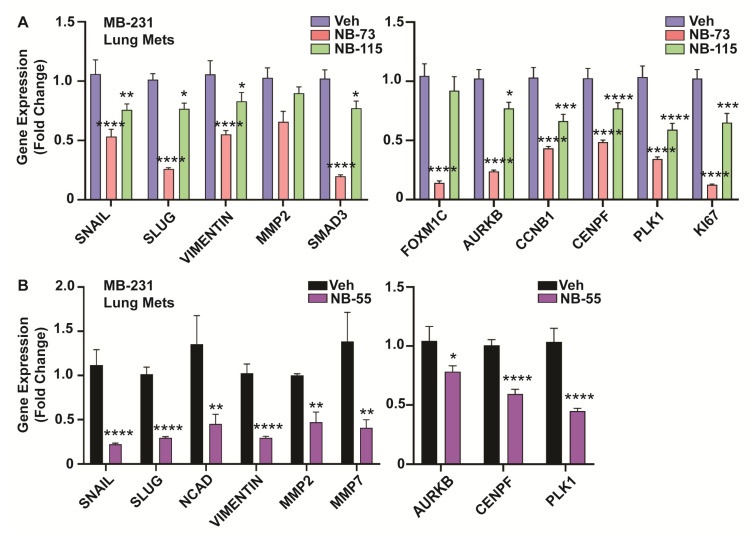
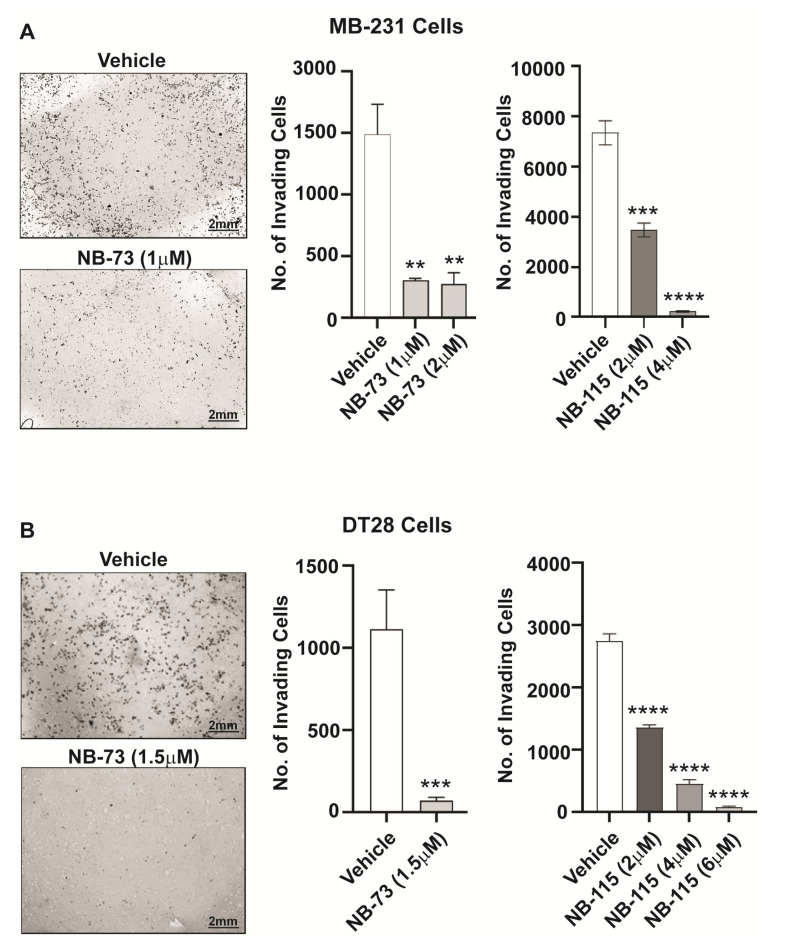
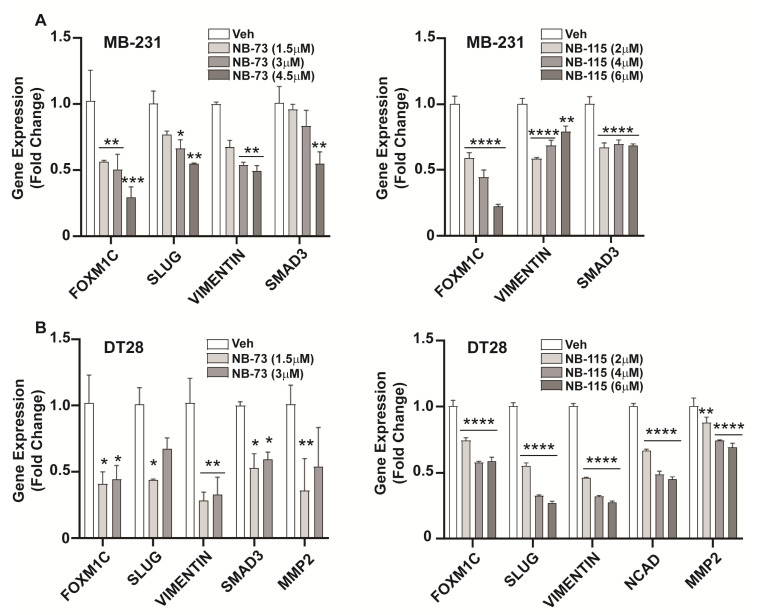
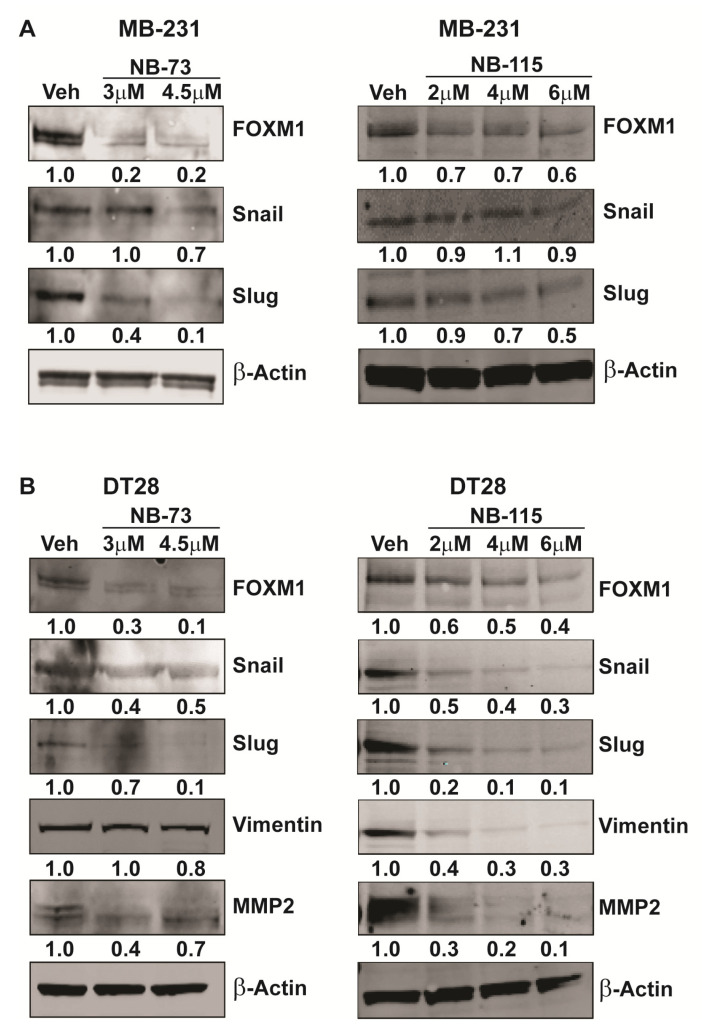
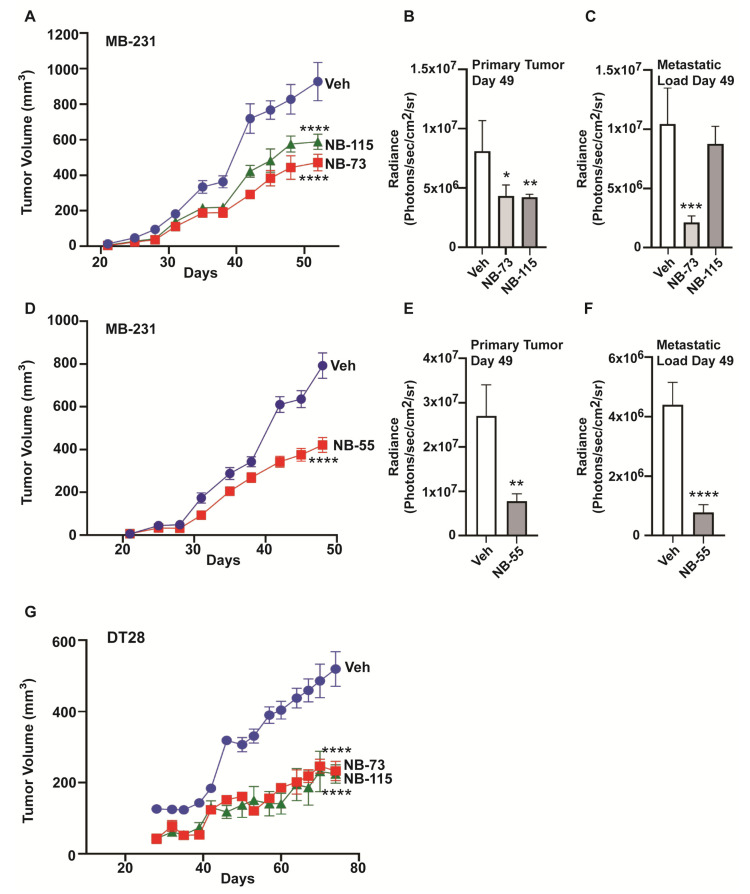
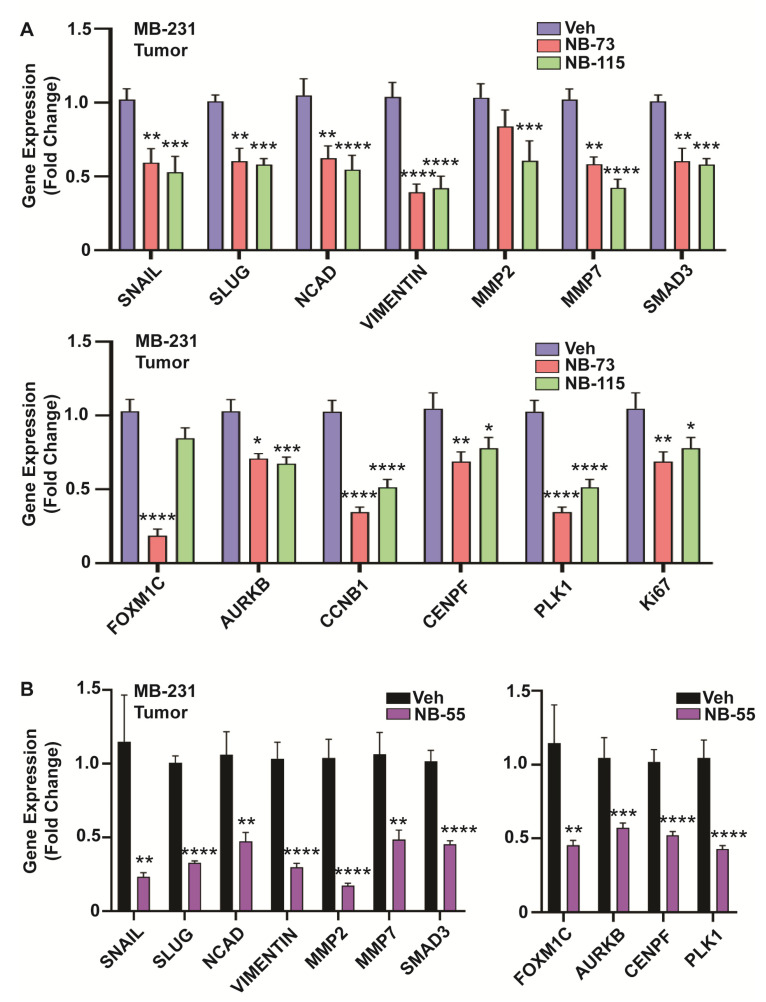
Metastasis-related complications account for the overwhelming majority of breast cancer mortalities. Triple negative breast cancer (TNBC), the most aggressive breast cancer subtype, has a high propensity to metastasize to distant organs, leading to poor patient survival. The forkhead transcription factor, FOXM1, is especially upregulated and overexpressed in TNBC and is known to regulate multiple signaling pathways that control many key cancer properties, including proliferation, invasiveness, stem cell renewal, and therapy resistance, making FOXM1 a critical therapeutic target for TNBC. In this study, we test the effectiveness of a novel class of 1,1-diarylethylene FOXM1 inhibitory compounds in suppressing TNBC cell migration, invasion, and metastasis using in vitro cell culture and in vivo tumor models. We show that these compounds inhibit the motility and invasiveness of TNBC MDA-MB-231 and DT28 cells, along with reducing the expression of important epithelial to mesenchymal transition (EMT) associated genes. Further, orthotopic tumor studies in NOD-SCID-gamma (NSG) mice demonstrate that these compounds reduce FOXM1 expression and suppress TNBC tumor growth as well as distant metastasis. Gene expression and protein analyses confirm the decreased levels of EMT factors and FOXM1-regulated target genes in tumors and metastatic lesions in the inhibitor-treated animals. The findings suggest that these FOXM1 suppressive compounds may have therapeutic potential in treating triple negative breast cancer, with the aim of reducing tumor progression and metastatic outgrowth.
与转移相关的并发症占乳腺癌死亡病例的绝大多数。三阴性乳腺癌(TNBC)是最具侵袭性的乳腺癌亚型,极易转移至远处器官,导致患者生存率低下。叉头转录因子FOXM1在TNBC中尤其上调并过度表达,已知其可调节多种信号通路,这些信号通路控制着许多关键的癌症特性,包括增殖、侵袭性、干细胞更新和治疗抗性,这使得FOXM1成为TNBC的关键治疗靶点。在本研究中,我们使用体外细胞培养和体内肿瘤模型,测试了一类新型的1,1 - 二芳基乙烯FOXM1抑制化合物在抑制TNBC细胞迁移、侵袭和转移方面的有效性。我们表明,这些化合物可抑制TNBC MDA - MB - 231和DT28细胞的运动性和侵袭性,同时降低重要的上皮 - 间质转化(EMT)相关基因的表达。此外,在NOD - SCID - gamma(NSG)小鼠中的原位肿瘤研究表明,这些化合物可降低FOXM1表达,并抑制TNBC肿瘤生长以及远处转移。基因表达和蛋白质分析证实,在接受抑制剂治疗的动物的肿瘤和转移病灶中,EMT因子和FOXM1调节的靶基因水平降低。这些发现表明,这些FOXM1抑制化合物可能具有治疗三阴性乳腺癌的潜力,目的是减少肿瘤进展和转移灶的生长。