State Key Laboratory of Natural Medicines, Jiangsu Key Laboratory of Carcinogenesis and Intervention, School of Basic Medicine and Clinical Pharmacy, China Pharmaceutical University, Nanjing 211198, China; Collaborative Innovation Center for Gannan Oil-Tea Camellia Industrial Development, Gannan Medical University, Ganzhou, China.
Guangdong Key Laboratory for Genome Stability & Disease Prevention, School of Pharmaceutical Sciences, Shenzhen University Health Science Center, 3688 Nanhai Ave, Shenzhen, 518060, China.
J Exp Clin Cancer Res. 2019 Mar 21;38(1):134. doi: 10.1186/s13046-019-1130-2.
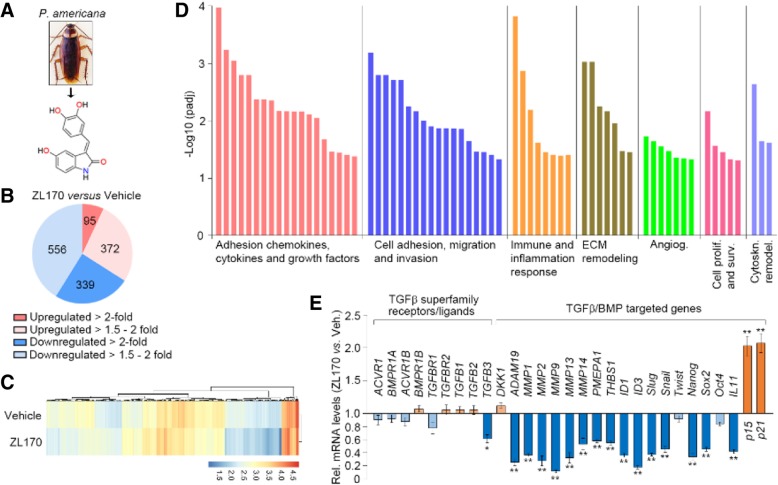
The transforming growth factor β (TGFβ) and bone morphogenetic protein (BMP) signaling pathways are both constitutively activated in triple-negative breast cancer (TNBC). We are interested in isolating the naturally-derived small-molecule inhibitor that could simultaneously targeting TGFβ/BMP pathways and further studying its anti-proliferative/-metastatic effects as well as the underlying mechanisms in multiple tumor models.
Multiple in vitro cell-based assays are used to examine the compound's inhibitory efficacy on TNBC cell growth, stemness, epithelial-mesenchymal transition (EMT), invasion and migration by targeting TGFβ/BMP signaling pathways. Transgenic breast cancer mouse model (MMTV-PyMT), subcutaneous xenograft and bone metastasis models are used to examine ZL170's effects on TNBC growth and metastasis potentials in vivo.
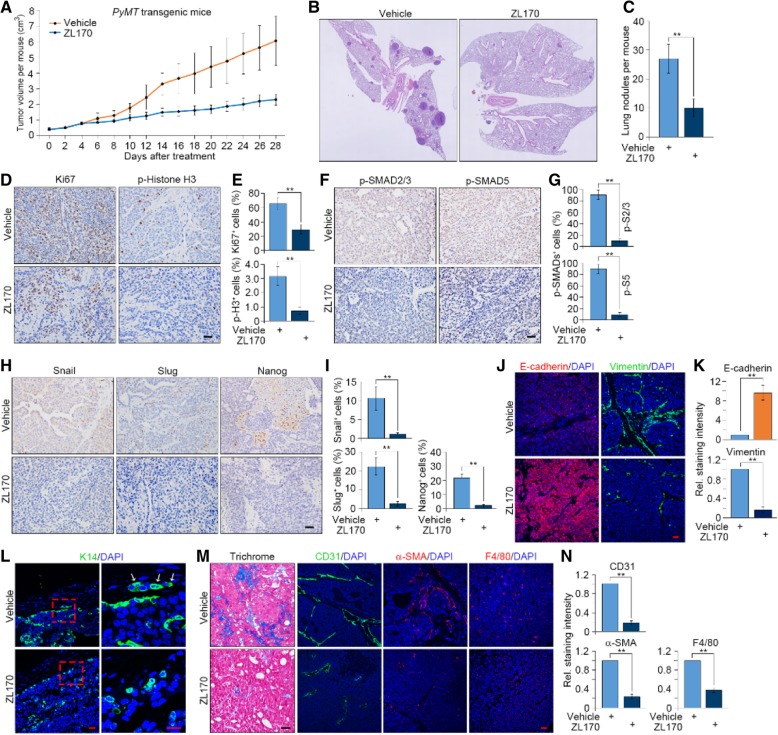
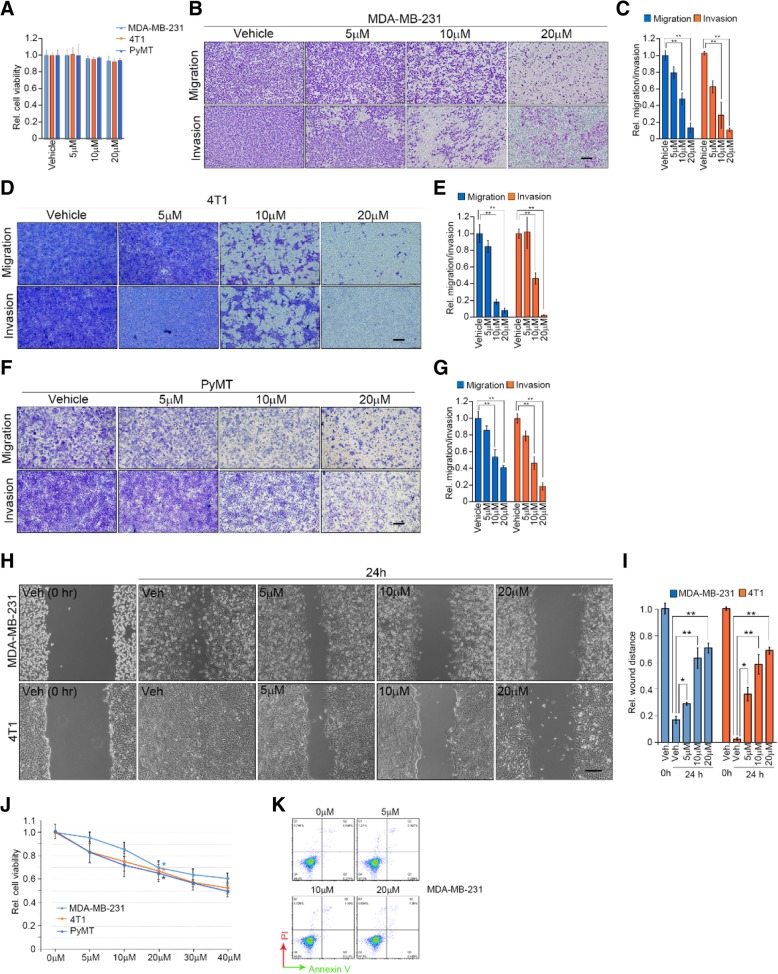
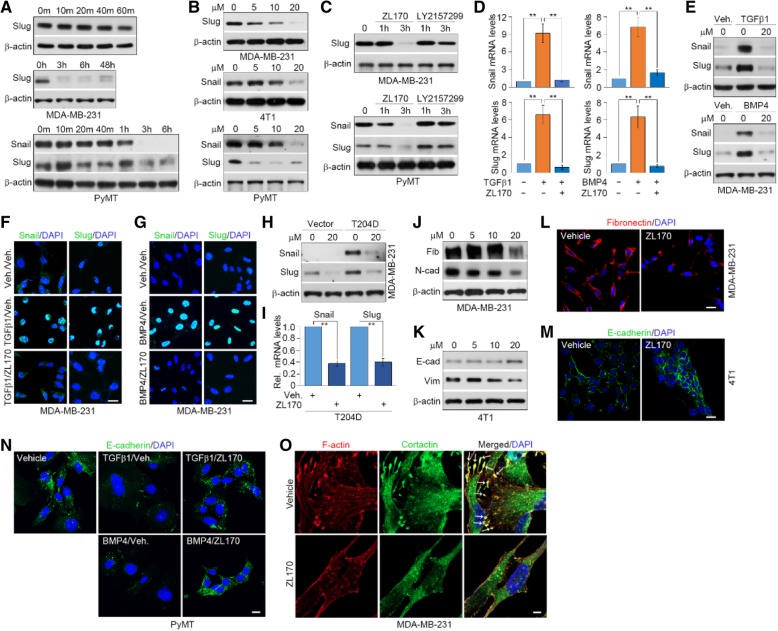
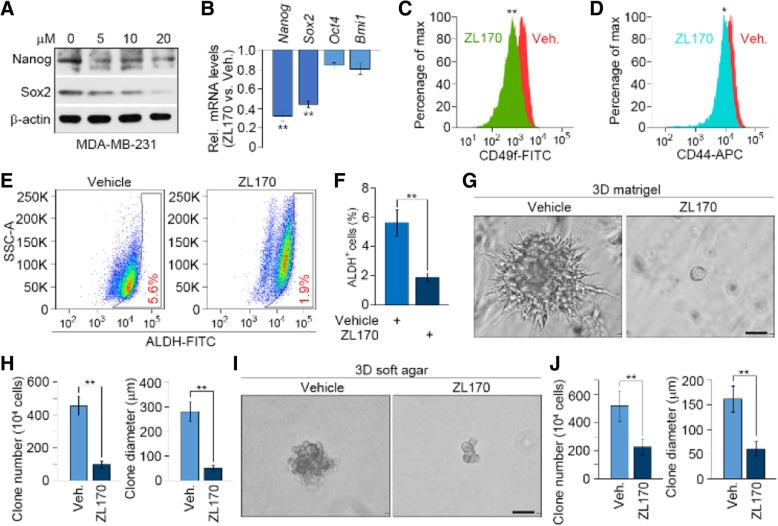
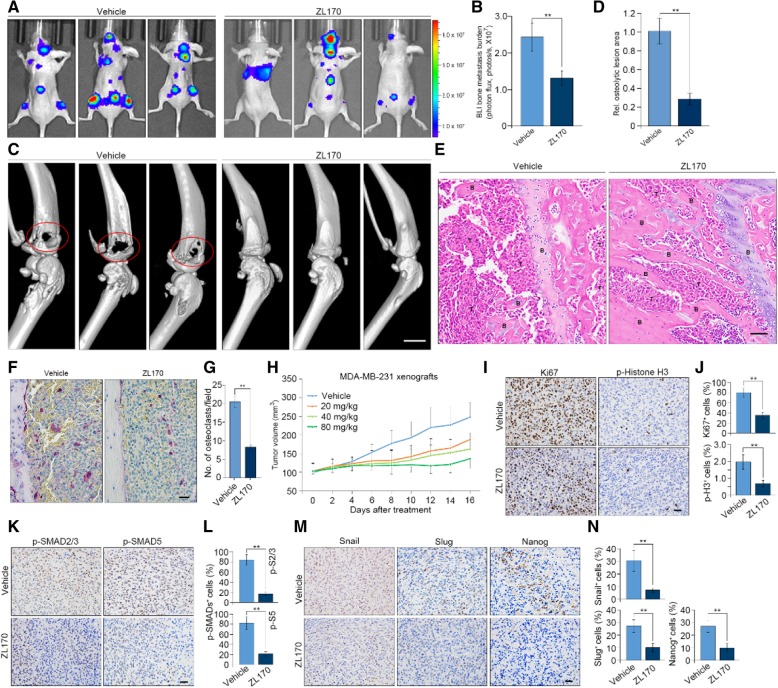
ZL170 dose-dependently inhibits cell proliferation, EMT, stemness, invasion and migration in vitro via specifically targeting canonical TGFβ/BMP-SMADs pathways in TNBC cells. The compound significantly hinders osteolytic bone metastasis and xenograft tumor growth without inflicting toxicity on vital organs of tumor-bearing nude mice. ZL170 strongly inhibits primary tumor growth and lung metastases in MMTV-PyMT transgenic mice. ZL170-treated tumors exhibit impaired TGFβ/BMP signaling pathways in both epithelial and stromal compartments, thereby creating a suppressive tumor microenvironment characterized by reduced extracellular matrix deposition and decreased infiltration of stromal cells.
ZL170 inhibits tumor EMT, stemness and metastasis and could be further developed as a potent anti-metastatic agent used in combination with cytotoxic drugs for treatment of TNBC and other advanced metastatic cancers.
转化生长因子 β(TGFβ)和骨形态发生蛋白(BMP)信号通路在三阴性乳腺癌(TNBC)中均持续激活。我们有兴趣分离出能够同时靶向 TGFβ/BMP 通路的天然小分子抑制剂,并进一步研究其在多种肿瘤模型中的抗增殖/转移作用及其潜在机制。
使用多种基于细胞的体外检测方法,通过靶向 TGFβ/BMP 信号通路,检测化合物对 TNBC 细胞生长、干性、上皮-间质转化(EMT)、侵袭和迁移的抑制作用。利用 MMTV-PyMT 转基因乳腺癌小鼠模型、皮下异种移植和骨转移模型,检测 ZL170 对体内 TNBC 生长和转移潜能的影响。
ZL170 通过特异性靶向 TNBC 细胞中的经典 TGFβ/BMP-SMADs 通路,在体外剂量依赖性地抑制细胞增殖、EMT、干性、侵袭和迁移。该化合物显著抑制溶骨性骨转移和异种移植肿瘤生长,而不会对荷瘤裸鼠的重要器官造成毒性。ZL170 强烈抑制 MMTV-PyMT 转基因小鼠的原发性肿瘤生长和肺转移。ZL170 处理的肿瘤在上皮和基质区室中均表现出 TGFβ/BMP 信号通路的抑制,从而形成一个抑制性的肿瘤微环境,其特征是细胞外基质沉积减少和基质细胞浸润减少。
ZL170 抑制肿瘤 EMT、干性和转移,可进一步开发为一种有效的抗转移药物,与细胞毒性药物联合用于治疗 TNBC 和其他晚期转移性癌症。