Ko Clarence Ching Huat, Chia Wai Kit, Selvarajah Gayathri Thevi, Cheah Yoke Kqueen, Wong Yin Ping, Tan Geok Chin
Department of Pathology, Faculty of Medicine, Universiti Kebangsaan Malaysia, Jalan Yaacob Latif, Bandar Tun Razak, 56000 Kuala Lumpur, Malaysia.
Department of Biomedical Science, Faculty of Medicine & Health Sciences, Universiti Putra Malaysia, 43400 Serdang, Malaysia.
Diagnostics (Basel). 2020 Sep 19;10(9):721. doi: 10.3390/diagnostics10090721.
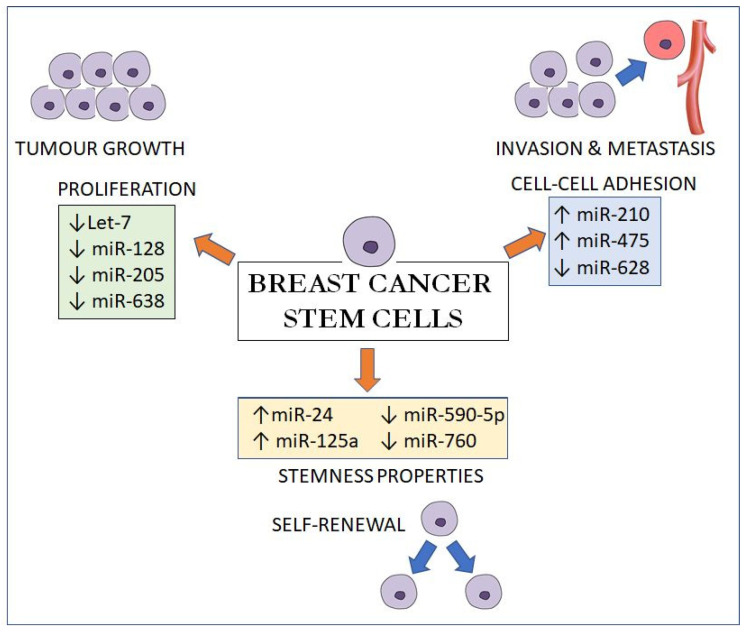
Breast cancer is one of the leading causes of cancer-related deaths in women worldwide, and its incidence is on the rise. A small fraction of cancer stem cells was identified within the tumour bulk, which are regarded as cancer-initiating cells, possess self-renewal and propagation potential, and a key driver for tumour heterogeneity and disease progression. Cancer heterogeneity reduces the overall efficacy of chemotherapy and contributes to treatment failure and relapse. The cell-surface and subcellular biomarkers related to breast cancer stem cell (BCSC) phenotypes are increasingly being recognised. These biomarkers are useful for the isolation of BCSCs and can serve as potential therapeutic targets and prognostic tools to monitor treatment responses. Recently, the role of noncoding microRNAs (miRNAs) has extensively been explored as novel biomarker molecules for breast cancer diagnosis and prognosis with high specificity and sensitivity. An in-depth understanding of the biological roles of miRNA in breast carcinogenesis provides insights into the pathways of cancer development and its utility for disease prognostication. This review gives an overview of stem cells, highlights the biomarkers expressed in BCSCs and describes their potential role as prognostic indicators.
乳腺癌是全球女性癌症相关死亡的主要原因之一,且其发病率呈上升趋势。在肿瘤组织中鉴定出一小部分癌症干细胞,它们被视为癌症起始细胞,具有自我更新和增殖潜力,是肿瘤异质性和疾病进展的关键驱动因素。肿瘤异质性降低了化疗的总体疗效,并导致治疗失败和复发。与乳腺癌干细胞(BCSC)表型相关的细胞表面和亚细胞生物标志物越来越受到认可。这些生物标志物有助于分离BCSC,并可作为潜在的治疗靶点和监测治疗反应的预后工具。最近,非编码微小RNA(miRNA)作为具有高特异性和敏感性的乳腺癌诊断和预后新型生物标志物分子的作用已得到广泛探索。深入了解miRNA在乳腺癌发生中的生物学作用有助于深入了解癌症发展途径及其在疾病预后中的应用。本综述概述了干细胞,强调了BCSC中表达的生物标志物,并描述了它们作为预后指标的潜在作用。