Proner Mariane Carolina, Ramalho Marques Ingrid, Ambrosi Alan, Rezzadori Katia, da Costa Cristiane, Zin Guilherme, Tres Marcus Vinícius, Luccio Marco Di
Laboratory of Membrane Processes, LABSEM, Department of Chemical and Food Engineering, Federal University of Santa Catarina, Florianópolis 88040-970, Brazil.
Laboratory of Control and Polymerization Processes, LCP, Department of Chemical and Food Engineering, Federal University of Santa Catarina, Florianópolis 88040-970, Brazil.
Membranes (Basel). 2020 Sep 18;10(9):239. doi: 10.3390/membranes10090239.
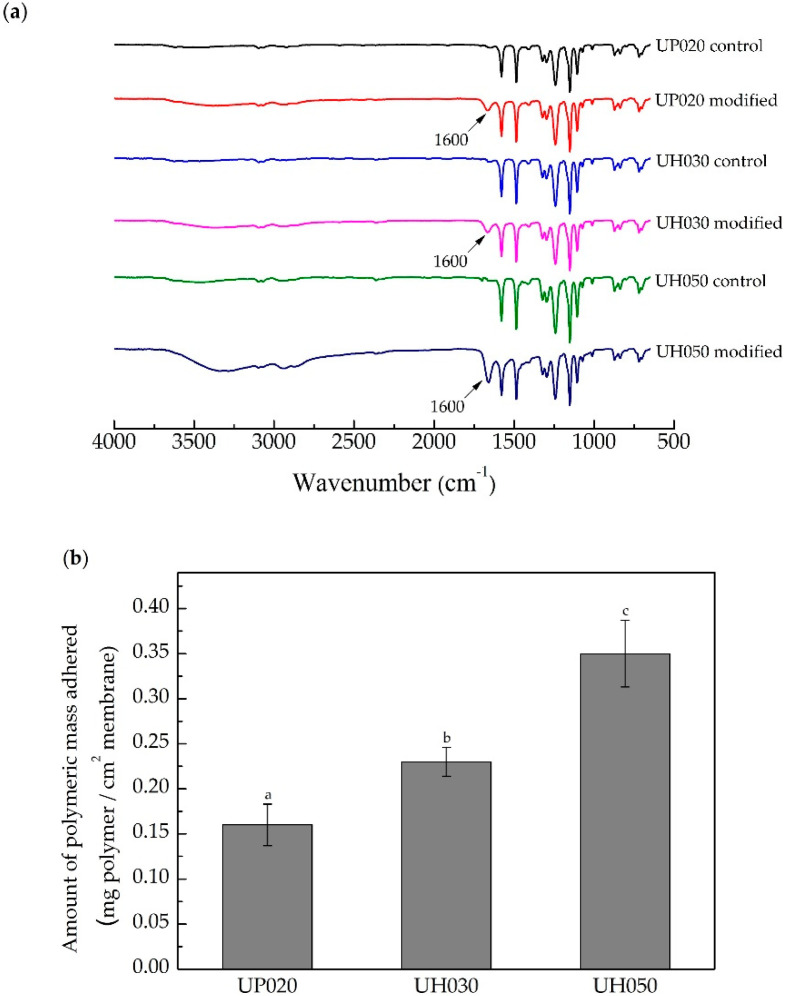
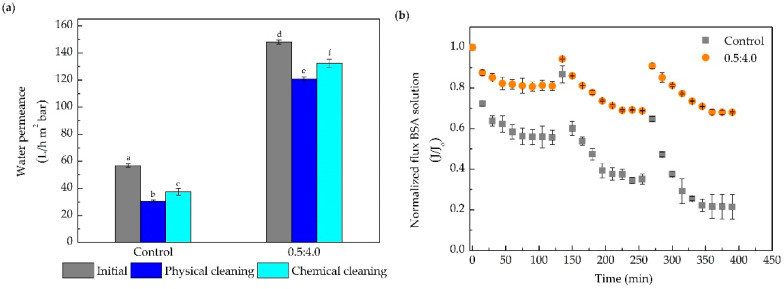
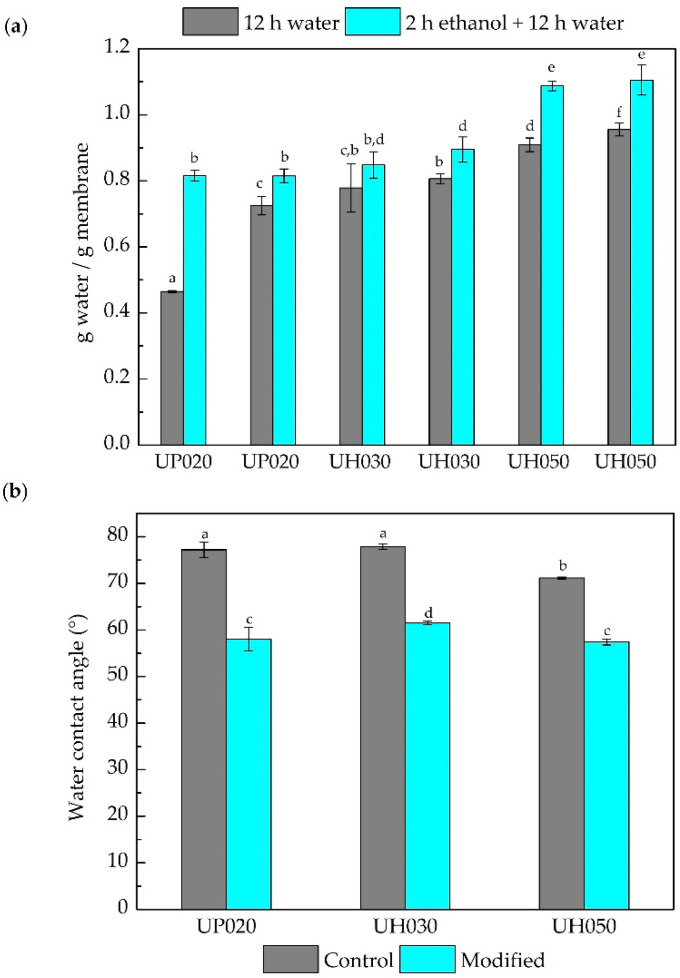
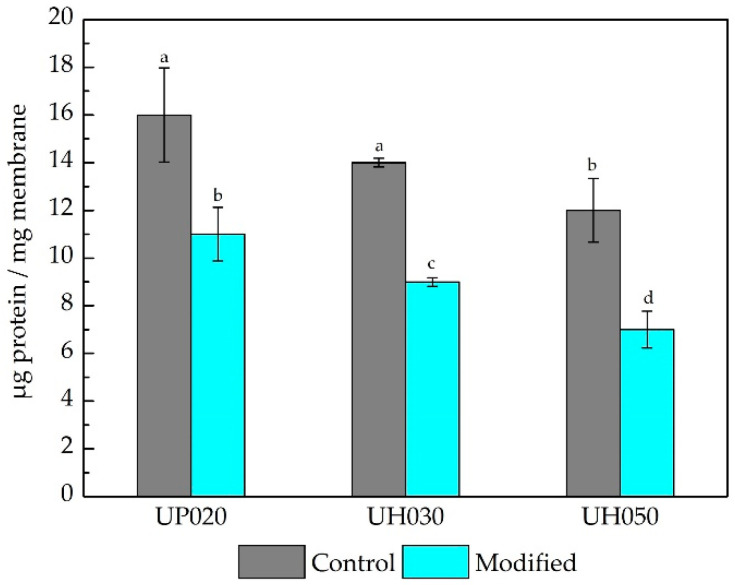
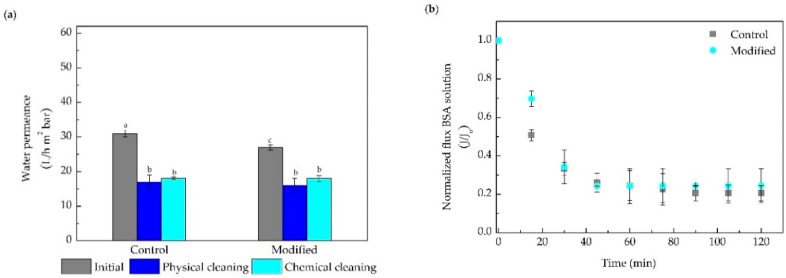
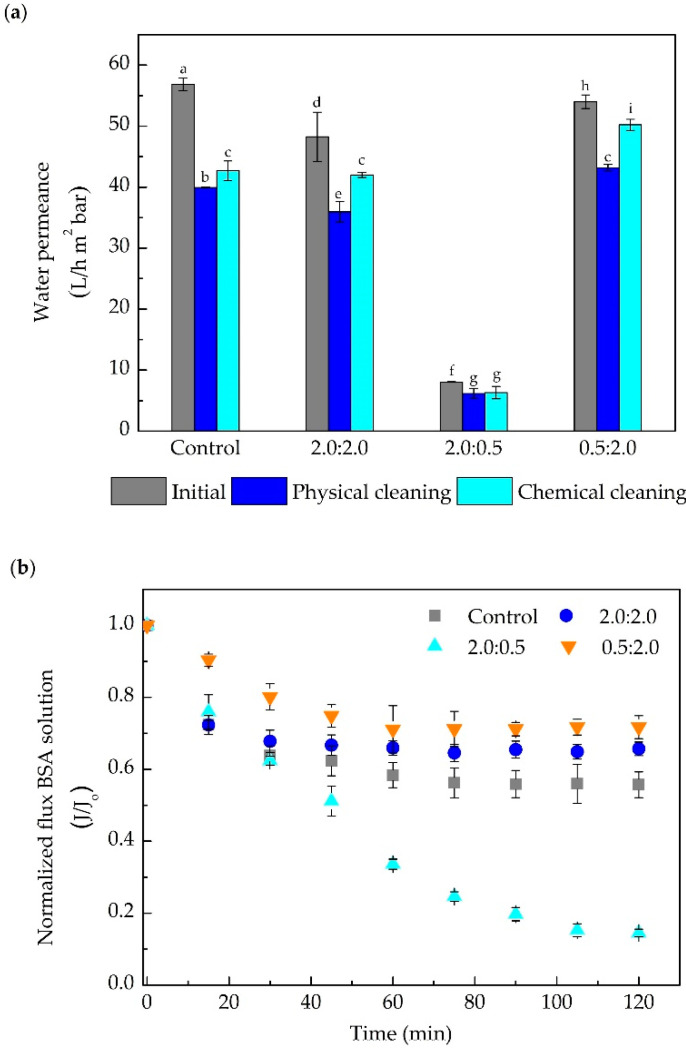
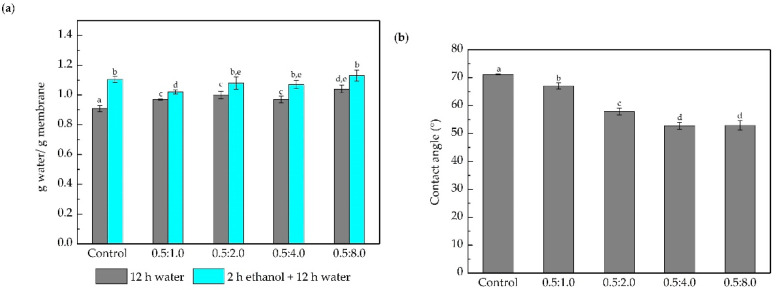
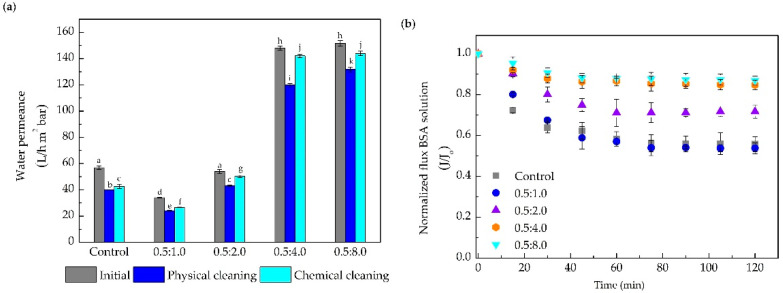
The mussel-inspired method has been investigated to modify commercial ultrafiltration membranes to induce antifouling characteristics. Such features are essential to improve the feasibility of using membrane processes in protein recovery from waste streams, wastewater treatment, and reuse. However, some issues still need to be clarified, such as the influence of membrane pore size and the polymer concentration used in modifying the solution. The aim of the present work is to study a one-step deposition of dopamine (DA) and polyethyleneimine (PEI) on ultrafiltration membrane surfaces. The effects of different membrane molecular weight cut-offs (MWCO, 20, 30, and 50 kDa) and DA/PEI concentrations on membrane performance were assessed by surface characterization (FTIR, AFM, zeta potential, contact angle, protein adsorption) and permeation of protein solution. Results indicate that larger MWCO membranes (50 kDa) are most benefited by modification using DA and PEI. Moreover, PEI is primarily responsible for improving membrane performance in protein solution filtration. The membrane modified with 0.5:4.0 mg mL (DA: PEI) presented a better performance in protein solution filtration, with only 15% of permeate flux drop after 2 h of filtration. The modified membrane can thus be potentially applied to the recovery of proteins from waste streams.
人们已经研究了受贻贝启发的方法,用于改性商业超滤膜以赋予其抗污染特性。这些特性对于提高膜工艺在从废物流中回收蛋白质、废水处理及回用方面的可行性至关重要。然而,一些问题仍需阐明,比如膜孔径以及改性溶液中所用聚合物浓度的影响。本工作的目的是研究多巴胺(DA)和聚乙烯亚胺(PEI)在超滤膜表面的一步沉积。通过表面表征(傅里叶变换红外光谱、原子力显微镜、zeta电位、接触角、蛋白质吸附)和蛋白质溶液渗透,评估了不同膜截留分子量(MWCO,20、30和50 kDa)以及DA/PEI浓度对膜性能的影响。结果表明,较大截留分子量的膜(50 kDa)在使用DA和PEI改性后受益最大。此外,PEI在蛋白质溶液过滤中对改善膜性能起主要作用。用0.5:4.0 mg/mL(DA:PEI)改性的膜在蛋白质溶液过滤中表现出更好的性能,过滤2小时后渗透通量仅下降15%。因此,改性膜有望应用于从废物流中回收蛋白质。