Shabdan Yerkin, Markhabayeva Aiymkul, Bakranov Nurlan, Nuraje Nurxat
National Laboratory Astana, Nazarbayev University, Nursultan 010000, Kazakhstan.
Faculty of Physics and Technology, AI-Farabi Kazakh National University, Almaty 050040, Kazakhstan.
Nanomaterials (Basel). 2020 Sep 18;10(9):1871. doi: 10.3390/nano10091871.
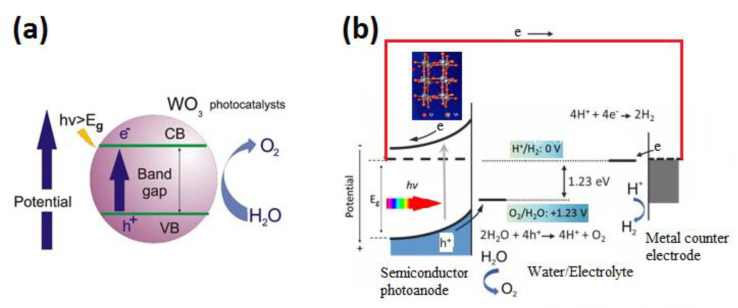
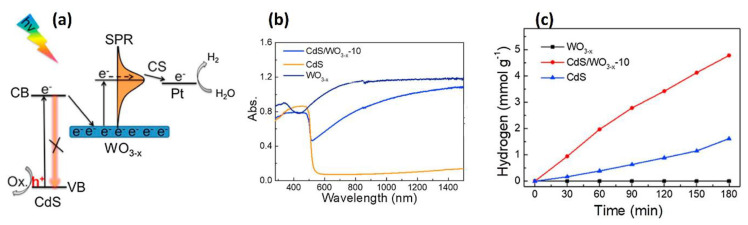
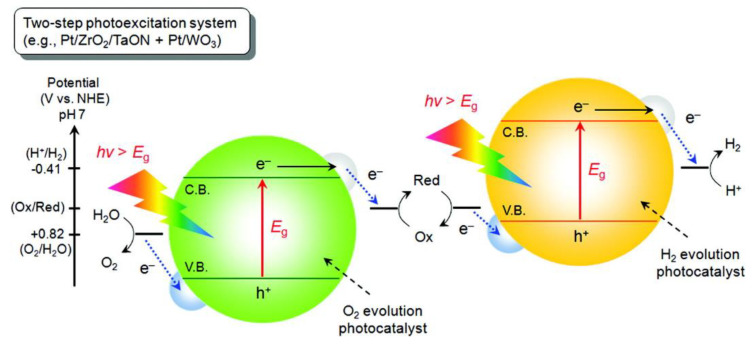
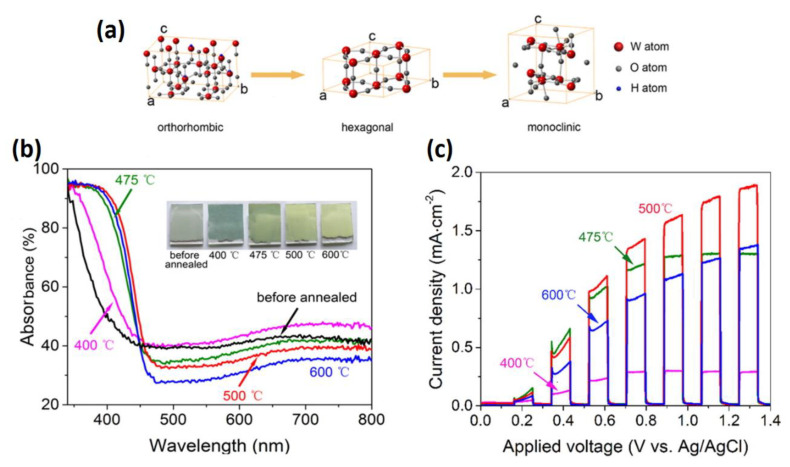
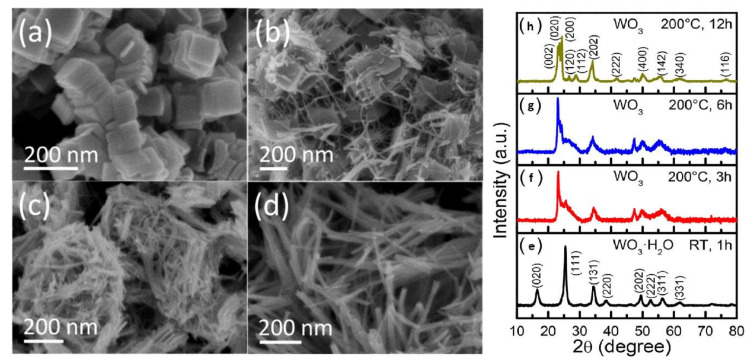
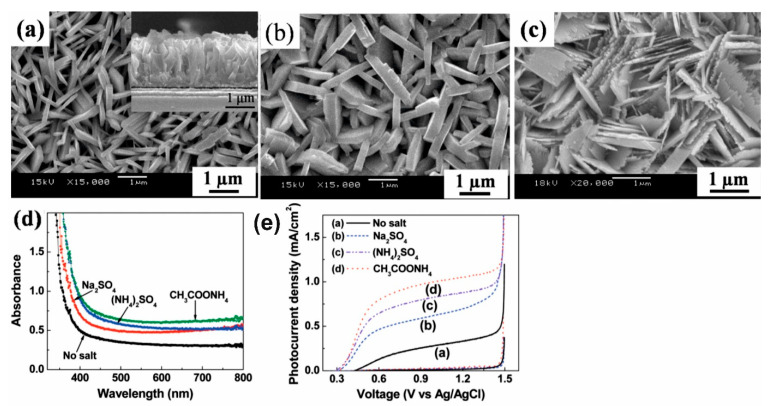
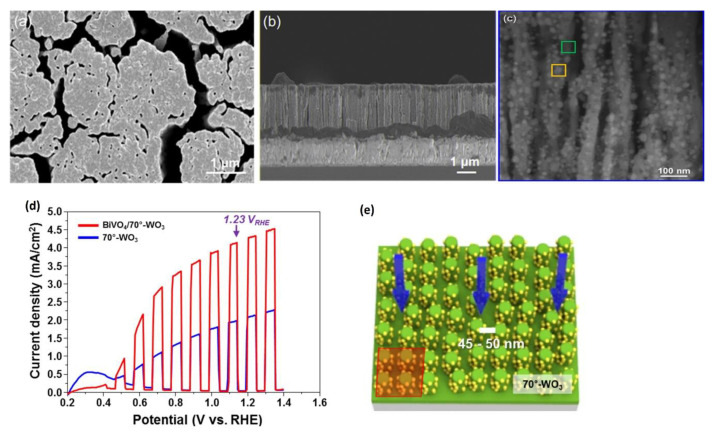
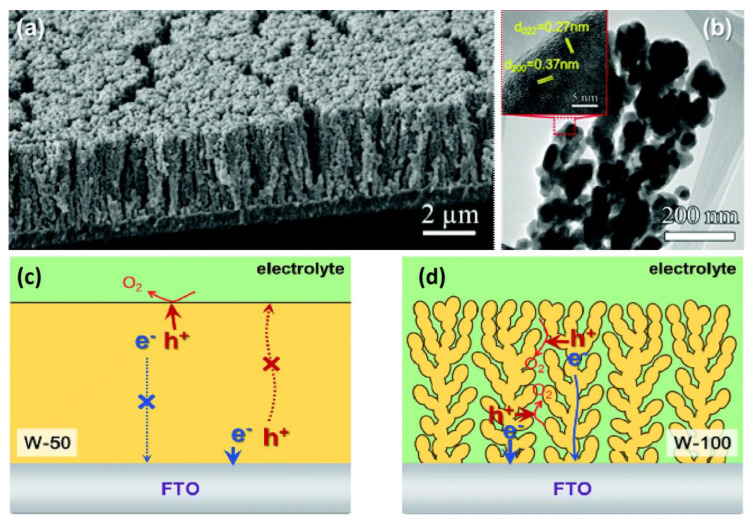
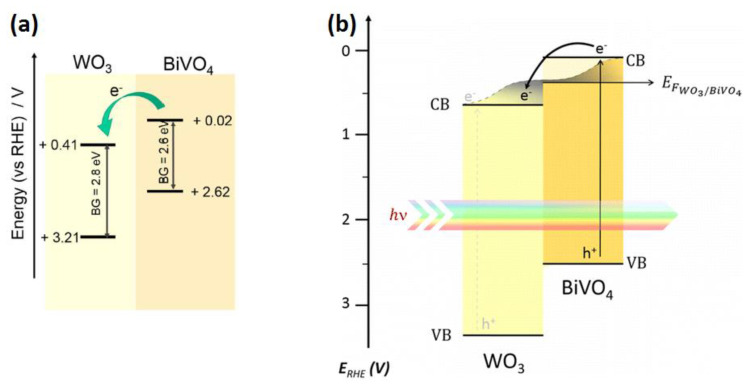
This review focuses on tungsten oxide (WO) and its nanocomposites as photoactive nanomaterials for photoelectrochemical cell (PEC) applications since it possesses exceptional properties such as photostability, high electron mobility (12 cm V s) and a long hole-diffusion length (150 nm). Although WO has demonstrated oxygen-evolution capability in PEC, further increase of its PEC efficiency is limited by high recombination rate of photogenerated electron/hole carriers and slow charge transfer at the liquid-solid interface. To further increase the PEC efficiency of the WO photocatalyst, designing WO nanocomposites via surface-interface engineering and doping would be a great strategy to enhance the PEC performance via improving charge separation. This review starts with the basic principle of water-splitting and physical chemistry properties of WO, that extends to various strategies to produce binary/ternary nanocomposites for PEC, particulate photocatalysts, Z-schemes and tandem-cell applications. The effect of PEC crystalline structure and nanomorphologies on efficiency are included. For both binary and ternary WO nanocomposite systems, the PEC performance under different conditions-including synthesis approaches, various electrolytes, morphologies and applied bias-are summarized. At the end of the review, a conclusion and outlook section concluded the WO photocatalyst-based system with an overview of WO and their nanocomposites for photocatalytic applications and provided the readers with potential research directions.
本综述聚焦于氧化钨(WO)及其纳米复合材料,它们作为光活性纳米材料用于光电化学电池(PEC)应用,因为其具有诸如光稳定性、高电子迁移率(12 cm² V⁻¹ s⁻¹)和长空穴扩散长度(150 nm)等优异性能。尽管WO在PEC中已展现出析氧能力,但其PEC效率的进一步提高受到光生电子/空穴载流子高复合率以及液-固界面处缓慢电荷转移的限制。为进一步提高WO光催化剂的PEC效率,通过表面-界面工程和掺杂设计WO纳米复合材料将是一种通过改善电荷分离来提高PEC性能的绝佳策略。本综述首先介绍水分解的基本原理和WO的物理化学性质,进而扩展到用于PEC、颗粒光催化剂、Z型方案和串联电池应用的制备二元/三元纳米复合材料的各种策略。还包括PEC晶体结构和纳米形貌对效率的影响。对于二元和三元WO纳米复合体系,总结了不同条件下的PEC性能,包括合成方法、各种电解质、形貌和施加偏压。在综述结尾,结论与展望部分概述了基于WO光催化剂的体系以及用于光催化应用的WO及其纳米复合材料,并为读者提供了潜在的研究方向。